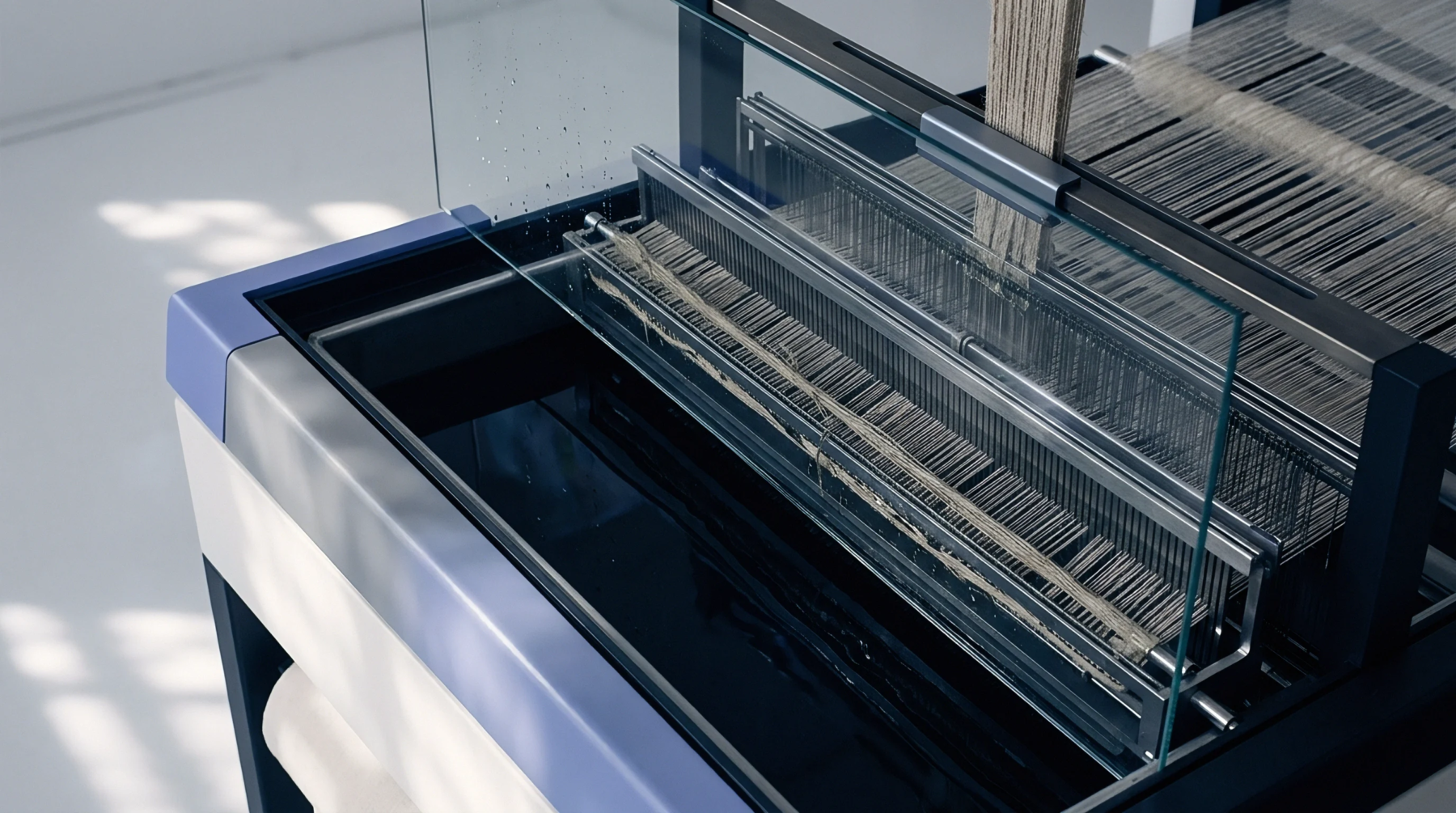
Fibre Alignment
Mechanical tensioning during wet spinning operates directly on botanical filaments extracted from flax stems. Flax fibre separation governs parallel strand orientation before drawing frames feed roving paths toward drafting zones. Chinese mills maintain strict drafting tolerances on these natural polymers to prevent filament breakage during high speed attenuation.
Tensile stress applied across successive roller sets controls sliver uniformity. Unprocessed bast strands enter mechanical combing machinery to remove short tow fractions while preserving long line material for high grade yarn production.
Strand Integrity
Breaking force measurements determine whether intermediate sliver yields meet established commercial thresholds. Mill technicians evaluate elongation parameters across conditioned samples drawn from continuous production batches. Extrusion resistance varies according to natural pectin content retained within cell walls after initial retting procedures.
Excessive mechanical action during preliminary processing reduces final breaking length parameters significantly. Buyers evaluate lot certificates against agreed specifications prior to authorizing large scale yarn acquisition.
Yarn Purity
Residual lignin percentages dictate the ultimate dyeing affinity of finished textile goods. Chemical cleaning stages remove non cellulosic constituents from the primary fibrous matrix without damaging microfibrillar structure. Finished linen fabrics exhibit higher tensile strength when constituent yarns maintain consistent linear density throughout the web.
Export documentation records residual moisture content to verify compliance with international commercial shipment standards.