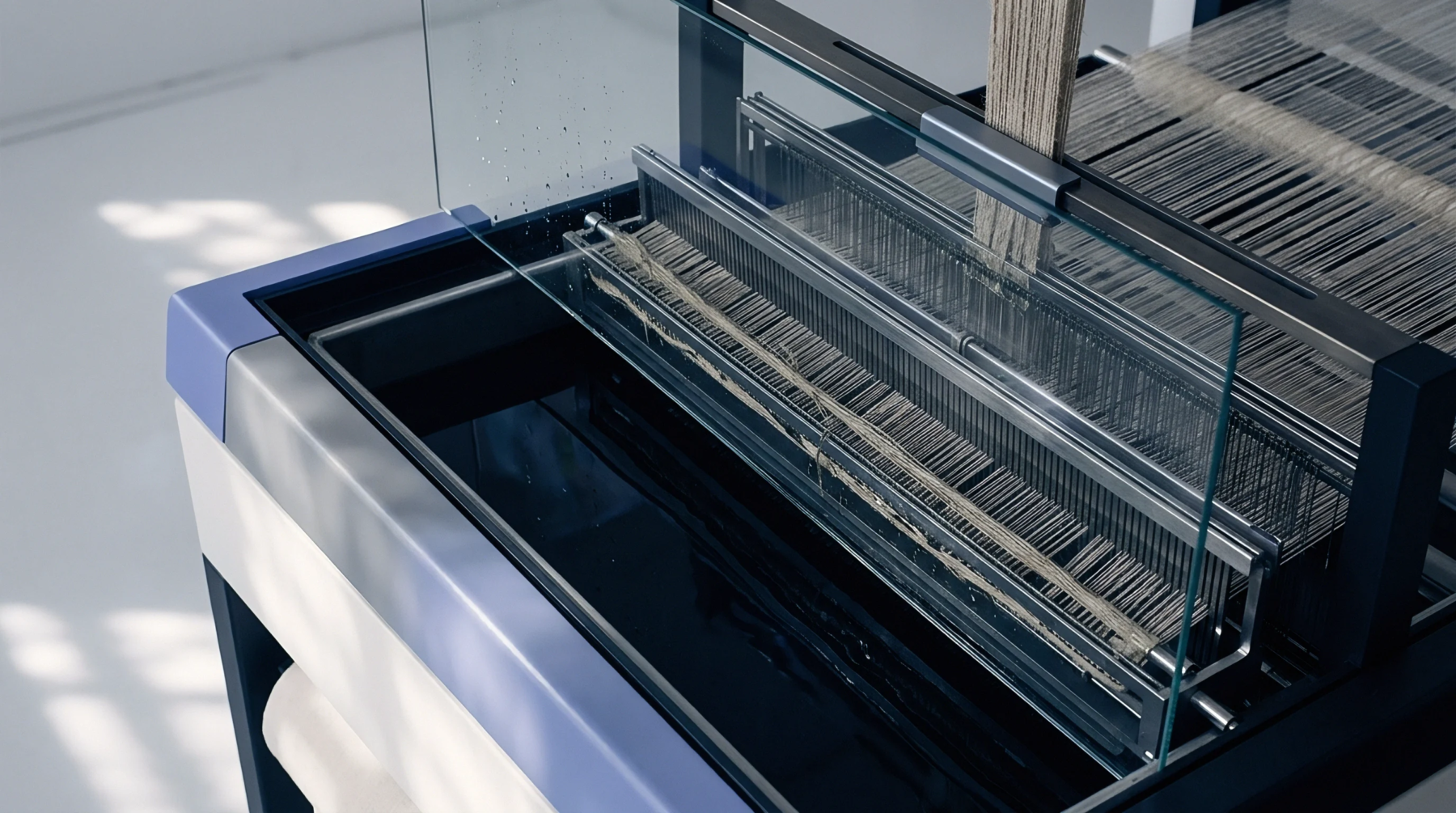
Shed Formation
Mechanical control of individual warp threads during the weaving process requires reliable components to separate the yarns and create the path for the weft carrier. Standard looms utilize heald wires arranged in frames to lift or lower selected warp yarns according to the weave pattern. This movement creates the plain-weave opening through which the shuttle or rapier travels.
Wire Design
Each metal strip features a polished eyelet in the center through which a single yarn must pass before reaching the reed. In linen weaving, these heald wires are typically made of tempered steel with nickel or chrome plating to withstand the abrasive action of stiff flax fibres. The eyelet must be perfectly smooth because any microscopic rough edges will shred the spun yarn, causing lint buildup and thread breakages during rapid harness shifts.
Modern jacquard machines utilize individual wire control, meaning that each wire is linked to a separate harness cord and electronic solenoid to weave complex damask designs without needing rigid frames.
Wear Pattern
Continuous friction from coarse flax yarn can wear grooves into the eyelet over millions of loom cycles. When mills weave heavy linen, they inspect these heald wires for steel fatigue and replace entire frames before the grooves can snag the incoming warp yarns. Finer yarn counts require smaller, rounder eyelets to prevent excessive lateral vibration during high-speed shed changes.