Processing Byproduct
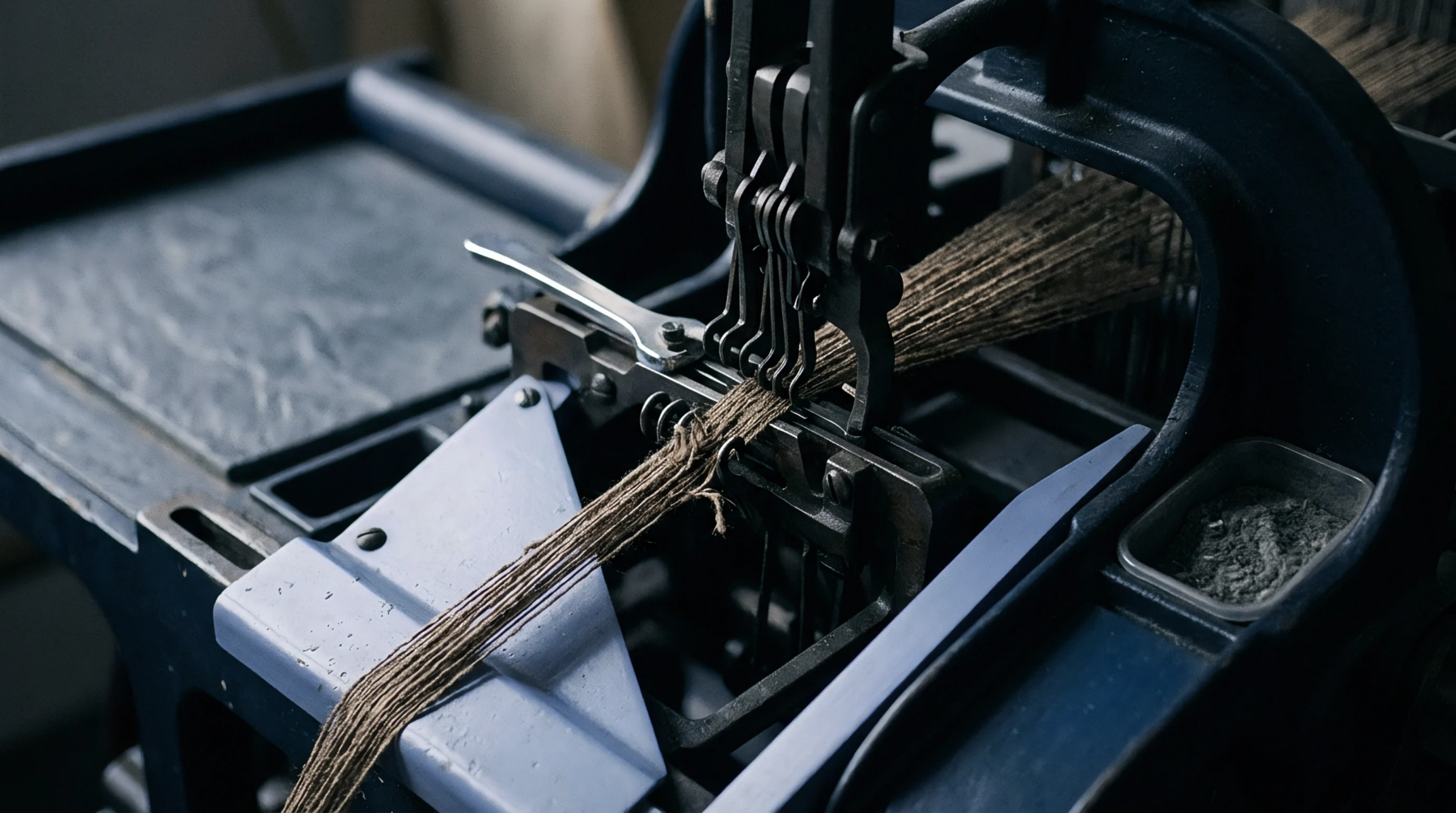
Short, tangled fibers comb out of scutched flax stricks during mechanical hackling operations across sequential pinned beds. The resulting byproduct, termed hackler tow, consists of broken middle-lamella fragments, coarse bast bundles, shive particles and unaligned short fibers. This material falls beneath the hackling machine as giant comb pins separate the long-staple line flax from the raw bundle heads and tails.
Its fiber distribution shows high heterogeneity in length and cleanliness compared to line flax. The boundary of this byproduct is marked by its extraction point, distinguishing it from scutching tow, which separates during the earlier, coarser mechanical beating of unhackled straw.
Carding Classification
Raw tow combings undergo aggressive cleaning through specialized shaker systems to dislodge adhering woody shive before entering the preparation line. Carding systems for hackler tow use worker and stripper rollers to untangle knotted fiber clusters without generating excessive dust. Fiber length arrays display a wide dispersion, typically ranging from twenty to one hundred and fifty millimeters.
The material presents irregular retting states, requiring selective batching before spinning rove production. Chinese bast spinning mills blend tow lots based on maturity, color, cleanliness and residual oil content to maintain yarn strength. Tow classification standards categorize lots according to trash percentage, moisture content and tensile cohesion.
Wet spinning of fine tow requires preliminary alkaline boiling to remove pectins and soften stiff bundle edges. Dry tow spinning directs coarser grades into twine, upholstery yarns and industrial packaging fabrics.
Commercial Valuation
Export contracts and domestic purchase orders separate hackler tow into specific market grades based on yield, fiber cleanliness and residual core shive. Buyers conduct hand-pulling assessments and laboratory air-flow fineness tests to determine processing value relative to long-line flax prices. Baled tow carries commercial inspection certificates specifying net dry weight, moisture regain against official standards and foreign matter levels.
If the shive content exceeds contractual thresholds, mechanical carding lines suffer high pin wear and produce excessive waste during drafting. Spinning mills balance tow proportions in blended roves to control the final price of blended linen-cotton yarns. Standard warehouse storage rules govern bale stack heights to avoid moisture accumulation that provokes mildew formation within dense tow fibers.