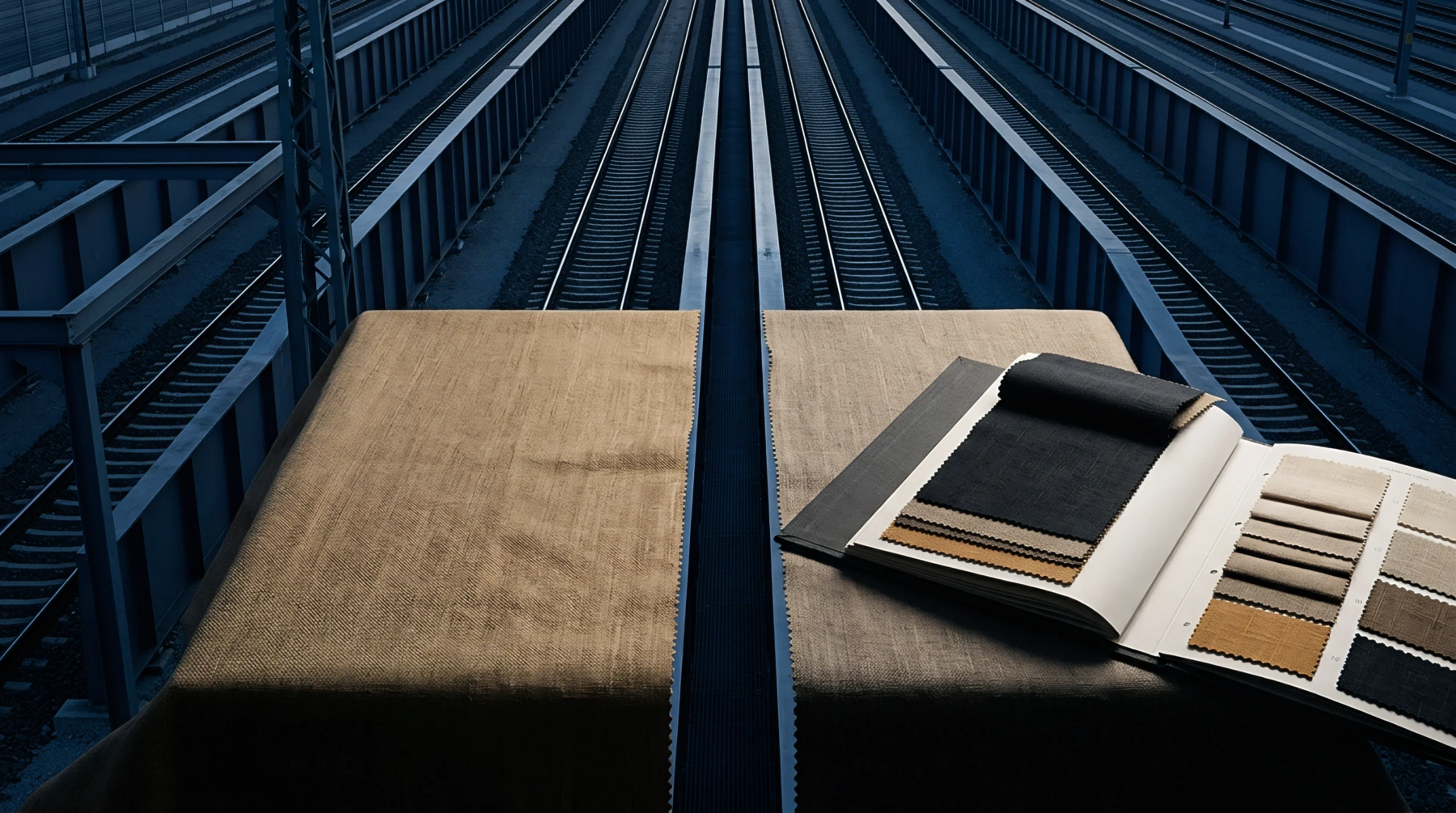
Fabric Stabilization
Post production preparation involves resting manufactured linen rolls in a controlled atmosphere before finishing. This process, known as greige roll conditioning, allows the raw linen fabric to absorb a standard amount of moisture from the ambient air, correcting the dryness caused by the friction and heat of the loom. It is conducted in a humidity chamber where air temperature and relative humidity are maintained at specific values for a minimum of twenty-four hours.
This treatment ensures that subsequent measurements of weight, width, and density are consistent and accurate, which is critical for meeting the buyer’s strict fabric specifications. Conditioning must be completed before any finishing steps, such as bleaching or printing, can begin.
Moisture Equalization
Linen fibers are highly hygroscopic and change dimensions based on environmental moisture. Applying greige roll conditioning stabilizes the yarn structure by allowing the warp and weft fibers to reach an equilibrium state. This step is necessary because dry yarn tends to shrink or distort unevenly when exposed to finishing chemicals or wet processing.
By standardizing the moisture level, the finishing plant avoids fabric defects like skewing or bowing during continuous dyeing.
Tension Release
Mechanical tension accumulates within the linen roll during high speed loom operations. Conditioning relieves these internal stresses by relaxing the fibers and yarns. This relaxation reduces subsequent shrinkage in the final linen product.