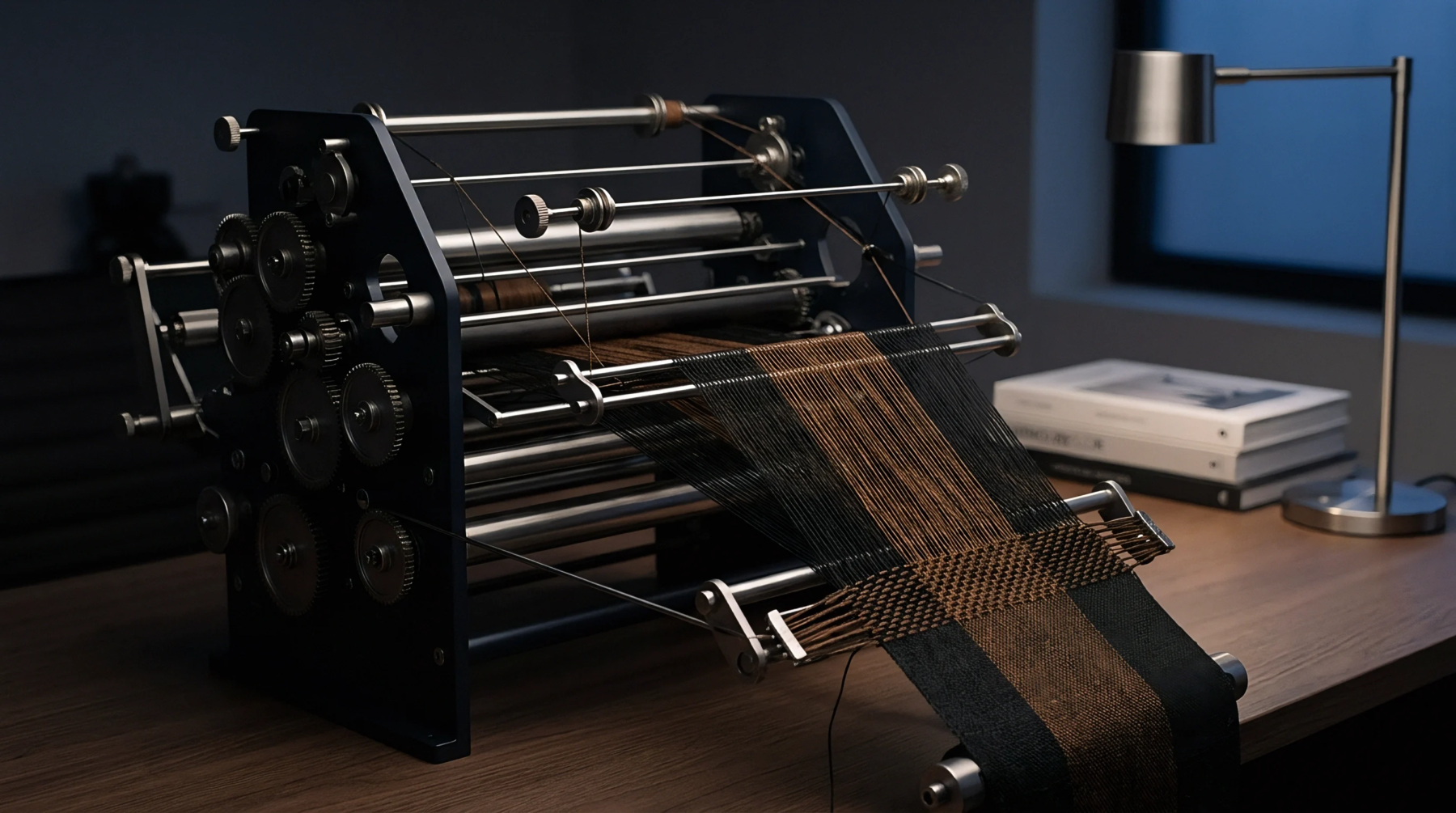
Weave Displacement
Beat-up position stability measures the mechanical resilience of woven cloth under dynamic reed impact forces. On high-speed flax looms, fell recoil represents the spring-back displacement of the fabric fell toward the harness after the reed withdraws. Dynamic elastic recovery in stiff linen warp yarns drives this backward motion immediately following pick insertion.
Mill loom settings record off-loom tension and let-off brake timing to compensate for fell movement. Uncontrolled displacement alters pick density and generates loom stop marks in fine linen fabrics.
Tension Relaxation
Elastic energy stored in stretched warp yarns during shed opening releases abruptly upon reed contact. Linen yarns possess low extensibility and high modulus compared to cotton or synthetic strands, amplifying force transfer at the fell line. When the reed retreats, warp tension pulls the newly inserted filling yarn backward toward the heddles before take-up motion stabilizes fabric position.
Electronic let-off systems calculate warp delivery rates to match pick insertion speeds, damping mechanical bounce. Technicians adjust backrest roller height and warp shed timing to minimize cyclic fell displacement. Excessive recoil forces cause beat-up resistance variability, creating horizontal lines across exported fabric rolls that fail buyer inspection standards.
Density Defect
Magnitude variations in fell displacement distort pick placement accuracy during weave structure formation. Loom stoppage allows warp tension relaxation, increasing fell displacement when weaving resumes. Automatic pick-finding sequences adjust take-up positions to neutralize position errors before restarted looms insert fresh picks.