Frictional Oscillation
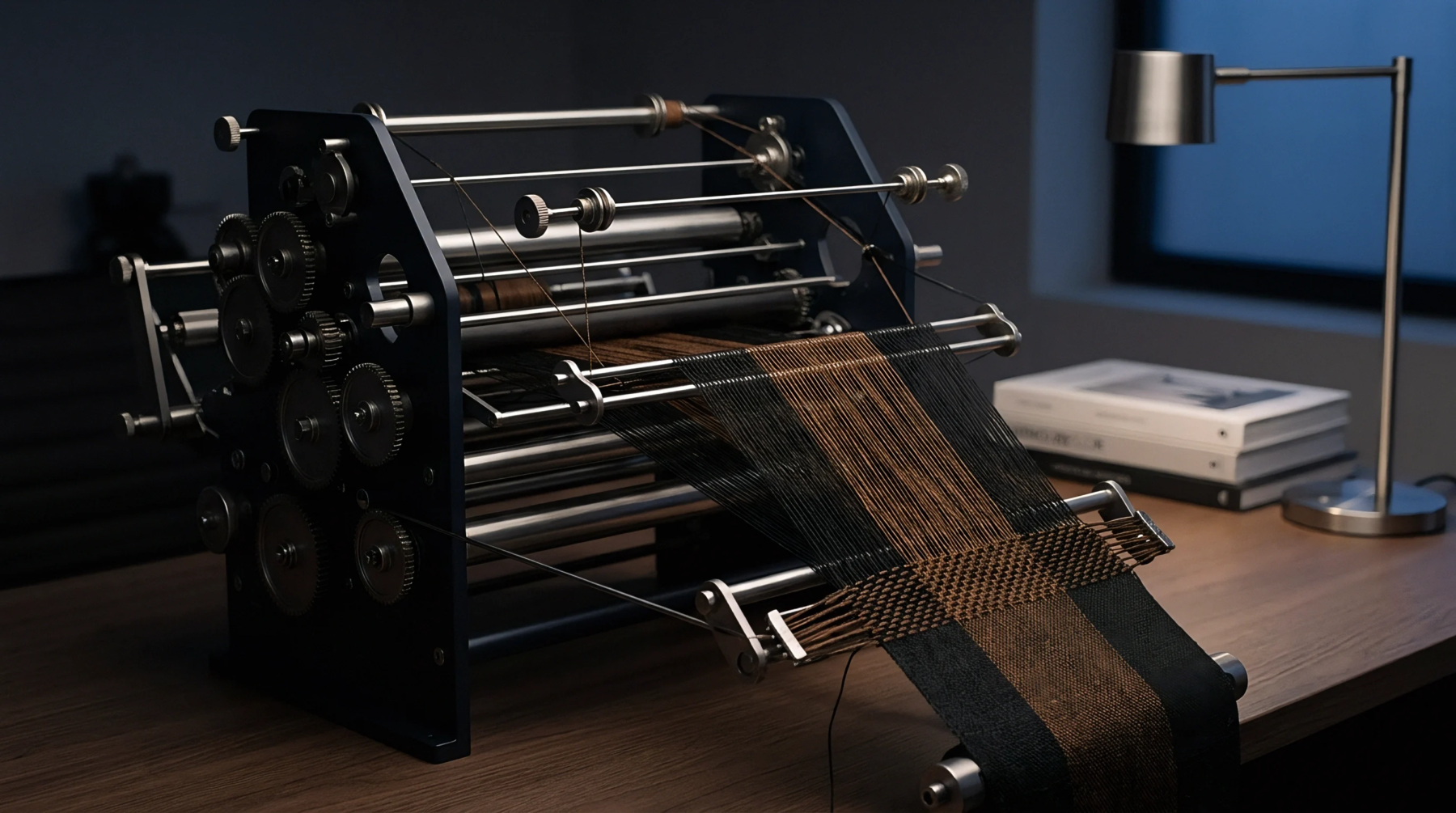
Frictional dynamic phenomena describe alternating phases of static adhesion and kinetic sliding between contacting material surfaces. In flax drawing and wet spinning, stick-slip transitions occur as fibre bundles repeatedly grip and slip against drafting rollers or adjacent fibres under applied tension. Static friction holds fibre strands until drafting force exceeds boundary threshold limit, causing sudden acceleration and tension release.
Technical spinning records log drafting force fluctuations and nip pressures to identify stick-slip behavior during attenuation. Uncontrolled dynamic friction generates thick-thin yarn periodicities and machine vibration.
Drafting Instability
Moisture variations and natural flax wax distribution modulate the intensity of stick-slip cycles in drawing zones. Dry fibres exhibit high static friction coefficients, increasing force required to initiate sliding and causing erratic energy release. Emulsion lubricants and bath wetting agents reduce static friction thresholds, smoothing transitions into kinetic sliding modes.
When stick-slip cycles synchronize across multiple spinning positions, harmonic vibrations transmit through the drafting frame chassis. Process engineers adjust roller weighting, apron gaps and fluid temperatures to suppress stick-slip oscillation during high-speed production. Continuous force sensors attached to drafting zones detect periodic force spikes, alerting operators to apply supplemental liquid conditioning to incoming sliver strands.
Quality Defect
Irregular motion during drafting creates periodic linear density variations known as drafting waves in spun linen yarns. Mass variation charts reveal characteristic energy peaks corresponding to stick-slip oscillation frequencies. Fabric woven from unstable yarn shows subtle cloudiness and uneven pick spacing that fails high-tier quality control audits.