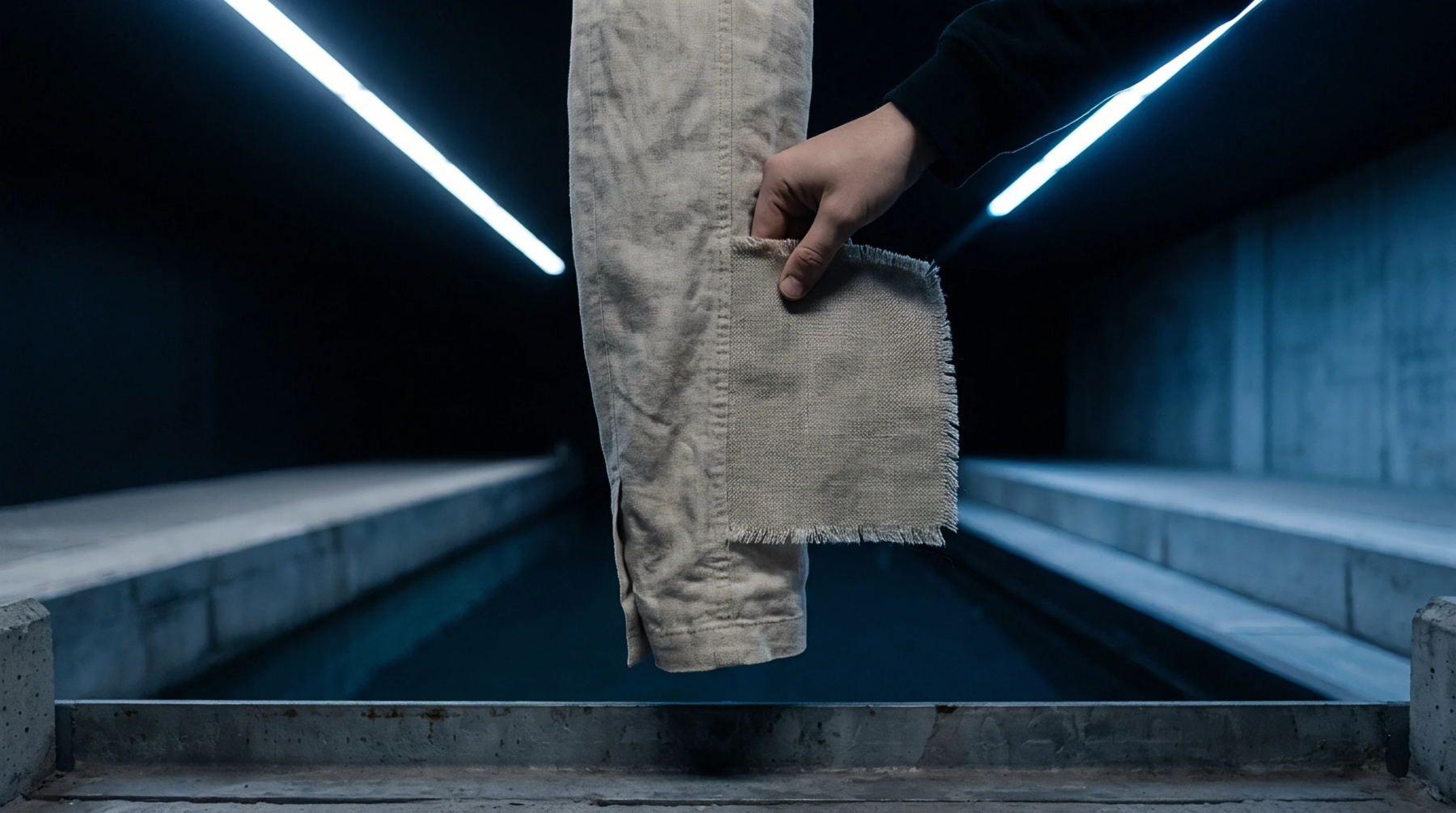
Structural Separation
Displacement of single ultimate plant cells along their long axes occurs when inter-fibre pectin bonds yield under mechanical tension. Elementary fibre slippage describes the physical sliding of individual cellulose filaments past one another within a flax fibre bundle. Softening agents in warm water drafting troughs dissolve calcium pectate binders, allowing controlled slippage between overlapping technical fibres.
Uncontrolled sliding reduces yarn linear density below specified tex values, creating weak points that rupture during winding operations. Mill quality control registers record slippage behavior through draft ratio monitoring and yarn evenness tests.
Drafting Kinetics
Fibre movement inside drafting zones depends directly on trough water temperature, dwell time, and roller nip pressure. Warm water baths weaken hemicellulose gels, which reduces inter-fibre friction and enables uniform attenuation of the roving. If temperature levels exceed technical parameters, pectin solubilization accelerates beyond operational targets, causing total bundle dissolution prior to twist insertion.
Spinning frames operating with correct drafting settings produce smooth yarn profiles with high orientation of ultimate cells. Process control sensors monitor tension variations across drafting zones to prevent draft waves and mass fluctuations.
Tensile Failure
Excessive sliding during drafting leads to yarn thin spots and frequent end-breaks at the spinning frame. Controlled slippage remains necessary to achieve high fineness in wet-spun linen yarns.