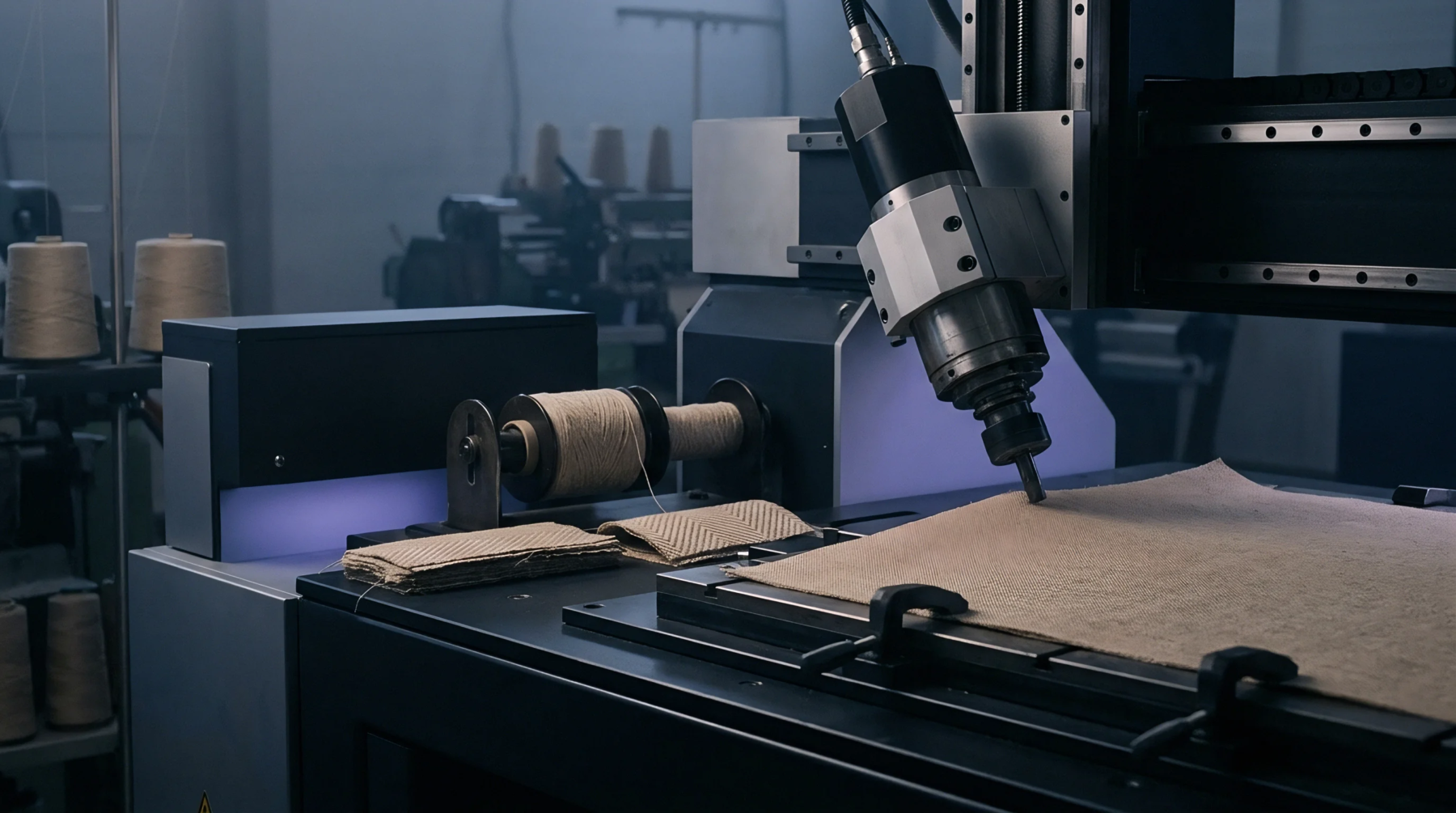
Tension Regulation
An electronic pre-winder brake maintains constant yarn tension during the high speed transfer of flax fibres from bobbins into the circular knitting or weaving heads within industrial linen production facilities. This device monitors rotational velocity through electromagnetic sensors to prevent overfeeding or snapping of delicate threads during the feed cycle. Engineers install the component between the supply creel and the primary spinning frame to ensure uniform material density.
Precise control of the motor torque counteracts the inertia generated by rotating yarn packages. Friction applied by the actuator remains proportional to the output requirement of the production line. Standard quality control protocols require these units to hold tension values within strict mill tolerances to prevent breakage.
Operation Mechanism
Operational logic dictates the activation of the braking force by calculating the difference between the programmed feed rate and the actual fibre discharge speed. Integrated circuits receive real time data from optical detectors monitoring the loop size of the flax. Variable voltage adjustments move the magnetic field strength to modulate the mechanical resistance of the pre-winder drum.
Rapid dissipation of excess energy occurs through heat sinks mounted on the external frame of the housing. Calibration occurs when the machine stands idle by measuring the torque against a stationary load cell. Discrepancies in the resistance force trigger automatic alerts on the central monitoring console to stop the drive motor.
Sudden fibre deceleration causes the system to reduce current flow immediately to avoid unnecessary material strain. High speed spinning environments demand this reactive frequency to maintain stable delivery rates across multiple lines.
Production Compliance
Fabric standards depend upon the accuracy of these mechanical interventions to guarantee uniformity in the final cloth weight and weave structure. Verification of the output happens during the greige inspection phase before the linen enters the chemical finishing or bleaching stages. Textile auditors record the consistency of tension settings on the production log to satisfy buyer requirements for export grade merchandise.
Failure of the brake to regulate the fibre flow leads to uneven density in the warp direction of the finished fabric. Consistent performance of the unit ensures that the mill meets the contractual specifications for tensile strength and dimensional stability.