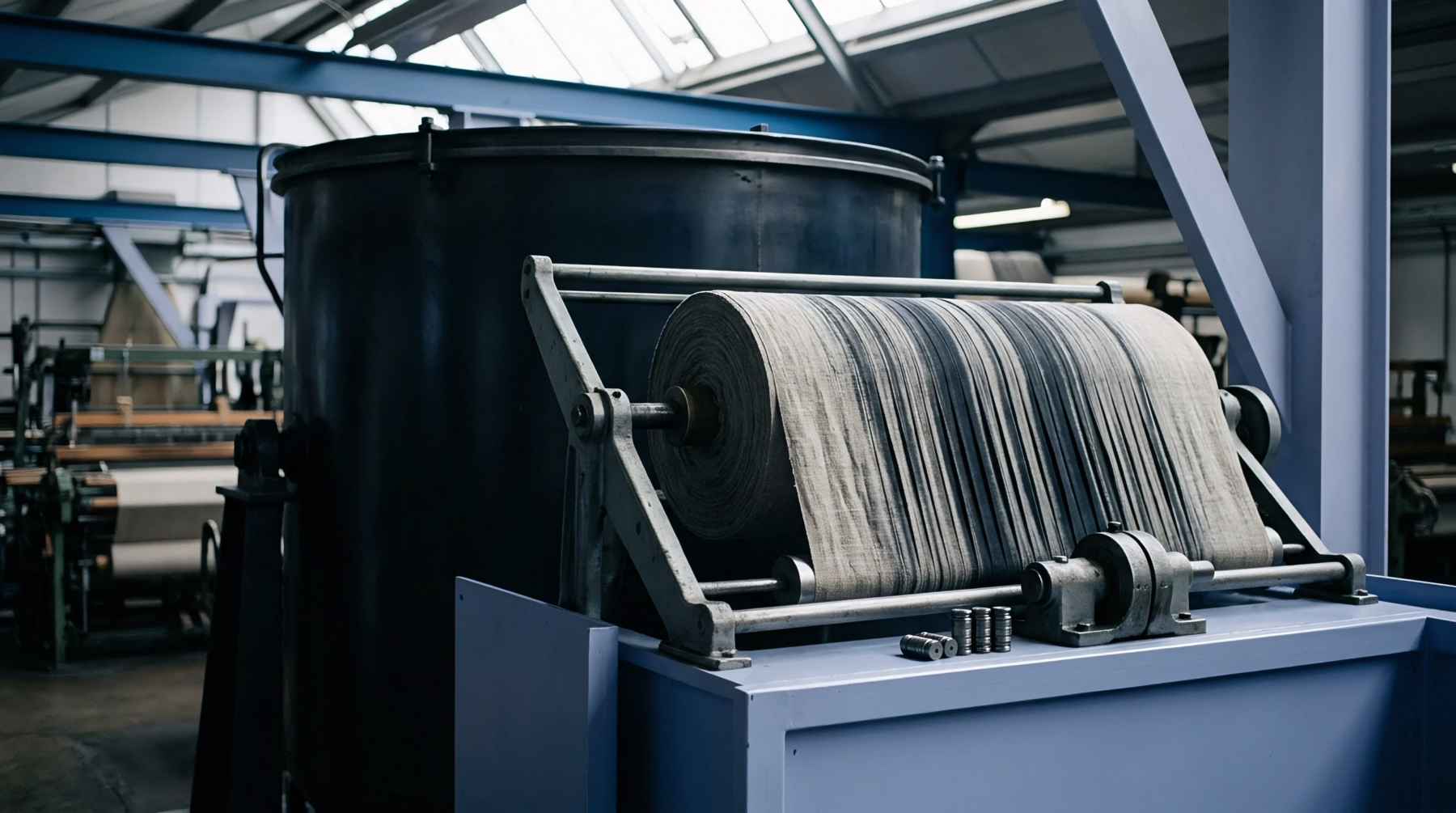
Fiber Tensioning
Mechanical adjustment of warp threads occurs during loom setup because unbroken flax strands demand precise stress limits to prevent brittle breakage while maintaining structural uniformity. Drawing in harness describes this specific preparatory phase where individual linen yarns are threaded through heddle eyes according to a predetermined draft plan. Workers must align each raw plant cellulose strand correctly to avoid crossing or friction points that weaken the final grey cloth.
Drawing in harness requires steady manual dexterity alongside visual verification of reed spacing to prevent subsequent warp line defects during high speed power weaving. Operators assess yarn tensile strength continuously during this alignment process since natural bast fibers possess variable elasticity compared to synthetic filaments. Improper alignment causes localized yarn abrasion when the heddle frames reciprocate, leading to immediate warp breakage and costly loom downtime on the production floor.
Drafting Protocol
Pattern geometry dictates the exact sequence of heddle shaft utilization inside the loom frame layout. Drawing in harness governs the spatial distribution of warp ends across the reed dents to achieve desired fabric density and weight per square meter. Master weavers inspect the finished drawing log against the original designer specification sheet to verify that end counts match buyer acceptance criteria.
Each individual shaft lifts specific warp subsets during the shedding cycle, creating the foundational interlacing matrix for plain or twill linen textiles. Technicians adjust the drop wire positions simultaneously with yarn threading to ensure warp stop motions activate correctly when a single fiber breaks. Strict adherence to the draft plan prevents pattern distortion in finished piece goods destined for apparel or household furnishing markets.
Export Compliance
Quality verification at the finishing stage relies heavily on initial setup precision documented during the preliminary yarn alignment phase. Drawing in harness influences dimensional stability and tensile strength ratings recorded in final inspection certificates issued before international shipment. Overseas buyers evaluate imported linen batches by measuring warp and weft density against agreed commercial standards rather than relying solely on mill declarations.
Inspectors reject consignments showing reed marks or irregular pick spacing that originated from faulty initial threading procedures on the production floor. Finished fabric grade reflects the meticulousness applied during preliminary harness preparation because downstream chemical bleaching and dyeing processes cannot correct structural warp alignment errors.