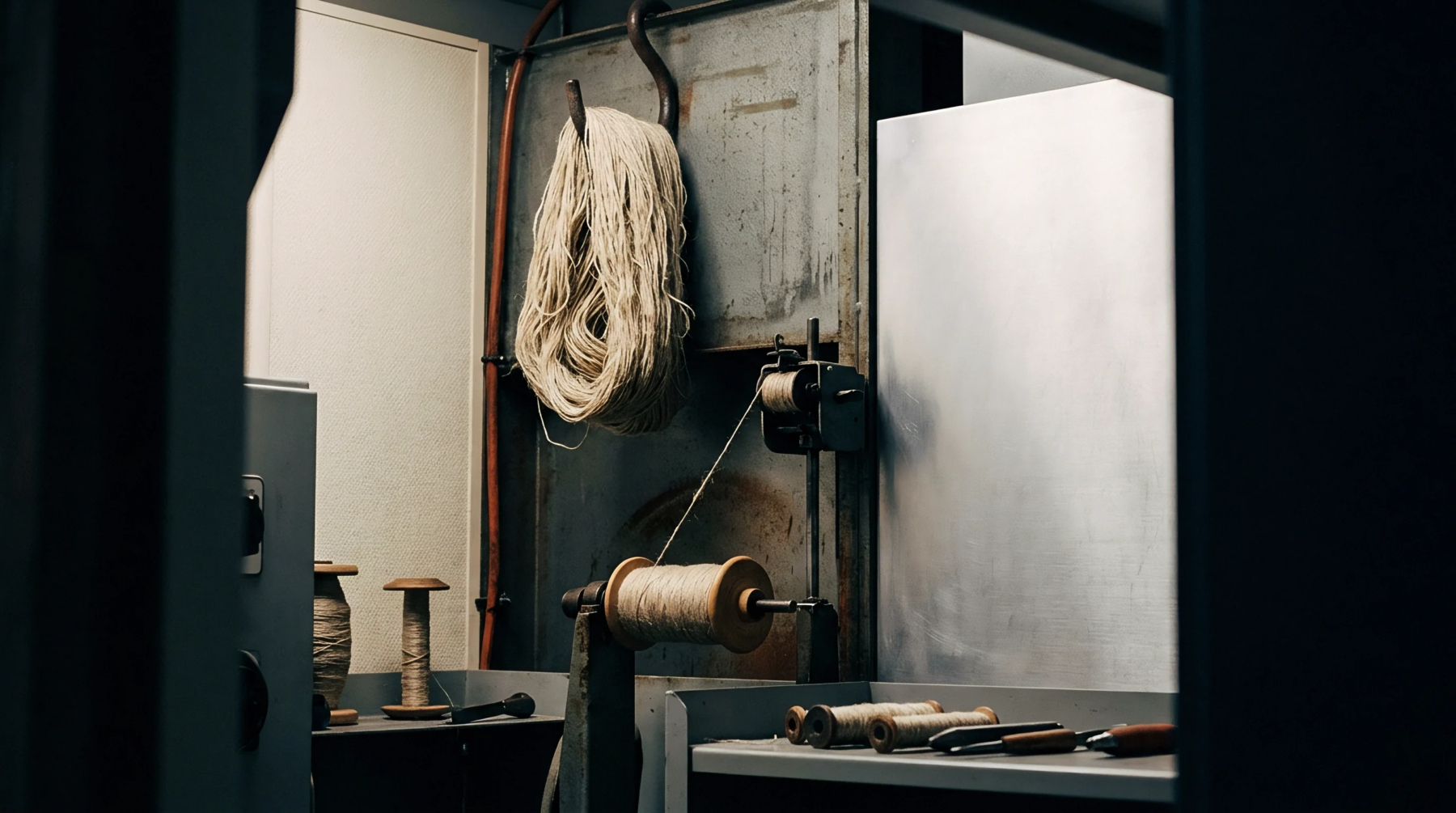
Fiber Alignment
Parallel assemblages of intermediate flax roving arrive from preceding carding machinery before the drawframe sliver undergoes continuous drafting rollers. This intermediate strand requires precise doubling operations to equalize mass variations along the linear density profile. Chinese spinning mills operate high-speed multi-head drafting machines where six or eight individual strands feed concurrently into the drafting zone.
Roller speed ratios create draft factors that stretch the combined material bundle while straightening bent technical fibers along the longitudinal axis.
Drafting Physics
Mechanical attenuation relies on differential surface speeds between front and back roller pairs within the drafting head. The drawframe sliver experiences inter-fiber friction forces that control the movement of short staple flax components during drafting zones. Breakage occurs when draft settings exceed natural fiber length distributions or fail to accommodate moisture fluctuations inside the mill environment.
Roller weights apply constant pressure to prevent uncontrolled floating fibers from creating thick or thin places in the final product.
Quality Verification
Technical inspectors record linear density measurements using gravimetric testing apparatus located beside the production line. The drawframe sliver passes through an automatic stop-motion sensor that halts delivery rollers whenever mass deviation exceeds factory acceptance thresholds. Laboratory technicians evaluate bulk samples against buyer specifications by weighing standardized lengths on analytical balances to calculate coefficient of variation percentages.
Final export documentation records these numerical outputs to verify compliance with contractual grade requirements before yarn spinning commences.