Production Method
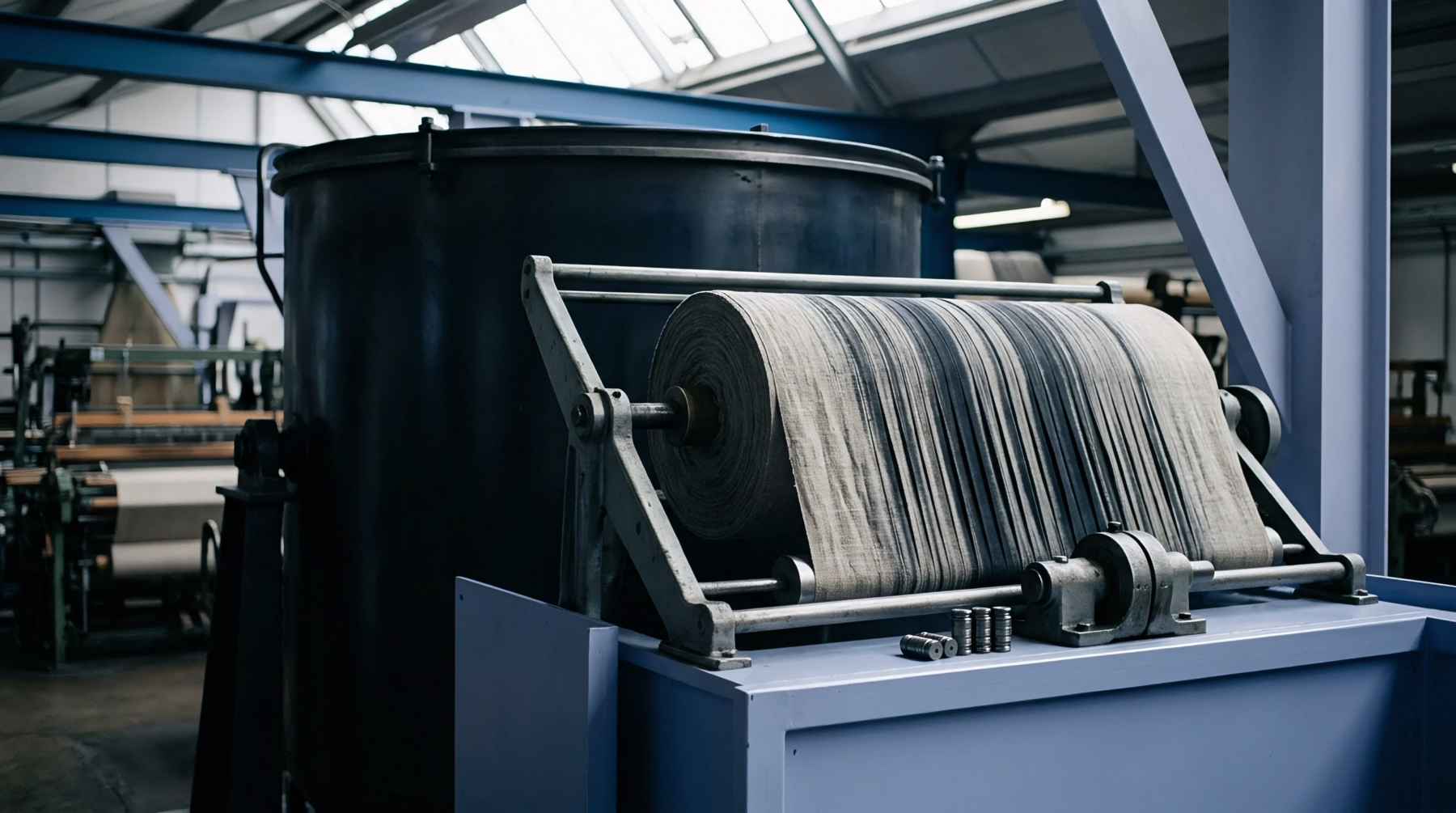
High speed winding machines transfer yarn from a creel onto a single large beam in one continuous operation. Large scale production of plain weave linen often utilizes direct warping because it handles high volumes of single yarn counts efficiently. This method creates the foundation for the weaving process by ensuring all yarns are parallel and under uniform tension.
Tension Control
Success in this stage requires individual tensioners for every end coming off the creel to compensate for the weight and drag of the flax yarn. Because flax is a brittle fibre, direct warping must operate at speeds that do not cause excessive friction or heat at the guides. Stop motions detect any broken yarn and halt the machine immediately to prevent gaps in the beam.
Consistent tension prevents the formation of slack ends during the later weaving stage.
Operational Limit
Suitability for specific fabric types depends on the total number of warp ends required for the loom. While direct warping is faster than sectional warping, it is usually reserved for simpler patterns or single colour warps. It requires a dedicated set of beams that are later combined in the sizing machine.
The efficiency of the loom is tied to the quality of this beam preparation.