Unprocessed Stock
Unretted or partially retted flax stems subjected to immediate mechanical shive removal represent a semi-processed intermediate material used for industrial yarns and non-woven mats. Stems pass directly through breaker rollers without extended field retting, producing stiff bundles containing residual woody core fragments. Decorticated straw serves as primary feed for mechanical decorticators in regional processing centers across northern China.
Coarse technical fibres extracted from this material enter technical textile markets rather than high-end apparel spinning chains.
Mechanical Extraction
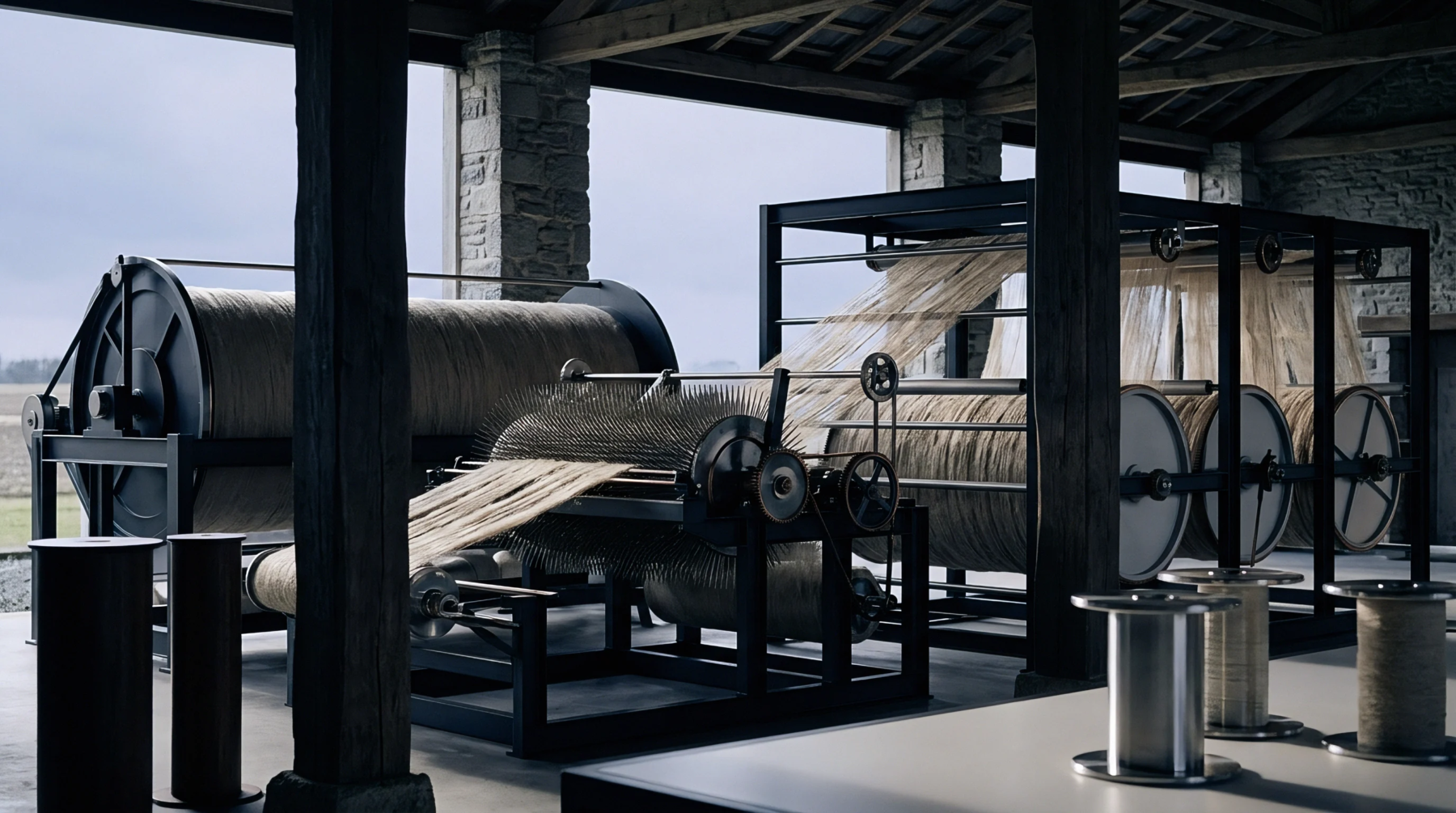
Fluted steel rollers crush the outer stem structures to shatter the brittle woody core while leaving bast fibre bundles intact. High-speed beaters and scutching turbines then strip away shive particles through centrifugal force and mechanical impact. Processing decorticated straw requires precise gap settings between carding pins to prevent excessive fibre breakage during cleaning.
Cleanliness levels depend heavily on stem dryness, as moist shives adhere tightly to bast bundles and resist mechanical separation. Dust extraction systems collect fine woody particles generated during high-speed crushing operations. Processed fibre streams undergo secondary carding to remove remaining cortical tissue before needle-punching or coarse spinning.
Modern mills monitor shive removal efficiency by weighing remaining impurities in samples taken after each extraction stage.
Fibre Yield
Quantitative output of usable bast fibre relative to initial raw stem mass determines the economic feasibility of decortication processing. High shive content reduces clean fibre yield to approximately twenty percent of raw stem weight. Industrial applications utilize the extracted fibre for geotextiles, automotive composites and coarse cordage.
Mill managers balance roller speed against fibre breakage to maximize technical fibre length while minimizing residual shive percentages.