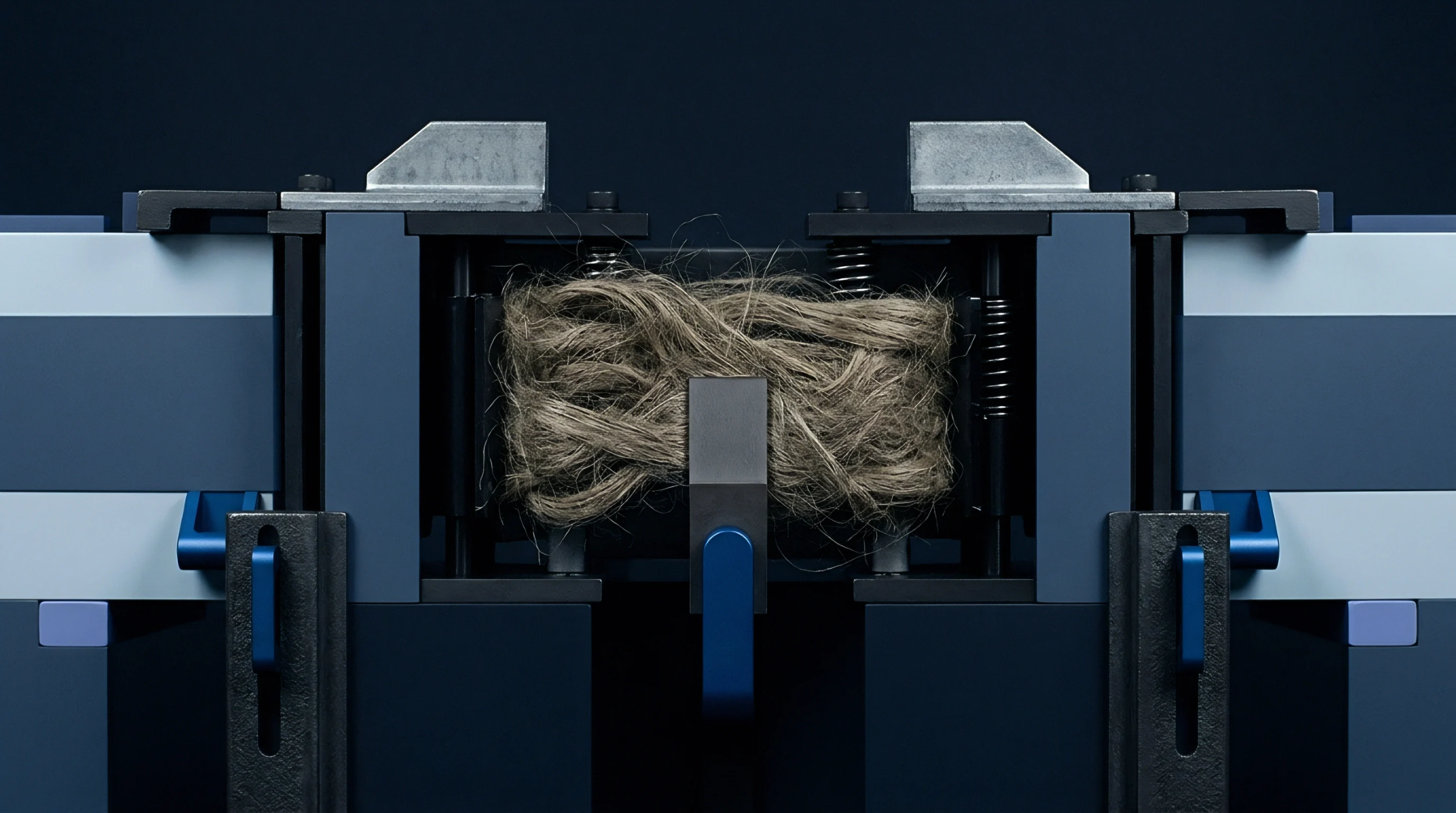
Jaw Geometry
Mechanical displacement during tensile strength testing introduces measurement errors by allowing specimen movement within clamping jaws. Clamp slippage occurs when flax yarn or woven linen fabric slides past jaw surfaces during force application in a tensile tester. Stiff linen yarns present high initial modulus and smooth surface wax, which cause high force concentration at the grip boundary.
If pneumatic or manual clamping pressure falls below the threshold needed to restrain unyielding bast fibers, the material shifts inside the clamp faces. Laboratory standards require monitoring jaw pressure and specimen displacement curves to detect unexpected movements during extension.
Error Recognition
Force-elongation curves recorded during standard tensile trials register artificial extension peaks when specimen displacement takes place within grips. Occurrence of clamp slippage yields falsely high elongation percentages and reduced breaking force readings on mill quality certificates.
Grip Modification
Surface modifications to clamp faces prevent specimen displacement without causing jaw breaks at stress points. Standard smooth steel jaw faces are often replaced with rubber-coated or capstan clamps when testing heavy linen fabrics or high-count flax yarns to eliminate clamp slippage. Increasing pneumatic pressure ensures uniform holding force across uneven yarn diameters.
Proper grip selection guarantees that tensile failure occurs within the gauge length rather than inside the clamping apparatus.