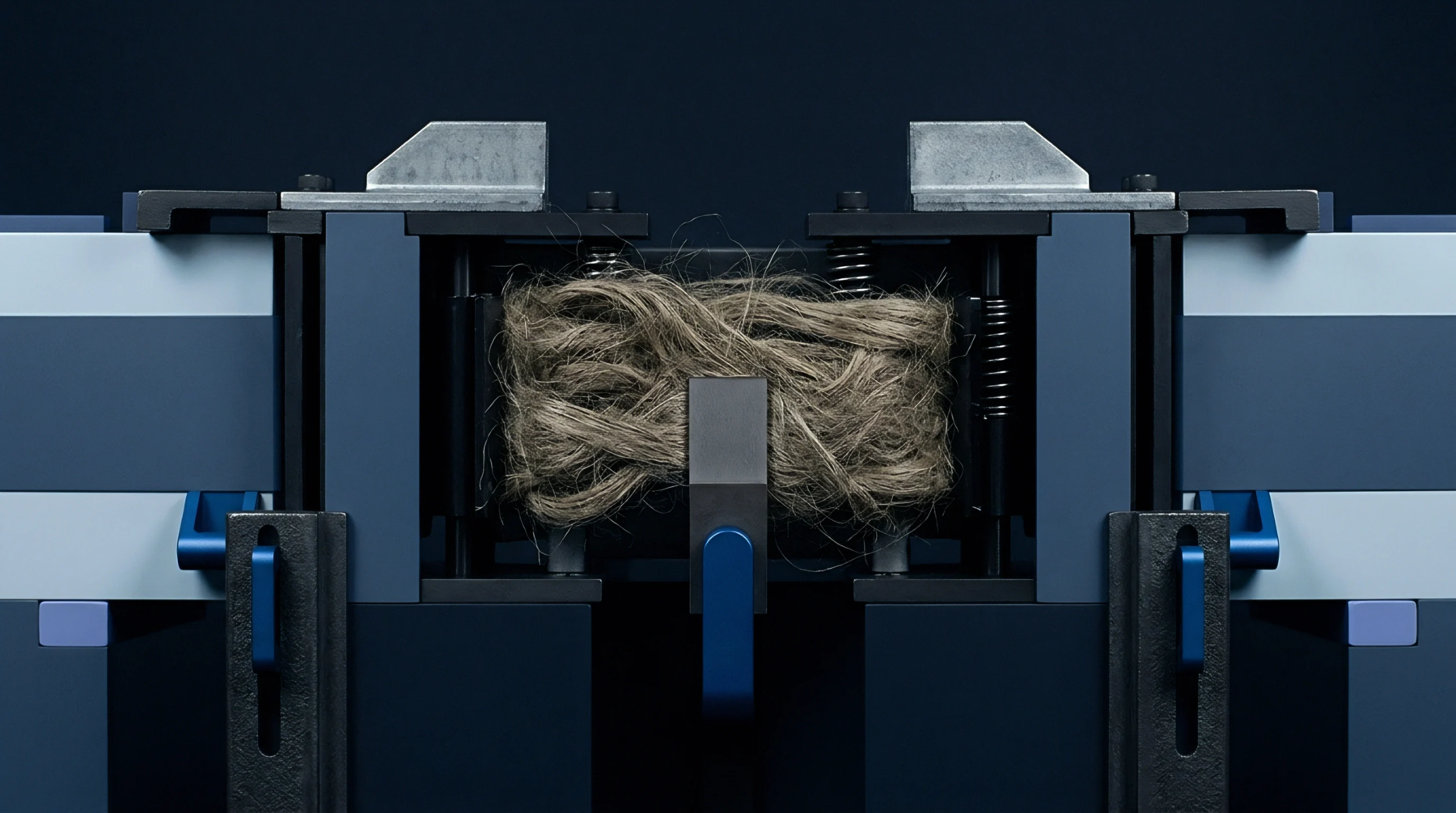
Pectic Breakdown
Biochemical and thermal separation processes govern the splitting of composite bast fiber strands into elementary cellulosic filaments. Processing lines rely on bundle dissociation to split coarse technical flax fibers into supple, spinnable groupings suitable for fine yarn production. The transformation governs the reduction of middle lamella pectin networks that glue adjoining cell walls together in unretted bast tissue.
Separation ceases when the natural adhesive compounds between individual cortical cells are completely dissolved or broken.
Mechanical Attenuation
Drafting rollers inside warm water spinning troughs shear the softened pectin matrix under continuous mechanical drawing forces. Water heated to sixty degrees Celsius plasticizes hemicellulose bonds within wet roving packages, facilitating bundle dissociation as flyer spindles insert twist. Flax slivers elongate steadily under differential roller speeds.
Chinese spinning facilities monitor attenuation ratios across wet spinning frames to balance yarn strength against filament diameter. Laboratory personnel enter resulting roving division metrics into spinning quality dockets. Effective fiber division allows spinners to reach yarn counts above sixty lea without risking dry fiber breakage or drafting choke.
Insufficient mechanical shear leaves fiber clumps intact, producing severe mass unevenness across the final yarn package.
Fineness Limit
Structural integrity boundaries prevent the division of flax bast fibers beyond single cell units. Excessive chemical bundle dissociation dissolves structural cellulose chains and ruins tensile capacity. Buyer acceptance criteria for wet-spun linen yarn set minimum tenacity thresholds that penalize over-dissociated raw material lots.
Fiber division stops at the elementary fiber boundary, where individual bast cells measure ten to twenty micrometers in cross-sectional width. Further degradation causes absolute yarn failure during package winding.