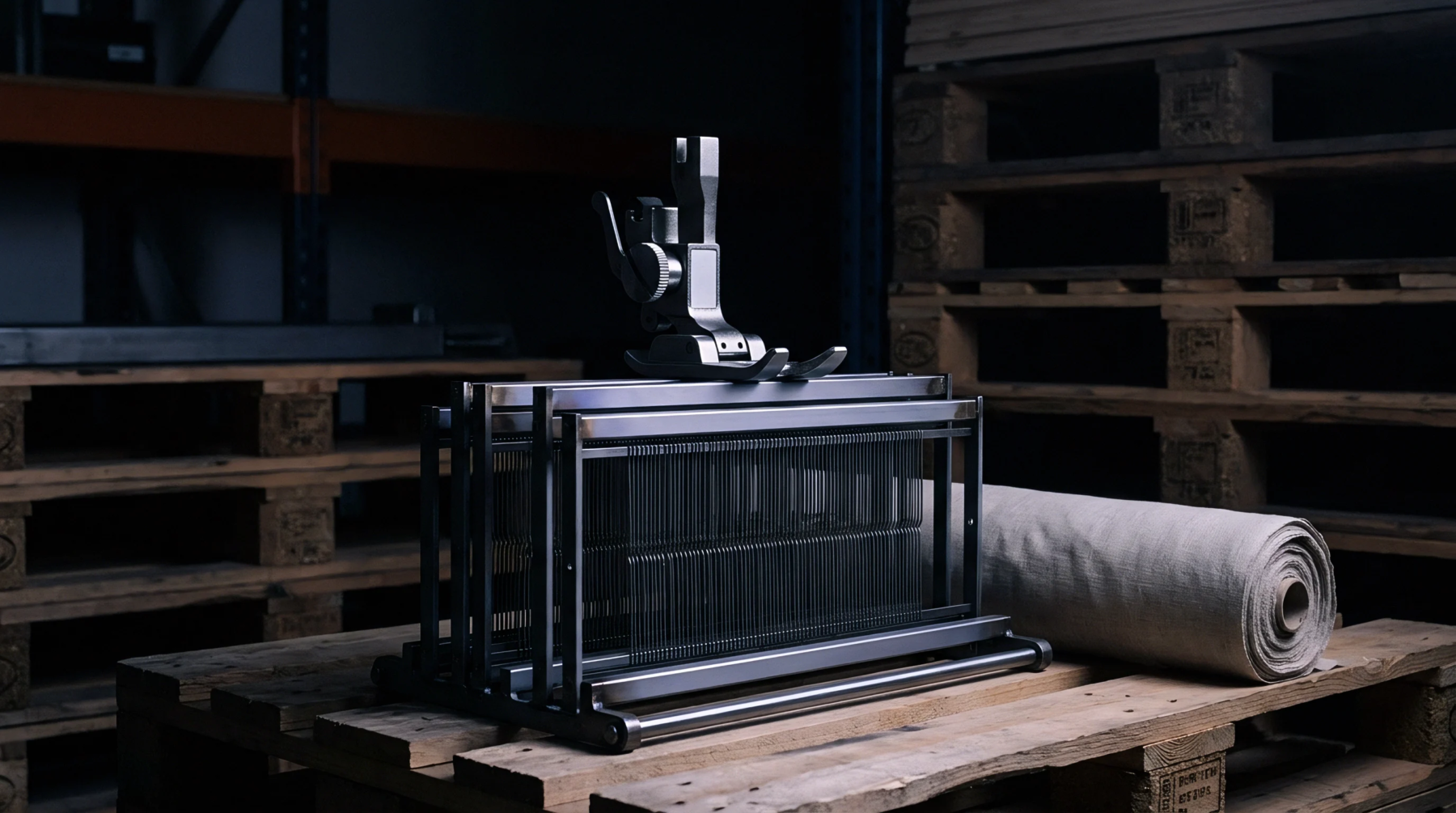
Weaving Synchronization
The mechanical coordination of heald frame movement and main nozzle activation governs the successful insertion of weft through the warp gap. Accurate air-jet shed timing ensures that the leading end of the yarn enters an unobstructed passage at the moment of peak pressure. Early or late delivery causes the weft to strike closing warp ends, resulting in bent picks or machine downtime.
Operational Sequence
Calculation starts with the degrees of rotation on the loom encoder where the shed reaches sufficient height. This interval for air-jet shed timing must account for the high moisture content in linen yarns which increases weight and air resistance compared to cotton. The delay between signal transmission and the solenoid valve opening requires a lead time measured in milliseconds to ensure the burst coincides with the open shed.
Adjustments are often made in two-degree increments to find the exact point where the filling yarn reaches the receiving side without tension spikes.
Production Impact
Efficiency drops when the duration of the air pulse exceeds the physical window of the shed opening. If air-jet shed timing drifts due to belt wear or sensor lag, the fabric surface develops loops and fringes that require manual repair. Mill managers monitor this parameter on the weaving machine controller to maintain consistent output quality across multiple shifts and reduce waste.
Proper settings reduce air consumption by avoiding wasted bursts against a closed shed.