Mechanical Tensioning
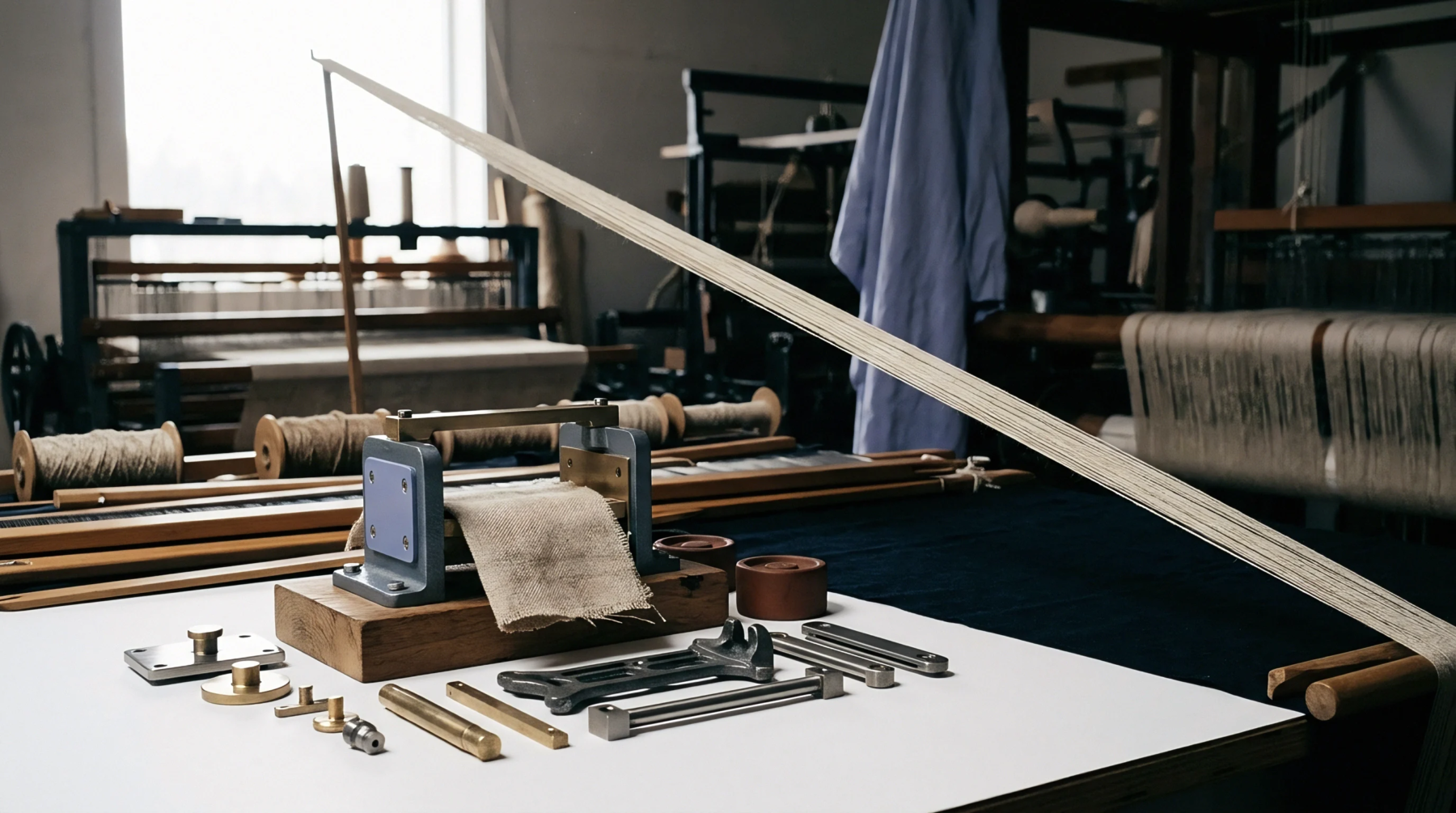
Direct mechanical compensation governs the operational mechanics of an active backrest during the weaving stage in Chinese linen mills. High-velocity shuttle looms demand dynamic adjustment mechanisms to counteract warp beam diameter reduction over continuous production cycles. Tension variance across flax yarn leads directly to warp breakage when stationary weighting configurations remain fixed throughout beam exhaustion.
Automated sensors measure warp elongation continuously and transmit signals to servomotors linked directly to the rear beam assembly. Shifting the physical position of the backrest roller dynamically maintains constant warp tension from the full beam down to the empty core. Mill technicians calibrate these responsive displacements against specific yarn count parameters established in the technical specification sheet.
Warp Control
Fabric quality parameters depend entirely upon stable warp tension during shed formation on pneumatic looms. Flax fibres possess low elasticity compared to synthetic filaments, which creates severe vulnerability to cyclic stress fluctuations during heddle displacement. Dynamic positioning of the oscillating roller absorbs the excess slack generated during heddle reversal and prevents uneven beat-up density in the grey cloth.
Operators verify warp stability through continuous audit of the electronic load cells mounted on the backrest brackets. Excessive tension variation produces warp stripes in finished linen goods, which reduces the commercial grade from first-quality export fabric to secondary stock. Production logs record tension deviations exceeding predefined thresholds to trigger immediate corrective maintenance on the servomotor drive units.
Export Grade
Finished linen destined for international markets undergoes rigorous physical testing to verify tensile strength and dimensional stability. Fabric inspection protocols evaluate whether dynamic tension regulation successfully eliminated warp density irregularities across the entire bolt length. Buyers establish strict acceptance criteria for breaking load performance, which relies heavily on uniform yarn spacing achieved during the weaving process.
Uncontrolled tension fluctuations during grey cloth production weaken the final textile matrix and cause failure during standard grab tensile tests. Mill quality management systems certify compliance with buyer specifications by documenting the operational efficiency of the mechanical feedback loop throughout the weaving run.