Operational Tension
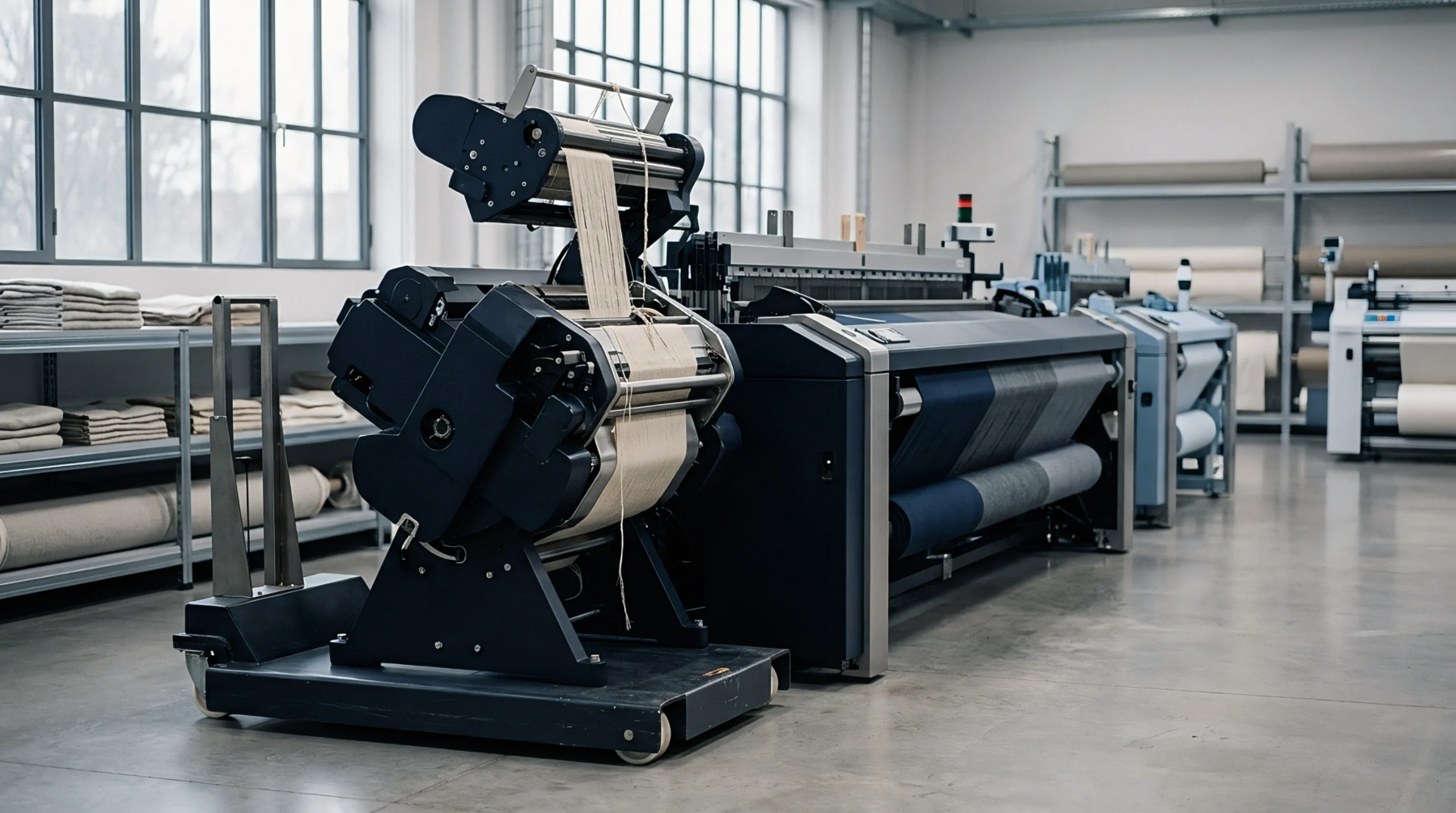
Mechanical regulation of warp tension determines the quality of flax cloth throughout the weaving cycle by controlling the height and pivot point of the whip roll. This whip roll geometry governs the distance between the warp beam and the fell of the cloth. Correct positioning maintains uniform force as the beam diameter decreases.
Misalignment creates variations in yarn density that remain visible after final finishing processes.
Kinematic Adjustment
Operators shift the position of the whip roll relative to the loom frame to compensate for different yarn counts or weave structures. This movement alters the wrap angle of the warp yarns as they transition from the let-off system toward the harness frames. High wrap angles increase friction and dampen oscillation during shed formation.
Precise settings ensure that peak tension spikes do not exceed the breaking strength of natural linen fibres. Changes in this configuration alter the physical properties of the fabric produced on a specific loom.
Quality Correlation
Buyers verify these mechanical settings by examining the uniformity of cloth density in the grey state before dye application or finishing. Differences in warp tension patterns result in uneven absorption of chemical agents during bleaching or dyeing sequences. Consistent performance requires that the whip roll remains parallel to the breast beam across the entire width of the loom.
Failure to maintain such alignment introduces permanent deformities into the finished textile roll.