Volumetric Proportion
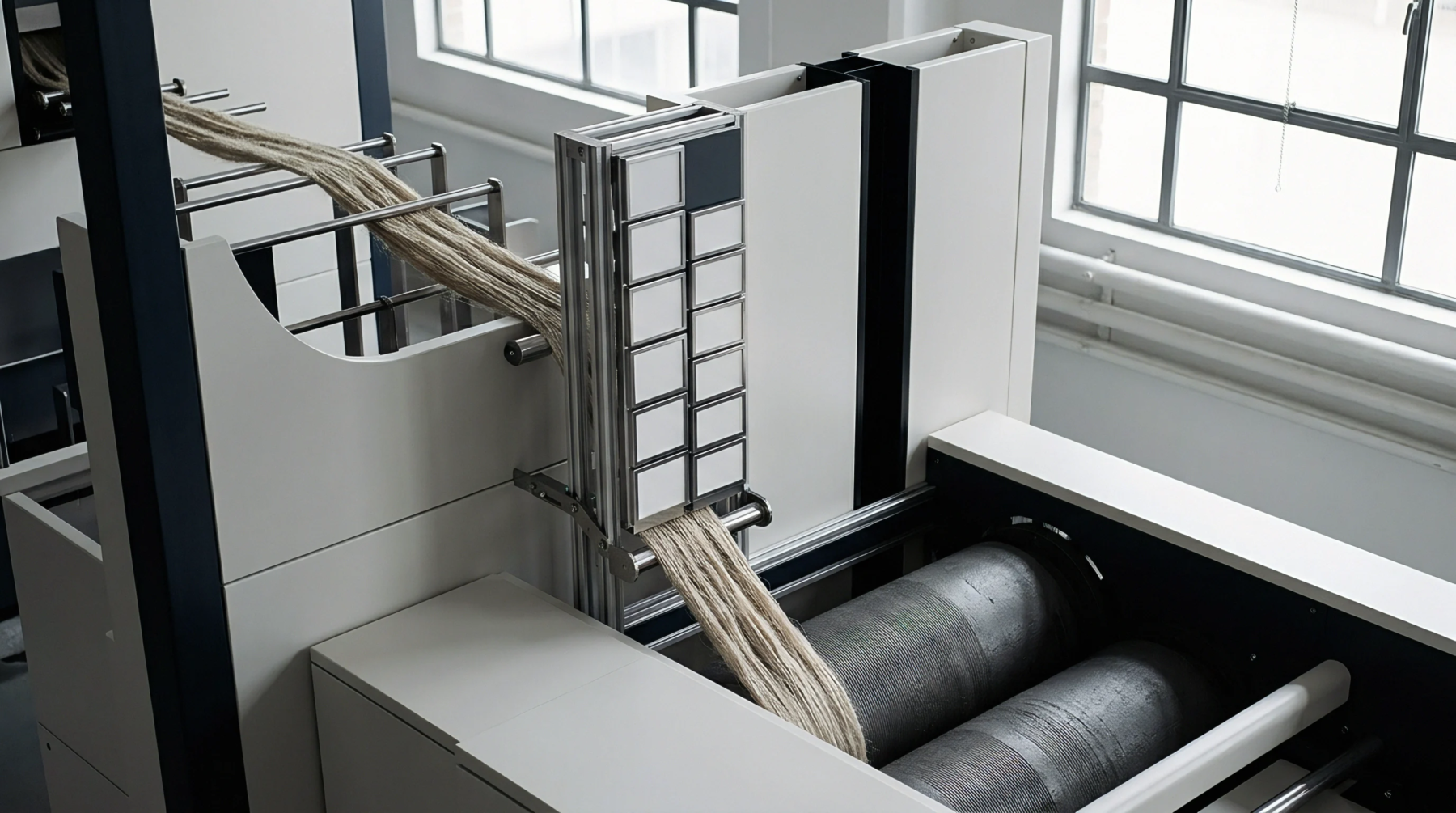
Quantitative liquid-to-solid mass proportions maintained in spinning trough baths govern chemical softening during wet ring spinning of flax yarns. The wet frame liquor ratio defines the mass relationship between hot water bath solution and roving throughput during fine linen yarn production. Maintaining correct liquor volume ensures uniform heat transfer and controlled pectin softening of flax rovings immediately prior to drafting.
Pectin Softening
Fluid dynamics within the spinning trough determine temperature consistency and chemical dissolution rates across drafting zones. Flax roving passes through hot water maintained between sixty and seventy degrees Celsius to soften middle lamella pectins, enabling elementary fibres to slide past one another during drafting. A liquor ratio that is too low results in rapid accumulation of dissolved pectins and thermal fluctuations, which causes uneven drafting, yarn thickness variations, and high end-break rates.
Automatic level controllers and continuous overflow pumps regulate freshwater replenishment and liquor replenishment to stabilize bath temperature and chemical concentration.
Control Limit
Operational bounds for bath replenishment rates prevent excessive thermal energy consumption and water waste. Ratios exceeding fifteen liters of liquor per kilogram of roving waste thermal energy, while ratios below eight liters per kilogram cause pectin redeposition on spinning frame rollers.