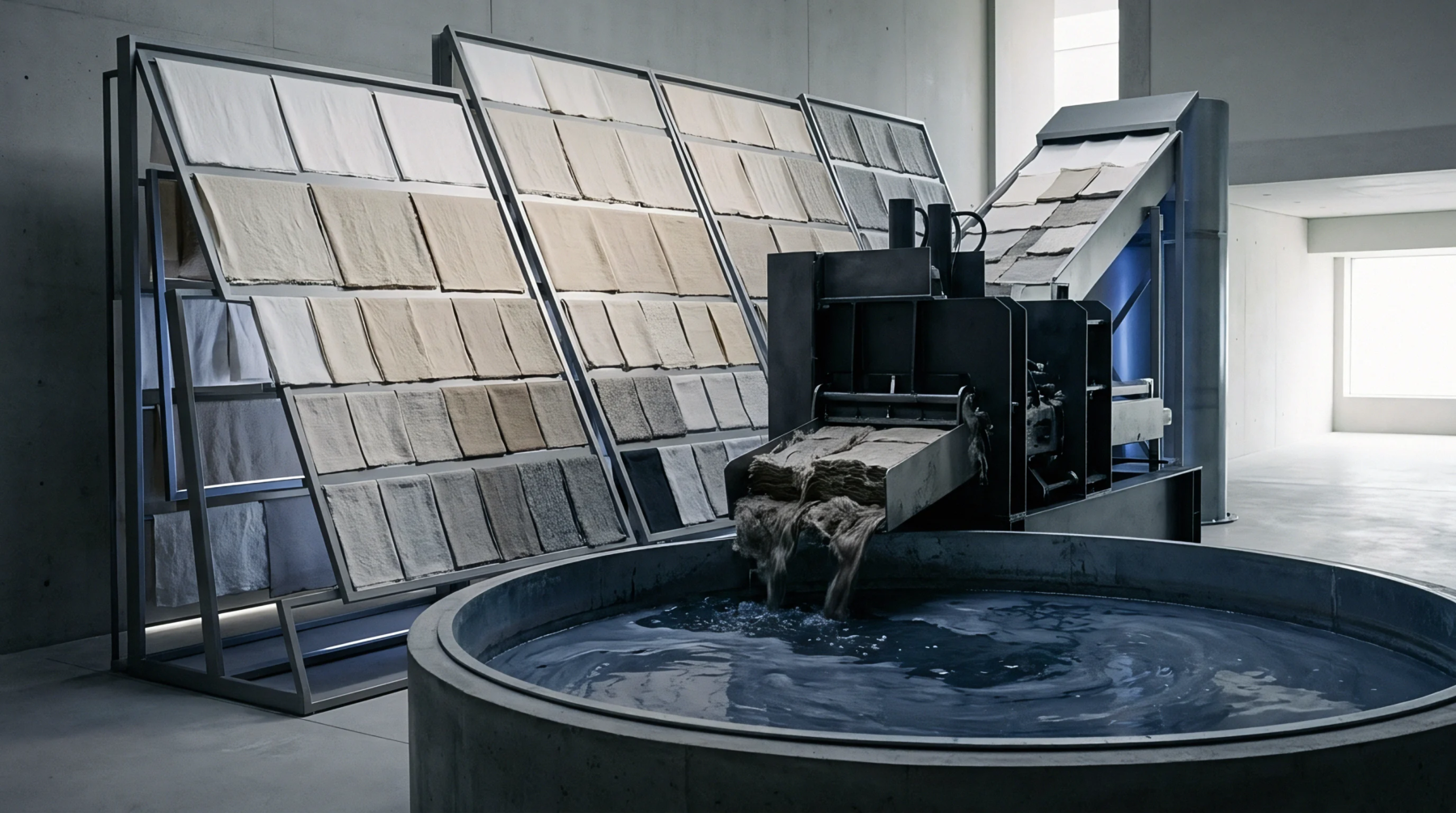
Splicing Instrument
The pneumatic hand-held or machine-mounted device that uses a combination of compressed air and a fine water mist to join the ends of stiff flax yarns is a standard tool in modern linen spinning and winding mills. The water assisted pneumatic splicer softens the natural pectin binder within the flax fibres, allowing them to bend and mingle under the force of the compressed air. This process creates a knotless joint that is nearly as strong as the parent yarn but has a far smaller profile than a traditional knot.
Mechanical Process
Executing a joint begins when the two yarn ends are placed into the splicing chamber, where they are trimmed to a specific length and exposed to a burst of compressed air to untwist the fibres. Following this preparation, a precise dose of pressurized water mist is injected into the chamber to increase fibre flexibility. The secondary burst of air then intermingles the moist fibres, and the subsequent retwisting action locks them into a cohesive structure.
This moisture-assisted treatment is essential because dry flax fibres are too stiff to mingle effectively, leading to weak joints that fail under loom tension.
Quality Criteria
Evaluating the splice quality involves measuring both its tensile strength and its diameter to ensure it meets buyer specifications. A successful splice must not exceed the parent yarn diameter by more than ten percent. This dimension control prevents the joint from catching during subsequent fabric production and finishing operations.