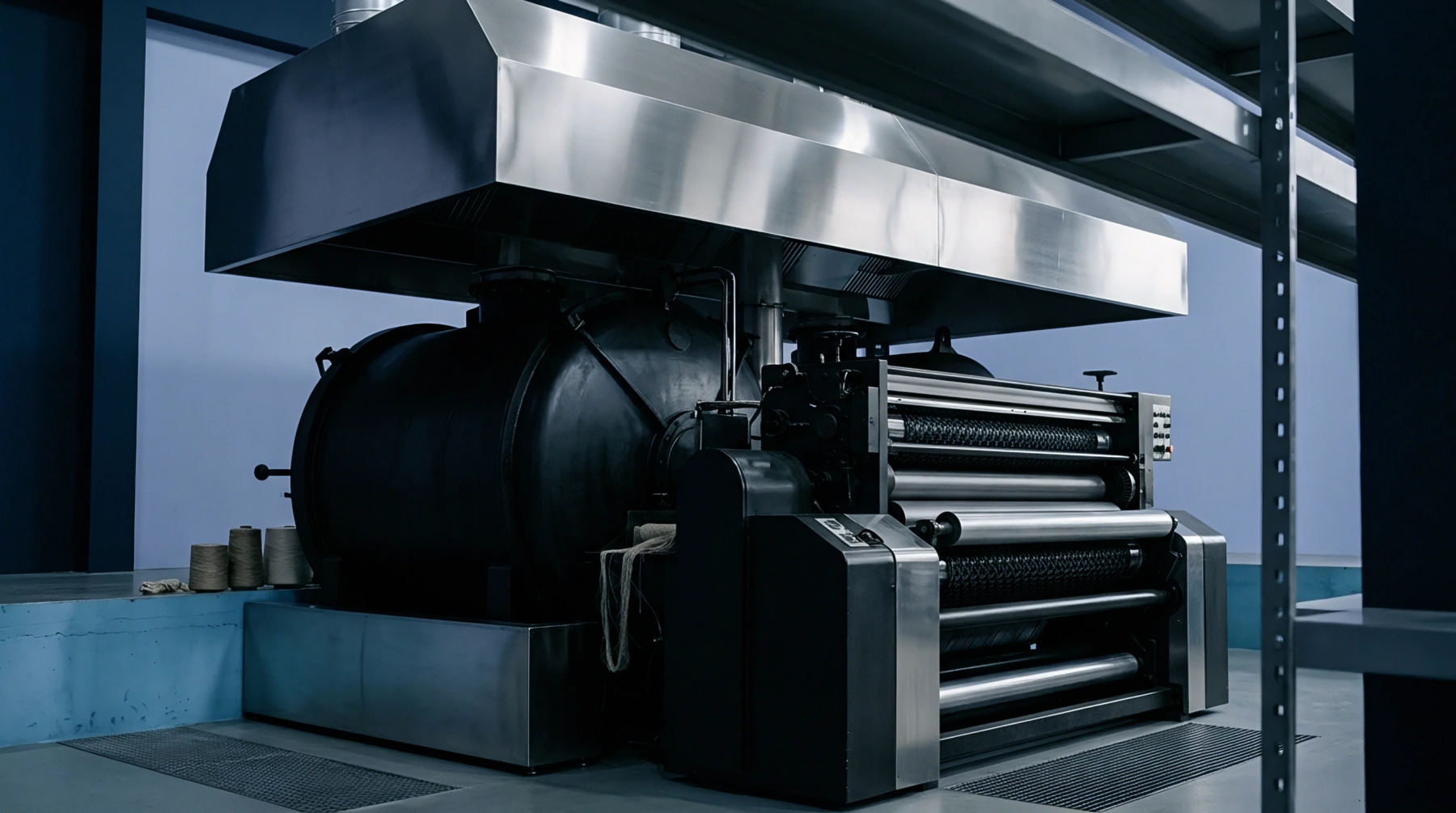
Kinetic Enhancement
Advanced wet processing technologies apply high frequency acoustic fields to liquid media to accelerate chemical diffusion and reaction rates at the fiber surface. In the bleaching and scouring of linen textiles, ultrasonic cavitational mass transport utilizes the energy from imploding micro-bubbles to force processing chemicals deep into the flax fiber bundles. This acoustic method reduces the processing time and temperature required for traditional wet finishing stages.
It stops being effective when the liquid viscosity becomes too high to support stable cavitation.
Microscopic Mechanism
The acoustic waves generate rapid cycles of compression and expansion that form tiny vapor bubbles in the liquid. When these bubbles collapse, the resulting ultrasonic cavitational mass transport creates localized high-speed micro-jets of liquid that strike the flax fibers. This mechanical action breaks up the boundary layers of liquid on the fiber surfaces, allowing faster penetration of hydrogen peroxide or sodium hydroxide.
The rapid movement of fresh chemical to the reaction site accelerates the removal of pectins, hemicelluloses and lignin from the bast structure.
Wet Processing Efficiency
By accelerating the mass transfer, mills can reduce the consumption of process steam and chemical reagents. This technology operates continuously in specialized open-width washing and scouring machines, lowering overall energy requirements.