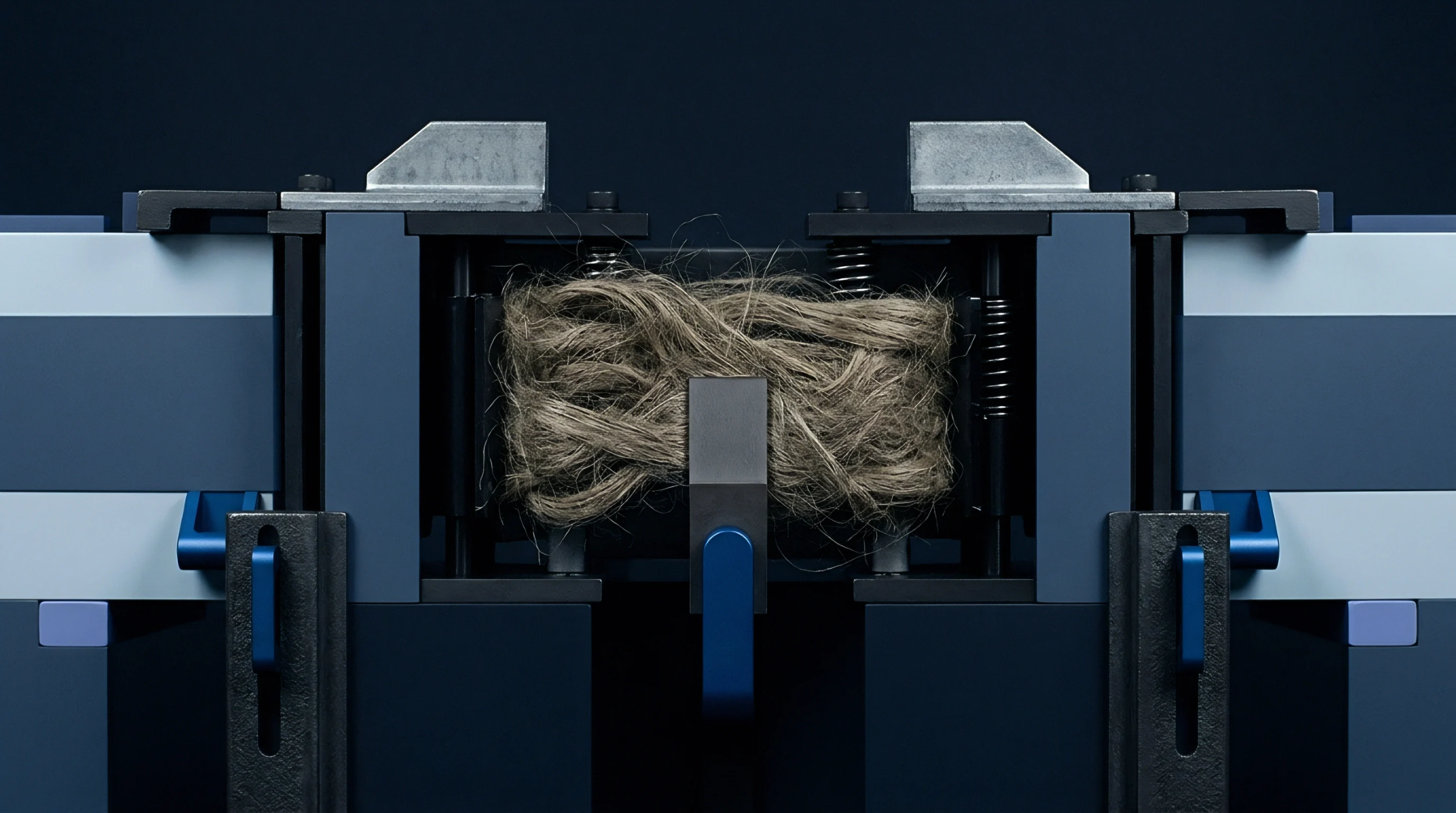
Fibre Specification
Raw flax measurement defines the anatomical width of individual stalks as they exist prior to mechanical decortication. The ultimate fibre diameter establishes the physical limits of cell wall thickness and luminal space, governing the potential for fineness in the subsequent yarn. Mill operators track these values to predict spinning performance when raw straw moves through breaking and scutching machinery.
Variations in soil nutrients and plant density create natural differences across harvest lots that influence the final yield of line fibre.
Measurement Protocol
Laboratory assessment quantifies this structural dimension through cross-sectional imaging under a microscope. Technicians prepare slides from middle stalk segments to capture the range of cellular development across a representative sample. These readings occupy the technical datasheet that accompanies export lots from the primary processing facility.
Quality control teams compare this physical property against spinning machine settings to adjust roller pressure and drafting force. Consistency in these dimensions allows the spinning frame to maintain tension without snapping the brittle plant cells during high speed operation.
Procurement Constraint
Commercial contracts define acceptable tolerances for raw material characteristics to ensure the output cloth meets downstream requirements. A buyer specifies a narrow range for this variable to guarantee the uniformity of the greige fabric surface. Mills reject shipments that fall outside this documented threshold because inconsistent diameters cause irregular torque in the twisted yarn.
High values indicate coarse material suitable for heavy canvas or industrial textiles whereas lower values satisfy the demands for fine linen shirting. This parameter serves as the primary technical boundary for determining whether a particular batch of flax fibre enters a high value supply line or moves toward lower grade paper production.