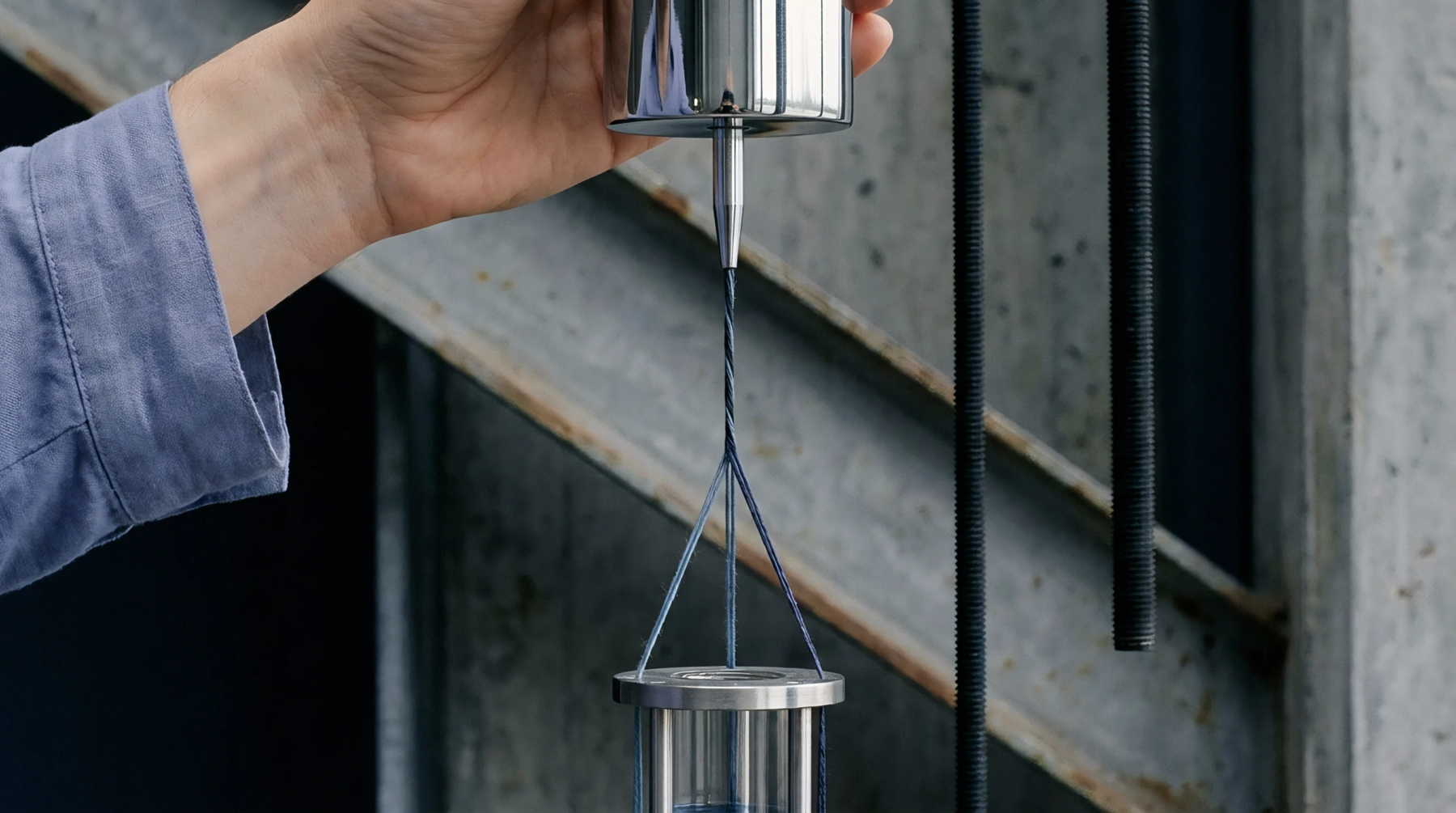
Fiber Tension
Adjusting mechanical resistance sensors on wet spinning frames ensures consistent draw ratios for flax roving passing through thermal water baths. Flax fibers require precise interfacial drag measurement during high speed drafting operations because raw bast variations alter slippage inside water troughs. Mill technicians perform tensiometer calibration against dead weights suspended from micro pulleys prior to morning shift changes.
Mechanical drift within the piezoelectric load cell alters millimeters of deflection per gram of pull during continuous wet stretching. Production managers record verified output voltages inside daily wet spinning logs to satisfy buyer tensile strength agreements.
Yarn Verification
Testing dry linen yarn batches demands absolute zero error on digital force transducers mounted above ring spinning spindles. Operators evaluate breaking tenacity across ten consecutive bobbin pulls before export documentation receives final sign off. Buyer acceptance thresholds allow zero point five percent variance from baseline breaking loads specified in purchase contracts.
Mill internal standards maintain tighter tolerances than commercial purchase orders to prevent excessive thread snapping during high density weaving. Quality supervisors archive electronic calibration certificates inside centralized plant servers alongside humidity logs from conditioning rooms.
Cloth Standard
Fabric tensile testing machines evaluate warp and weft breaking strength on finished linen bolts before garment manufacturing distribution. Technicians clamp woven swatches into pneumatic grips connected to calibrated load frames running at constant extension rates. Cloth grade classifications depend entirely on force displacement curves recorded during grab test procedures defined in textile standards.
Mill testing protocols differ from apparel brand specifications regarding jaw pressure limits and ambient testing temperatures. Final shipping manifests list exact pound force ratings alongside lot numbers to guarantee compliance with international textile import regulations.