Frictional Alternation
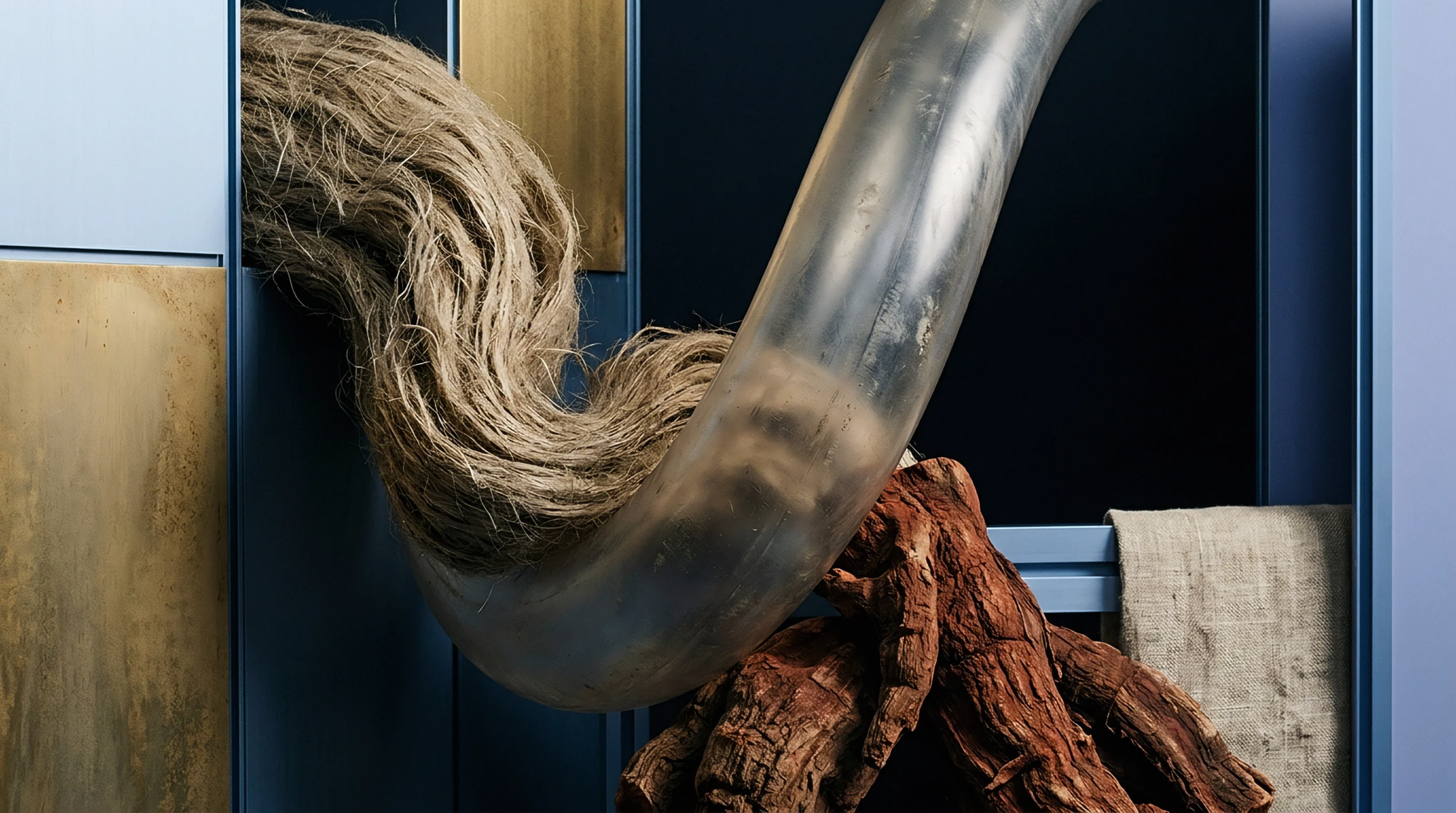
A jerky, discontinuous sliding behavior occurs when the static friction between two contacting surfaces exceeds the dynamic friction during movement. In the wet spinning of linen, stick slip motion can occur when flax fibers are drawn out through the drafting rollers. This erratic movement happens when fibers temporarily bind together before suddenly releasing and sliding forward.
The resulting uneven draw creates alternating thick and thin regions along the length of the spun yarn. Spinners must control this frictional instability to ensure that the yarn has a uniform thickness and remains strong during weaving.
Yarn Defect
An irregular fiber flow during drawing directly causes periodic mass variations in the final textile strand. High stick slip motion leads to yarn breakage because the thin regions created by the jerky motion cannot withstand the winding tension. Testing the yarn on an evenness tester reveals the characteristic sinusoidal variation caused by this phenomenon.
The mill monitors these test charts to detect drafting roll wear or improper lubrication of the machine bearings.
Process Correction
A change in drafting speed or pressure helps to eliminate the sliding instability. When operators adjust the pressure on the nip rollers, they minimize stick slip motion and restore a smooth fiber flow. This adjustment is documented on the machine maintenance card to maintain standard operating conditions.