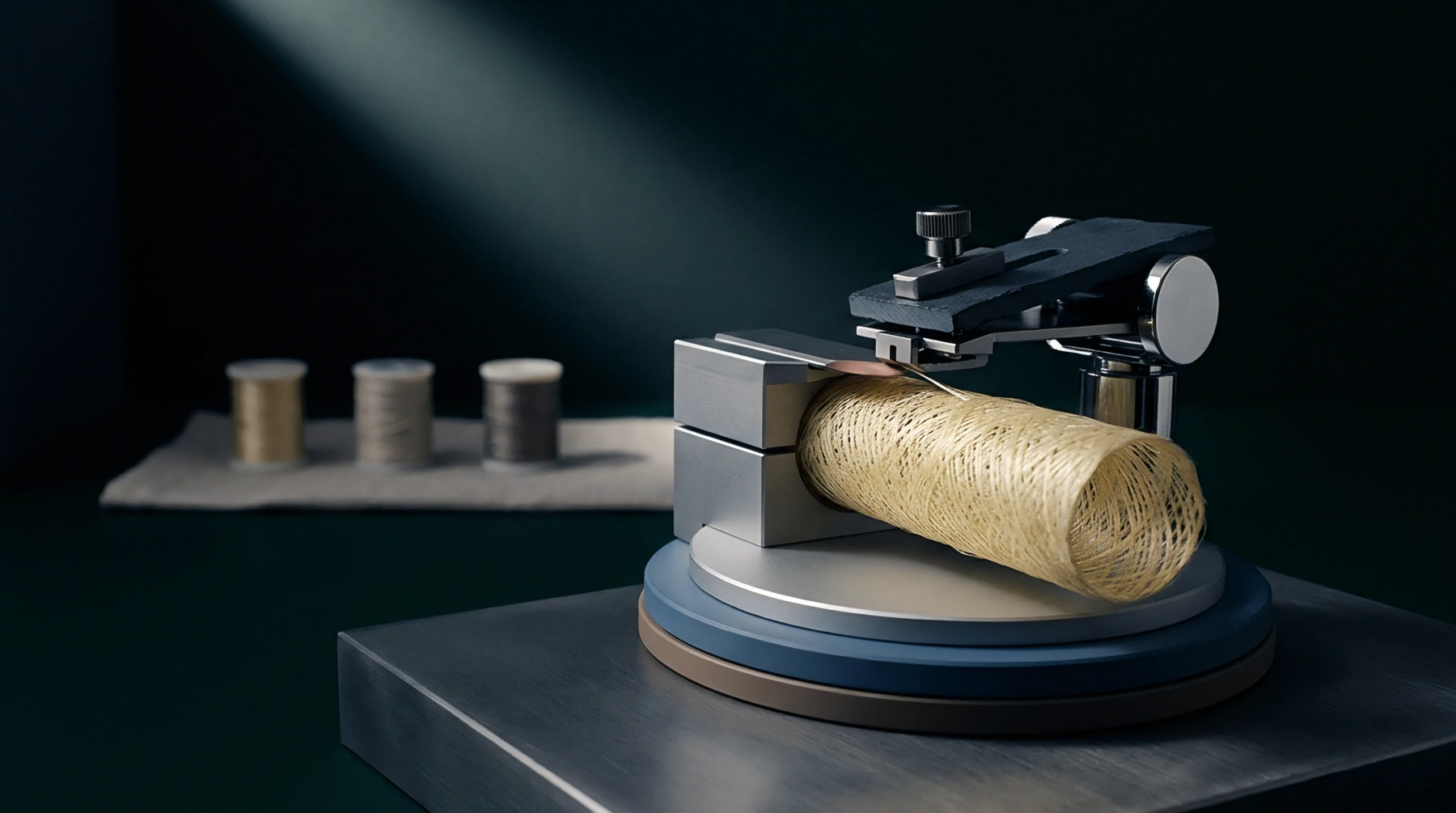
Slicing Instrument
Precision cutting instruments produce the ultra-thin specimens required for high-resolution optical microscopy. A rotary microtome operates by translating a rotary handwheel action into a precise linear movement of the specimen across a fixed steel or glass knife. In linen laboratories, this device is used to slice embedded flax bundles into wafers measuring only a few micrometres in thickness.
These incredibly thin slices allow light to pass through the specimen, enabling clear visualization of the fibre walls and lumen structures. The consistency of these slices is paramount for the subsequent computerized image segmentation and analysis. Technicians regularly calibrate the instrument to maintain a deviation of less than one-tenth of a micrometre across the entire sample batch.
Sectioning Operation
Stable mechanical design prevents thickness variations between successive cuts of the embedded fibre block. When operating the rotary microtome, the technician advances the sample holder in increments as small as one micrometre. This mechanical precision relies on a sturdy feed mechanism that resists the physical forces generated during cutting.
Proper adjustment of the knife angle minimizes specimen distortion and prevents surface scratches that would otherwise corrupt the digital imaging process.
Specimen Quality
Blade wear and incorrect speed produce sectioning artifacts such as compressions or tears in the flax wafer. These defects distort the apparent thickness of the cell walls and lead to inaccurate grading. Ensuring that the rotary microtome is fitted with a sharp blade and operated at a uniform speed is therefore critical for obtaining valid datasets.
Clean sections prevent the misclassification of premium long-staple flax imports.