Structural Lock
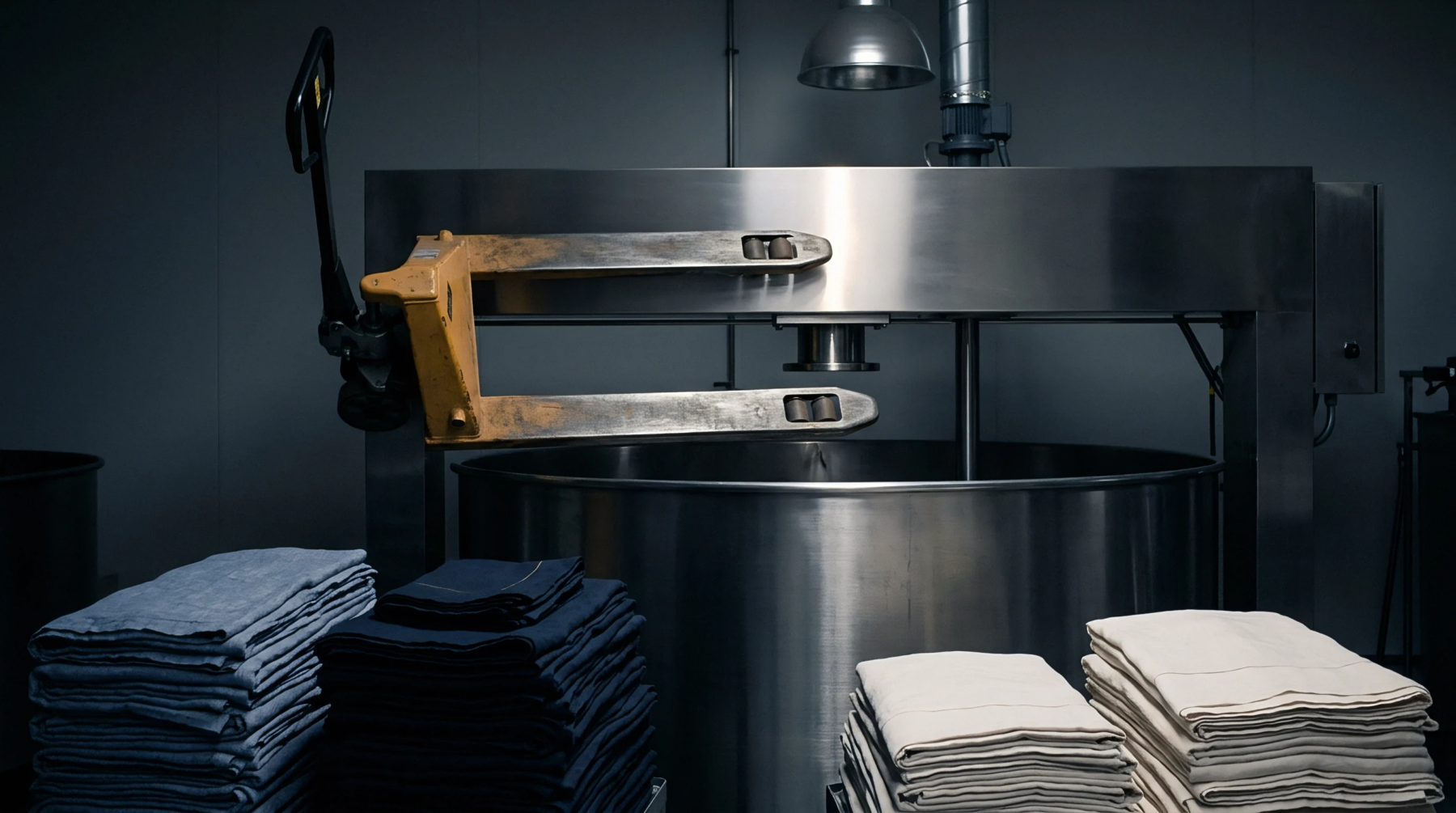
Interlocking and settling of warp and weft yarns in a simple over-and-under pattern when tension is released and wet finishing is applied. During this process, the plain weave consolidation stabilizes the fabric structure by locking the flax fibers into their permanent positions. This transition reduces the porousness of the linen cloth and increases its overall resistance to slippage.
The result is a denser, more durable fabric with a characteristic smooth hand feel.
Wet Processing
Industrial wet finishing, which includes scouring, bleaching, and laundering, drives this structural shift. In Chinese weaving mills, raw cloth comes off the loom under high tension, leaving the yarns in an open and unstable state. Subjecting the fabric to hot water and mechanical agitation allows the linen yarns to expand and shift into their lowest-energy configuration.
This plain weave consolidation increases both the warp and weft crimp, which prevents the yarn from sliding when the finished garment is worn.
Seam Security
Quality inspections assess this structural density by testing for yarn slippage at the seams. Fabric that has not undergone sufficient plain weave consolidation remains vulnerable to distorting under low stress. Buyers require the mill to log these density values after wet treatment to ensure long-term structural integrity.