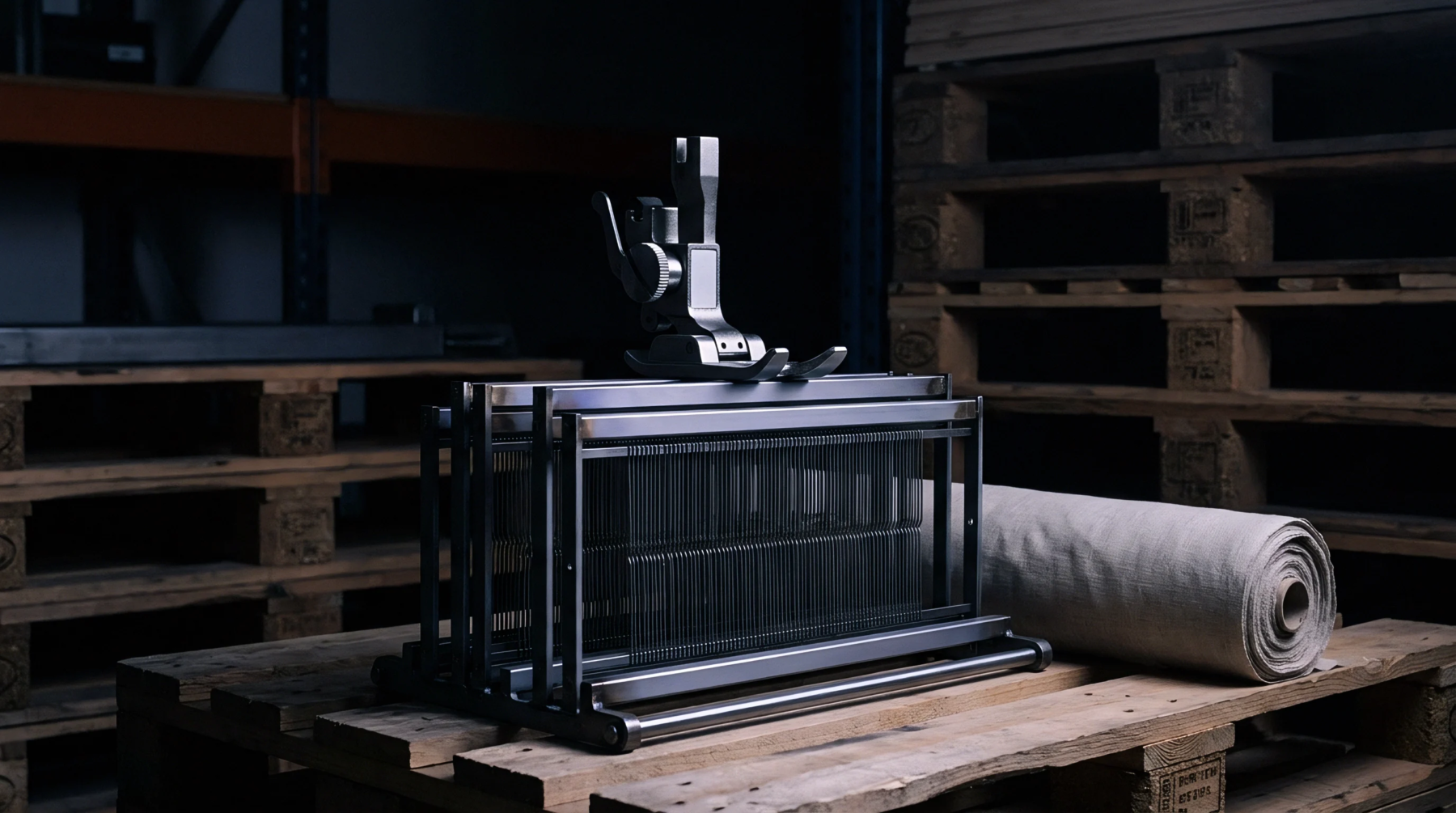
Weave Disruption
Incorrect weft yarn insertions across the warp shed constitute localized pattern disruptions in woven cloth construction. Loom sensor failures or improper yarn tensioning create mispick faults when a pick is missing, doubled or inserted out of sequence during shed formation. Linen weaving operations encounter these defects frequently when processing stiff, uneven flax yarns on high-speed looms.
The classification covers pattern errors in plain, twill or dobby weaves and stops where continuous missing picks form long structural gaps in the fabric roll.
Loom Mechanism
Yarn breakage at the insertion nozzle or rapier gripper causes the filling insertion system to miss a designated shed cycle. Optical weft feelers detect missing picks and trigger automated loom stop motions to halt weaving. When electronic feelers fail or operate with improper sensitivity, the loom continues running and inserts subsequent weft picks out of pattern sequence.
Weft storage feeders with incorrect tension settings also cause double picks by allowing two filling yarns to enter the shed together. Weavers repair these weaving defects by manually unpicking the incorrect filling passes and re-engaging the pick-finding mechanism on the loom drive.
Quality Inspection
Fabric graders record pattern defects during grey cloth inspection under standardized overhead lighting. Unmended filling errors drop grey linen fabric from first-grade quality down to second-grade export stock. Buyers establish contract allowances for permissible fault frequencies on inspection records before approving final shipment releasing.
Finishing plants refuse cloth with uncorrected pattern defects because uneven pick spacing alters shrinkage behavior during washing and dyeing operations.