Apparatus Function
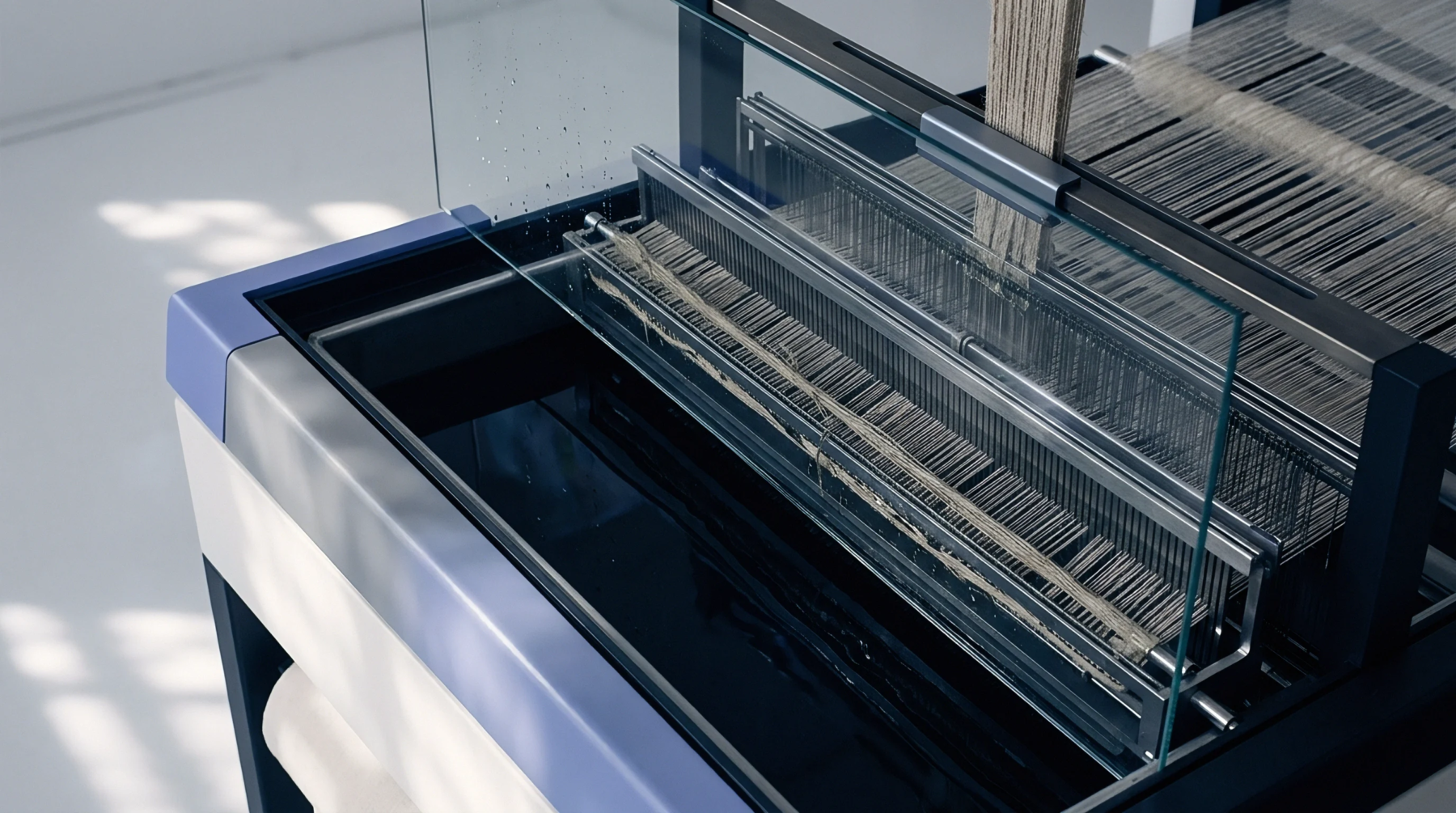
Mechanical clamping devices used in textile warp preparation secure and align individual yarn sheets to enable rapid automated knotting during pattern changeovers. A knotting frame holds the tails of an exhausted warp sheet parallel to the incoming warp ends of a fresh warp beam directly in front of the loom shedding mechanism. Clamping bars grip each yarn layer under uniform tension, presenting two neat flat layers to an automatic warp-tying carriage.
The apparatus functions across both stationary preparation stands in dedicated warp-drawing alleys and mobile carriages wheeled directly behind active weaving machines. Filament clamping terminates at the selvedge edges, leaving lease rods and droppers in place to maintain end sequencing without re-drawing harness eyes.
Weaving Preparation
Preparation routines in Chinese linen weaving sheds depend on exact tension alignment across heavy clamping rails to prevent slub snags and loose knots. Operatives mount the exhausted beam remnants onto the lower bar of the knotting frame, combing the linen warp ends with stiff bristle brushes to eliminate cross-overs. Technicians then mount the replacement beam, stretching the new flax sheet over the upper clamp and locking the gripping jaws with eccentric cam levers.
Uniform tension across the width is essential, because stiff wet-spun flax yarn lacks elongation and sags if clamped unevenly. The automated tying machine traverses the clamped sheet, tying up to six hundred fisherman knots or flat knots per minute across thousands of adjacent ends. Weave room supervisors inspect the resulting knot line before pulling the knotted joints through the reed wires and drop eyes.
Operational Limit
Yarn diameter irregularity limits knotting performance when processing coarse tow strands with heavy natural slubs. Coarse knots formed on uneven flax bundles can fail to clear narrow heald eyes during initial beam advance, causing warp breaks across the loom width. The knotting frame cannot accommodate simultaneous ties between warps of disparate linear density, requiring complete manual re-drawing when switching counts.
Damaged gripping strips allow yarn slippage under clamp tension, ruining end alignment and forcing operators to manually comb the entire sheet again.