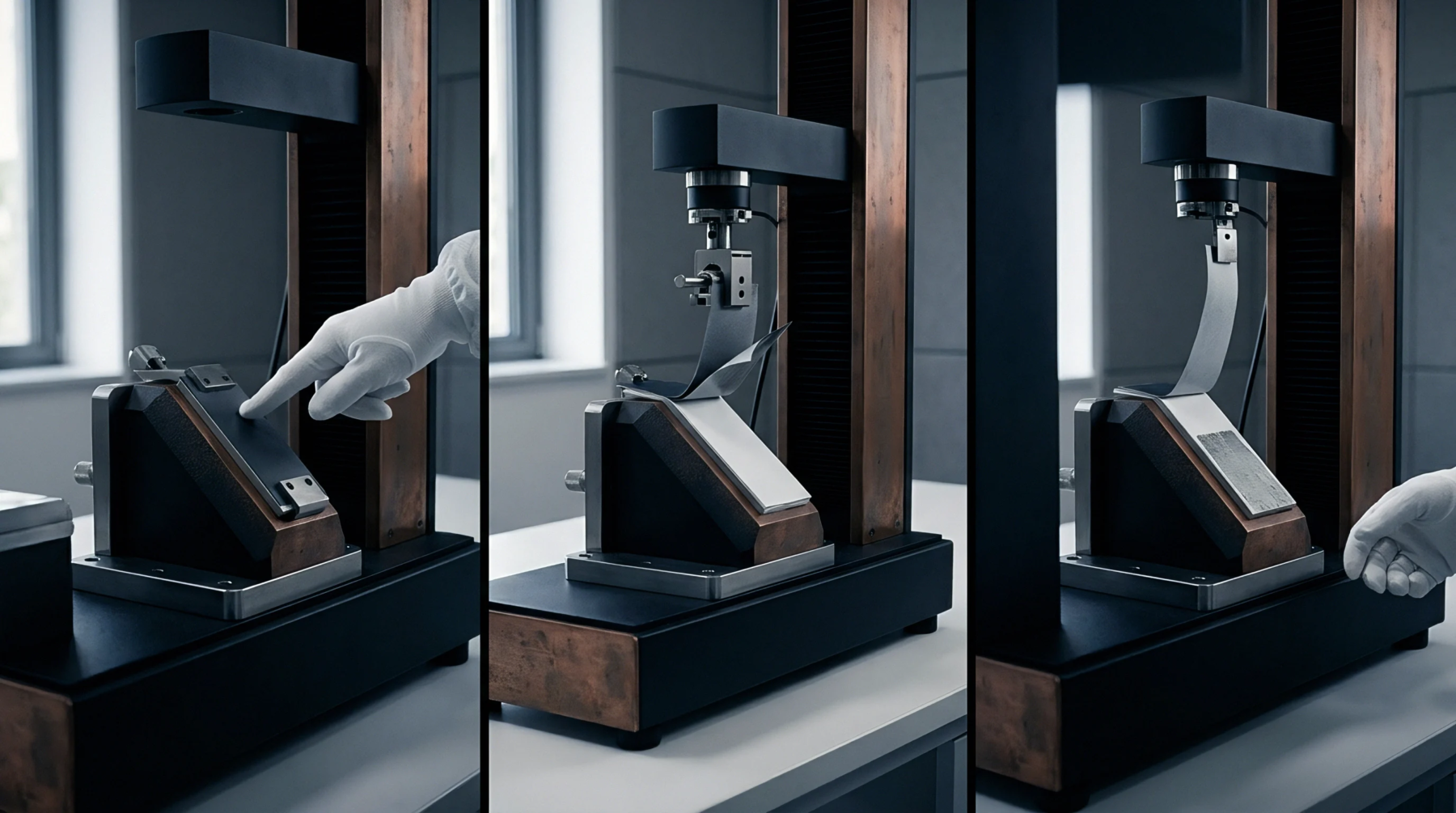
Testing Procedure
Tensile strength testing of spun linen yarns requires specific clamping conditions to prevent premature yarn failure at the borders of the holding device. The practice of jaw break elimination involves adjusting the clamping pressure and using protective cushioning to ensure that the yarn breaks in the middle of the test span. Accurate measurements of yarn tenacity are impossible if the specimen consistently shears where the metal jaws grip it.
This technical approach guarantees that the recorded breaking load represents the actual strength of the yarn body rather than a localized stress point caused by the metal clamp.
Grip Modification
Pneumatic yarn clamps are adjusted to distribute the holding force evenly across the contact area. When jaw break elimination is executed correctly, the operator applies a thin elastomer wrap or cardboard tab to the ends of the linen sample. This modification prevents the hardened steel surfaces from crushing the delicate cellulose fibres.
Data Quality
Failures that occur within three millimetres of the grip edge must be discarded from the official statistical batch. If the jaw break elimination rate is low, the resulting average breaking strength is artificially depressed and fails to represent the true quality of the spun yarn. Mills rely on these corrected tests to certify yarn shipments for high-speed loom production.