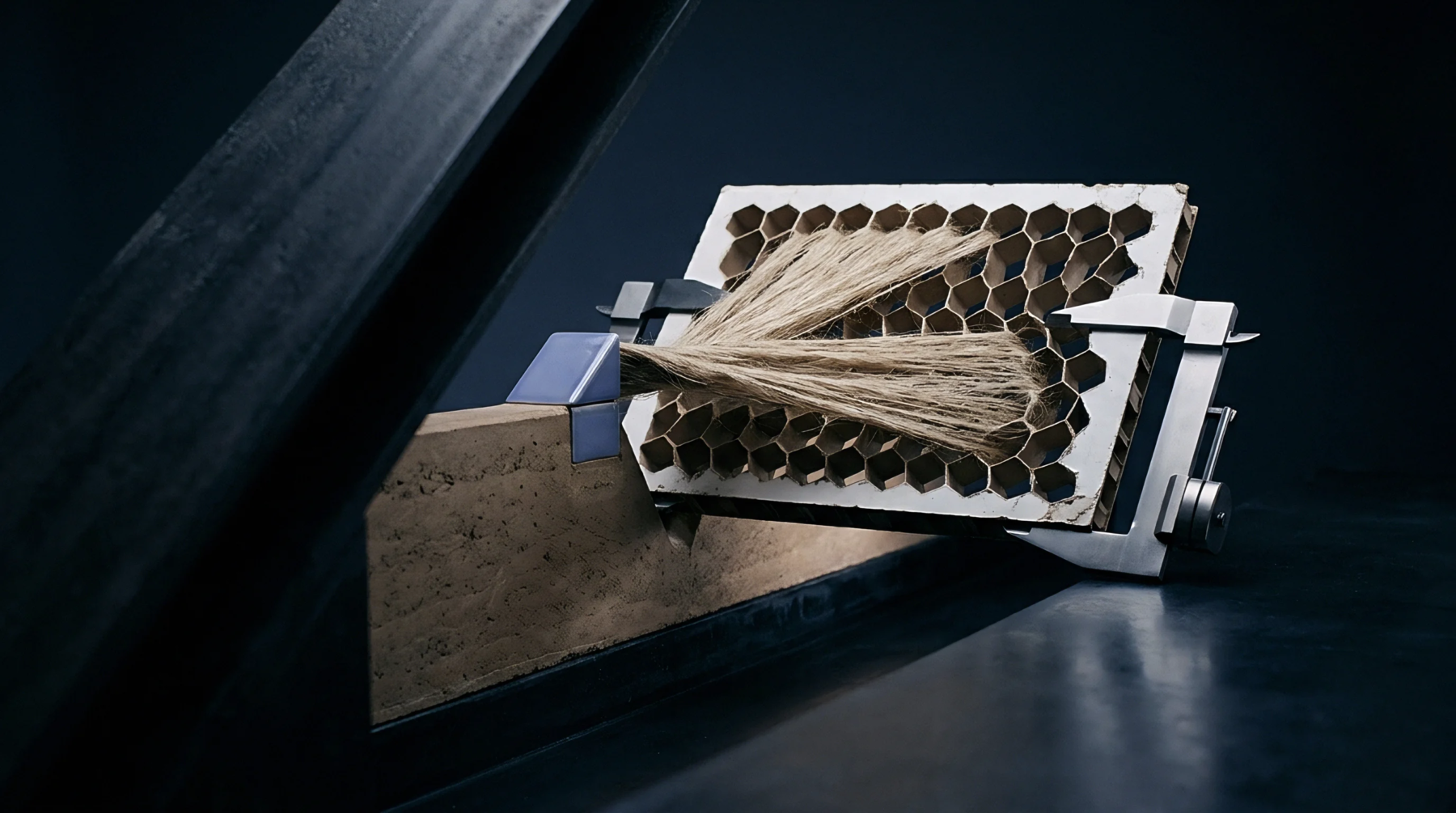
Overhead Framework
Heavy structural frames mounted above power looms support overhead shedding mechanisms and align harness cords relative to the warp sheet. The Jacquard superstructure absorbs dynamic cyclic loads generated by high-speed electronic Jacquard heads during linen pattern formation. Steel gantries isolate mechanical vibrations to maintain exact registration between comber boards and loom warp beams.
Mill installation drawings specify structural load capacities and ceiling clearance parameters for overhead framing.
Structural Load
Rapid vertical movement of thousands of harness cords generates substantial kinetic forces during shed changes. Steel beams welded or bolted into rigid gantry configurations distribute the weight of electronic shedding heads and harness assemblies down to mill floor foundations. Deflection in overhead support beams causes harness cords to pull unevenly across the loom width, generating mispicks and broken warp ends in fine flax weaves.
Engineers calculate dynamic resonance frequencies to prevent gantry oscillation from matching the stroke rate of the weaving machine. Adjusting cross-bracing geometry stabilizes the framework against side-to-side forces during high-speed insertion of weft yarns. Regular structural inspections verify bolt torque settings and weld integrity across the overhead support grid.
Vibration Isolation
Dynamic isolation mounts decouple overhead support gantries from mill building walls. Unmitigated vibration transmission damages building structural members and causes yarn tension fluctuations across neighboring looms. Operating speeds must remain below maximum design thresholds to prevent structural fatigue in frame members.