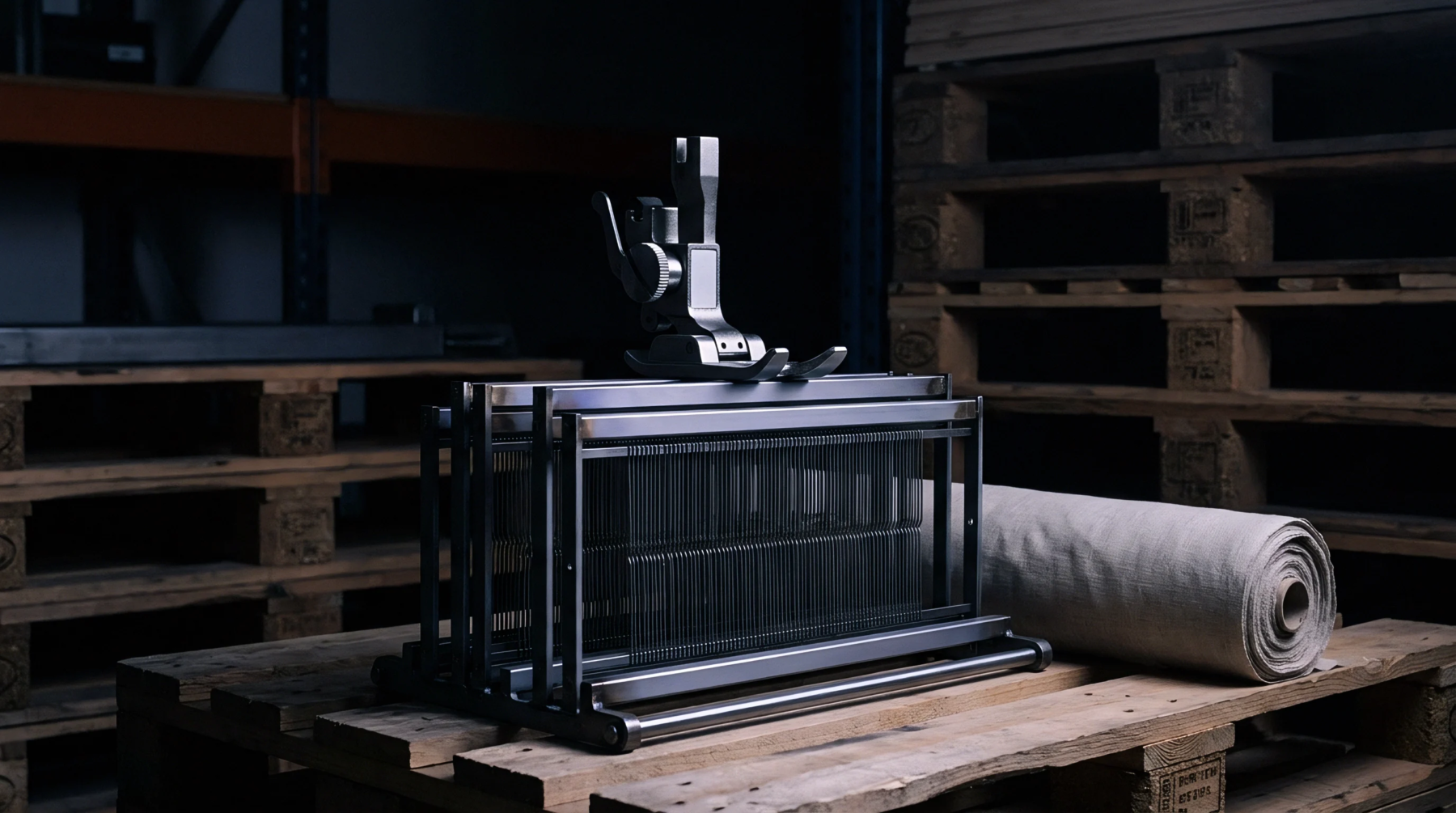
Loom Arrangement
Structural attachment of the jacquard harness cords to the individual mail eyes governs the path of warp threads during the formation of complex woven patterns. This physical configuration, commonly referred to as the harness tie, determines how many warp ends can be controlled independently by the jacquard machine. Weavers establish this setup during loom preparation to prepare the machinery for specific fabric constructions.
Threading Sequence
Linen weaving factories select the specific connection style based on the symmetry and repetition of the design. The harness tie routes the cords through the comber board to prevent friction and thread abrasion during high-speed shed changes. When the warp threads are lifted, the tension on the cords must be uniform across the entire width of the loom to avoid skipped threads or yarn breakage.
This routing is critical for flax yarns because their low elasticity makes them susceptible to damage under unequal tension. Technicians check each cord path manually during loom setup before the first meters of linen are woven.
Design Limit
The choice of harness configuration determines the maximum width of the pattern repeat that the loom can execute. A poorly planned harness tie restricts the pattern possibilities, forcing the mill to run simpler designs on advanced jacquard machinery. This configuration cannot be changed easily once the loom is fully threaded, meaning the decision binds the production line for the entire duration of that contract.