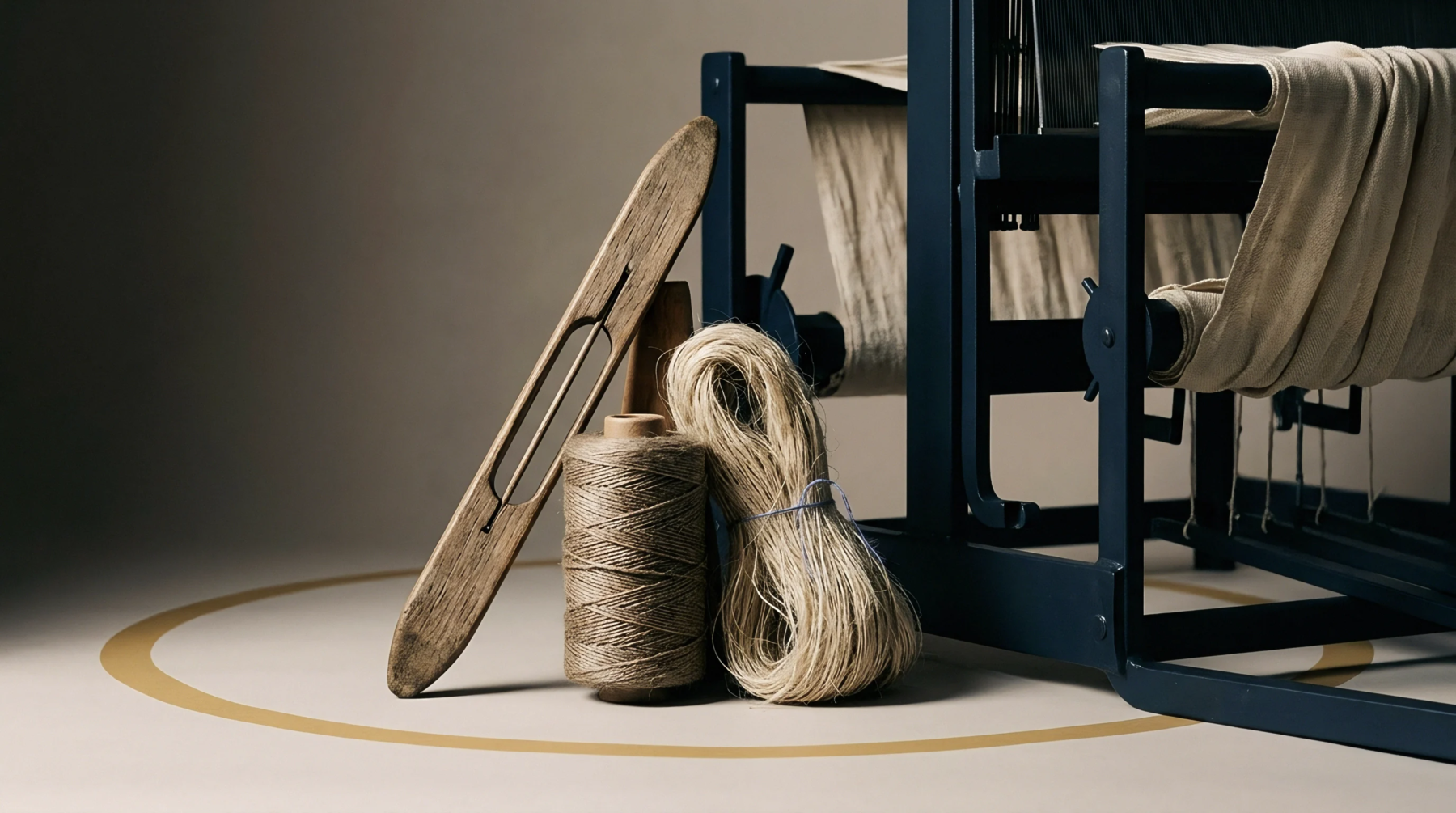
Mechanical Configuration
Weaving loom operations rely on the timed arrival of harness frames at the shed opening to ensure clear passage for the shuttle or rapier. Harness frame stagger achieves this by offsetting the vertical movement of adjacent frames during the cycle. Proper calibration of this movement prevents the yarns from rubbing against each other during the shed formation process.
Excess friction between flax fibres results in breakage or increased fluff formation on the finished linen surface. Precise timing minimizes the stress on individual warp ends throughout the entire width of the loom. Adjusting the relative height of the frames relative to each other controls the tension distribution within the shed.
Timing Variance
Setting the harness frame stagger involves mechanical adjustments to the cam or electronic settings on modern looms. Technicians perform this task during the setup phase for a specific linen fabric specification. The document tracking these changes remains the loom setting sheet within the production log.
Different cloth structures require specific offsets to manage the density of the warp yarns. A tighter weave structure demands larger offsets to keep the top and bottom shed layers distinct. Excessive overlap of the frame movement leads to uneven tension across the warp.
Correctly adjusted timing ensures that the warp yarns move in a sequence that allows the filling yarn to pass without hindrance. Minimal variance in the lift height creates a flatter shed which reduces the energy consumption of the loom.
Production Quality
Achieving the correct harness frame stagger directly influences the overall grade of the final linen output. Variations in this setting alter the surface texture and the structural uniformity of the fabric. Mills record the outcome of these settings in the quality inspection reports generated after every full batch run.
Consistent performance during this stage confirms that the loom operates within the mechanical limits defined by the manufacturer. Accurate synchronization prevents defects in the finished linen by maintaining the integrity of the warp yarns until the insertion of the weft. Properly calibrated movement preserves the strength of the flax fibre by avoiding unnecessary abrasion.
Reliable shedding results in superior fabric consistency across the entire production lot.