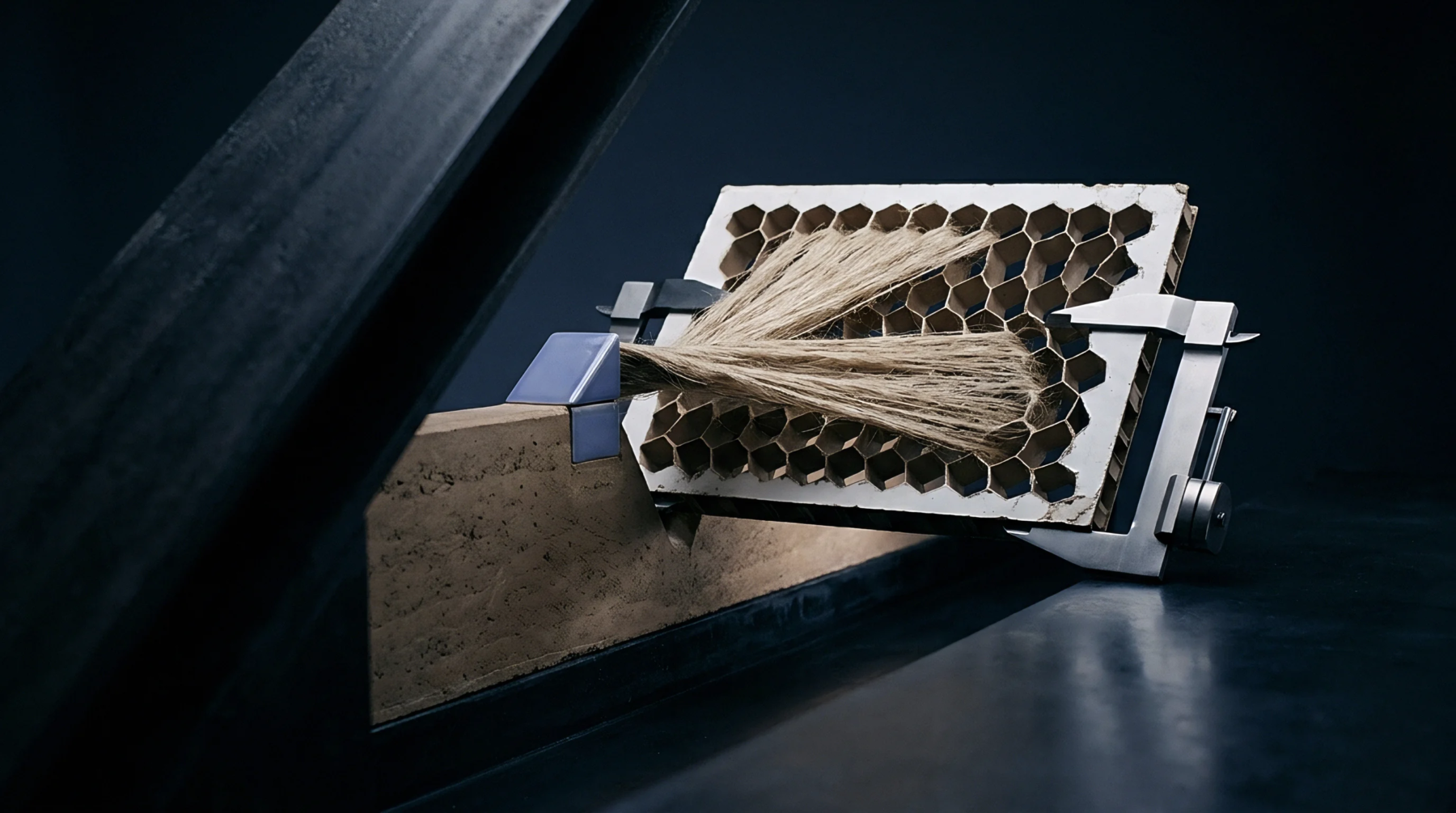
Structural Integrity
Plastic deformation within crystalline flax cellulose involves dislocation kink bands. These linear features develop under compressive stress during high speed mechanical harvesting or heavy scutching. The crystalline structure buckles to accommodate local strain when shear forces exceed the yield threshold of the primary cell wall.
Mechanical Analysis
Internal energy peaks at these sites of localized collapse. Fibre testing labs identify such zones through polarized light microscopy or cross sectional analysis of the middle lamella. Higher concentrations of these bands correlate with reduced tensile strength because the misalignment prevents optimal load transfer across the cellulose microfibrils.
Flax mills monitor these zones to determine whether fibre processing speeds exceed the physical tolerance of the raw material.
Procurement Standard
Buyer contracts often stipulate maximum allowances for structural defects found in raw hackled flax shipments. Verification occurs during the incoming quality control stage by drawing representative samples for destructive testing. Technicians measure the frequency of these bands per unit length to assign an appropriate grade for fine linen spinning.
Material containing excessive kink density requires lower settings on the carding machines to avoid total fibre breakage. Stable production depends on keeping mechanical strain below the point where these localized failures begin to form.