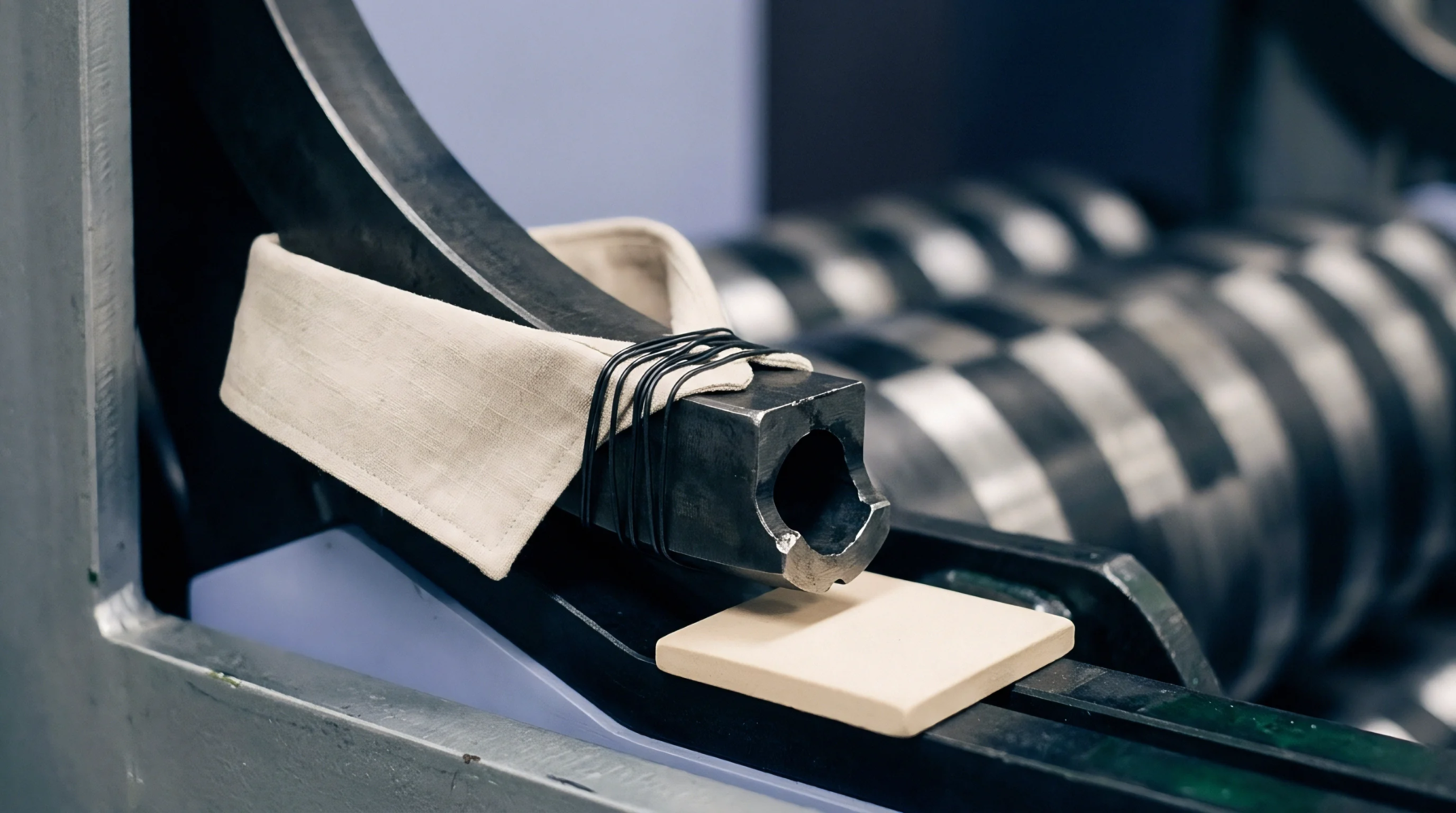
Structural Endurance
Mechanical degradation in natural cellulose bundles occurs when repeated cyclic stresses during high-speed spinning weaken the internal fiber structure. In flax yarn processing, bast fibre fatigue represents this cumulative loss of tensile strength caused by tension fluctuations during drafting and winding. Yarn breaks occur when the processing stress exceeds the remaining capacity of the weakened material.
Dynamic Loading
Stress accumulation during drafting represents the primary mechanism behind this structural failure. Rapid acceleration and deceleration of the fibers between draft rollers produce microscopic shear cracks within the crystalline regions of the cellulose. Over several thousand cycles, these cracks propagate along the longitudinal axis of the cell wall.
The rate of this deterioration depends heavily on the moisture content maintained within the spinning room.
Spinability Limit
Spinning mills measure this degradation by running yarn through a series of tension rollers at controlled velocities to count the cycles preceding a break. When bast fibre fatigue reaches a threshold, the yarn loses its cohesion and snaps, halting the machine. Proper adjustment of the spinning bath temperature helps mitigate the damage by softening the hemicellulose matrix that binds the fibrils.
This thermal control ensures the yarn remains resilient during subsequent high-speed winding operations.