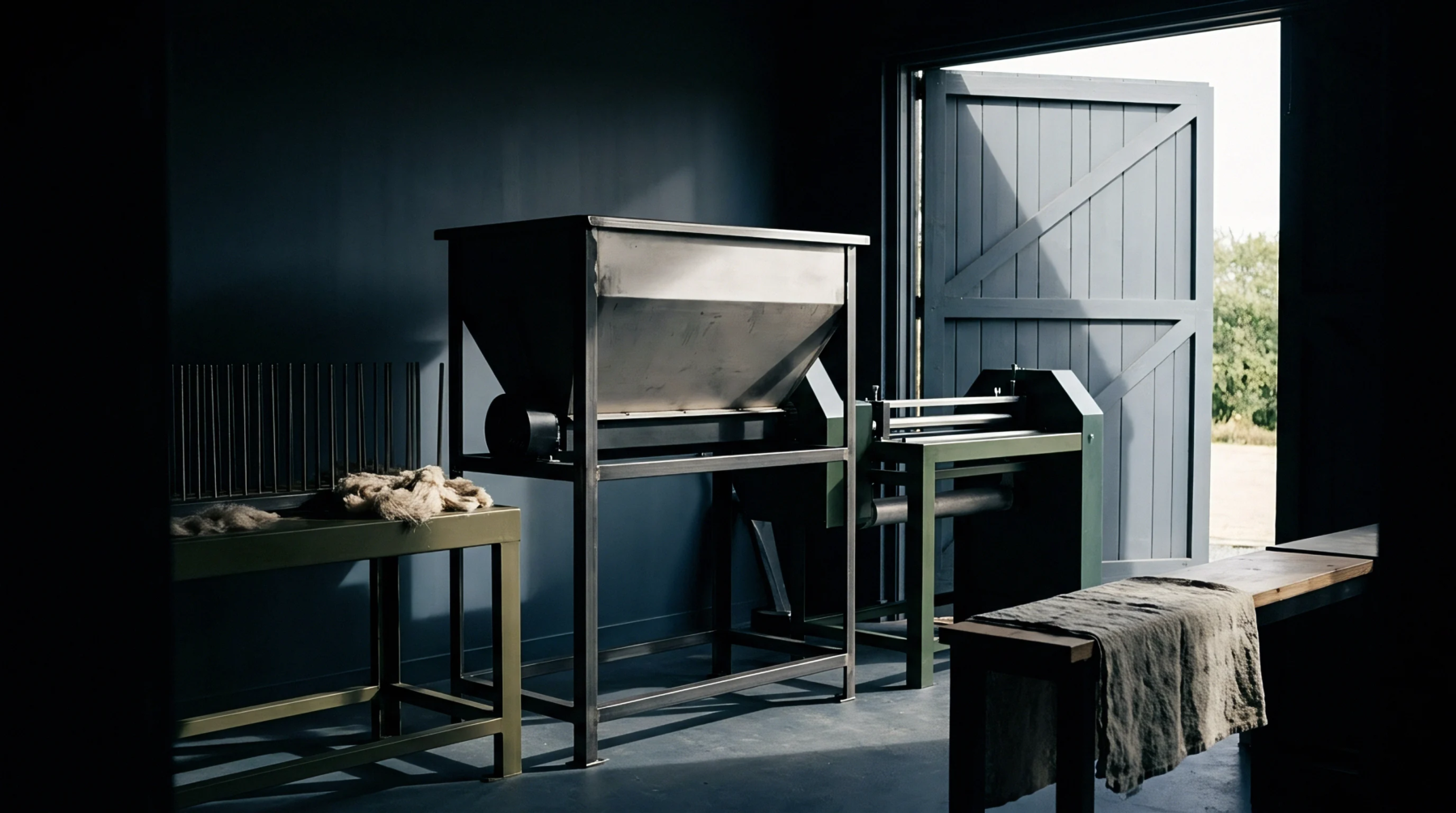
Fiber Inspection
Flax fibers arriving at mill sorting tables occasionally reveal a transverse bruised spot where blunt impact during mechanical hackling or harsh bundle separation crushed the internal cell wall without tearing the outer cuticle. Jiangsu spinning mills grade this localized stem trauma during initial raw material classification before roving frames draw the damaged strand into commercial yarn. Quality inspectors record the frequency of the structural flaw on mill inspection sheets to determine whether the affected batch qualifies for fine warp spinning or must drop to coarser weft production.
Crushed cellulose regions create weak points along the sliver that cause filament breakage under high tension during high speed wet spinning. Mechanical stress concentrated on the compromised area forces operators to reduce drafting speeds to prevent yarn snapping on the spindle.
Bundle Integrity
Unprocessed flax bundles lose tensile strength rapidly when microscopic cellular collapse compromises the tubular geometry of the plant stem. Spinning technicians evaluate the structural soundness of long line flax before combing operations separate the ultimate fibers from technical fibers. Damaged sections shed short tow waste at higher rates during carding because ruptured cell walls shatter under needle roller action.
Mill yield calculations adjust downward when raw material lots contain high proportions of stem bruising from rough harvesting machinery.
Spinning Tolerance
Yarn uniformity depends entirely on the unbroken continuity of plant cellulose along the drafting zone of the drawing frame. Roving processors monitor sliver tension closely because compressed zones fail to elongate evenly alongside healthy strands during drafting. Uneven drawing produces thick and thin spots in the final yarn that weaken woven linen fabric during subsequent loom shedding.
Fabric inspection standards penalize finished cloth containing broken picks caused by weak yarn segments originating from damaged raw material.