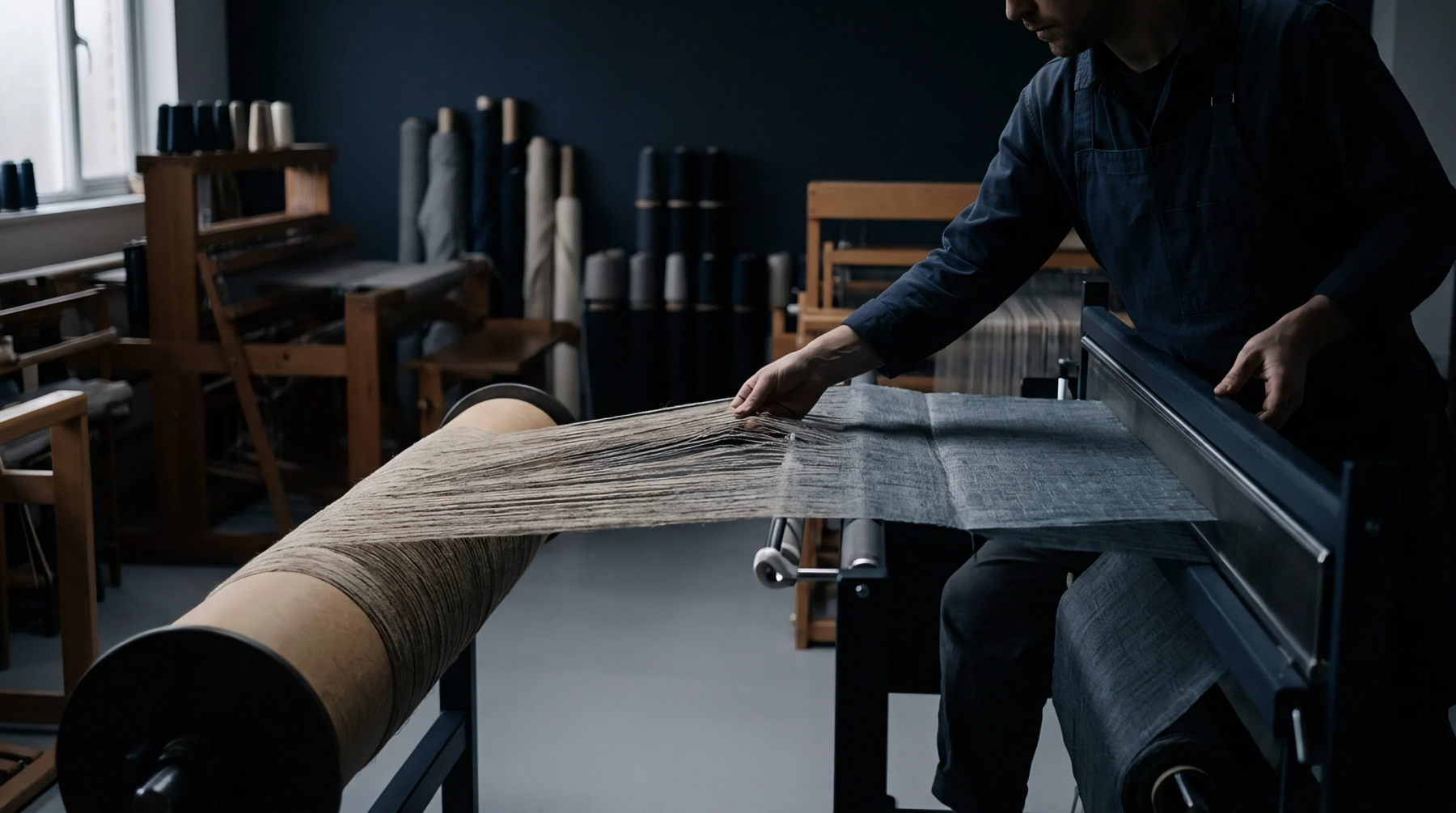
Frictional Variance
The jump between the grip of a stationary object and the glide of a moving one creates a specific vibrating motion. Within this frictional variance, the stick-slip oscillation appears in the drafting zone of a spinning frame when the rollers do not move with perfect uniformity against the flax sliver. This fluctuation generates a chattering sound and a corresponding wave pattern in the diameter of the spun thread.
Mechanical Influence
Precision engineering of the drafting rollers and the selection of appropriate aprons can minimize the impact of the jerky movement. By improving the mechanical influence, the pressure applied to the nips is kept high enough to control the fibres but low enough to avoid inducing vibrations. Mill technicians calibrate the drive systems to ensure that the rotational speed remains constant under varying loads.
Defect Genesis
Small fluctuations in the drafting process accumulate to form long period yarn faults that are visible only after the fabric is woven. This defect genesis is a major cause of the barred effect where stick-slip oscillation creates a striped appearance in plain weave linen fabrics. To prevent this, mills use advanced lubricants and synthetic materials for the roller covers that have a narrow gap between their static and kinetic friction values.