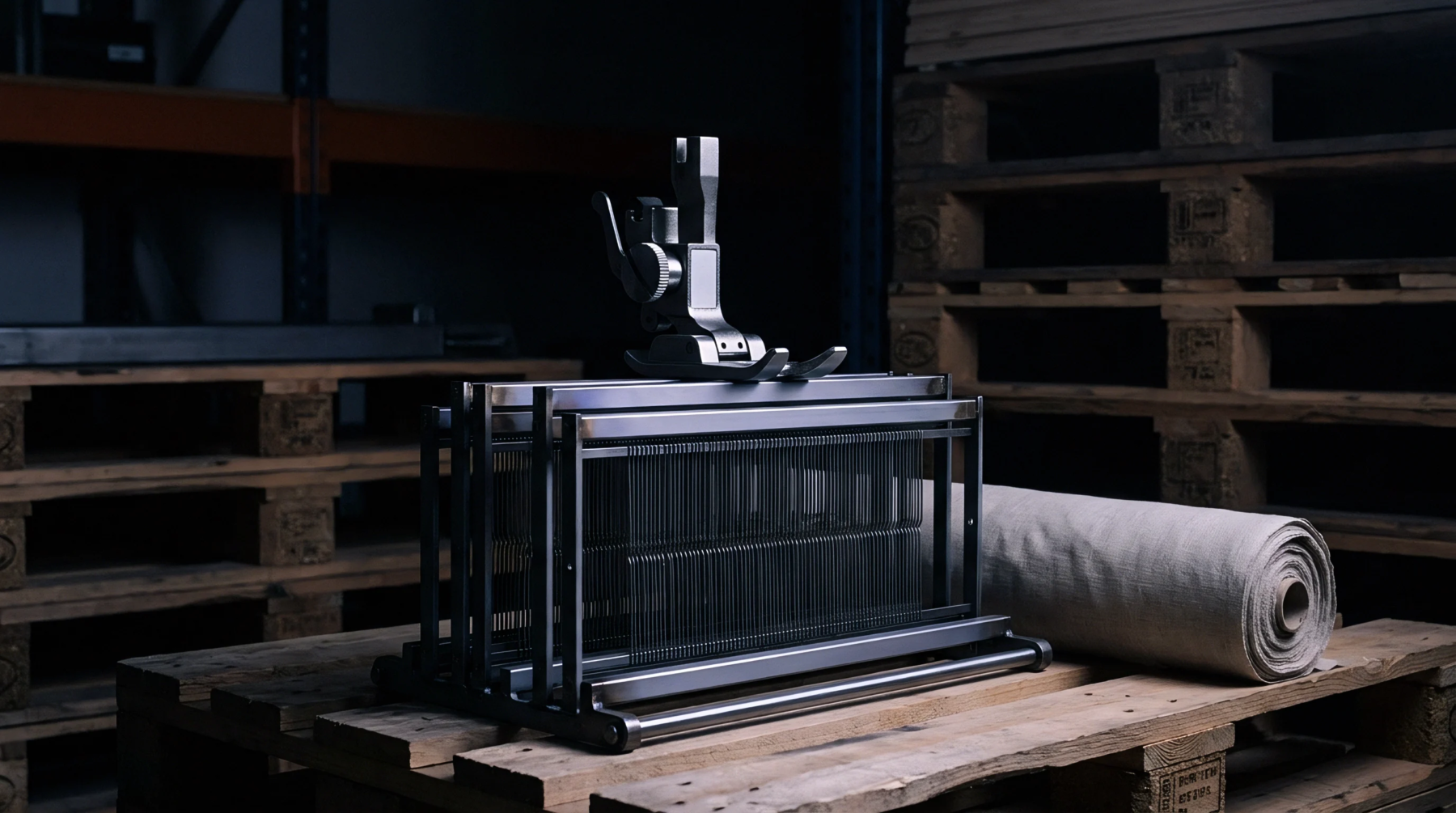
Mechanical Tension
Flax spinning machinery employs this force compensation assembly to regulate drag during the final drafting phase. The spring undersystem maintains a constant resistance on the carriage frame when roving passes through the flyer. It governs the elongation of the fibre strand by adjusting the pressure against the primary drive shaft.
This configuration prevents sudden snapping of the delicate yarn while the spindles accelerate to their operating speed. It acts as a passive brake to ensure the twist remains uniform throughout the production cycle.
Calibration Accuracy
Technical inspectors measure the force output of this component during periodic maintenance checks to verify compliance with mill standards. A deviation in the return rate indicates wear on the coil or a fatigue failure in the retention pin. Personnel document these findings in the equipment ledger after running a standardized stress test at the rated line speed.
The records show how much tension the assembly exerts across the full range of motion. Variations here directly modify the yarn density and impact the final grade of the cloth. Such data enables the maintenance department to predict when the mechanism needs replacement before a batch of raw material suffers damage.
Process Integration
Woven fabric production relies on the consistency provided by this hardware to achieve the high tensile strength required for export quality linen. Successful tension management at the spinning stage dictates the smoothness of the yarn surface which ultimately defines the texture of the finished textile. Accurate control allows the spinning frame to operate continuously without frequent stoppages for adjustments.
Mechanical stability remains a requirement for meeting the acceptance criteria of buyers who prioritize uniformity in every bolt of cloth.