Cellulosic Bast
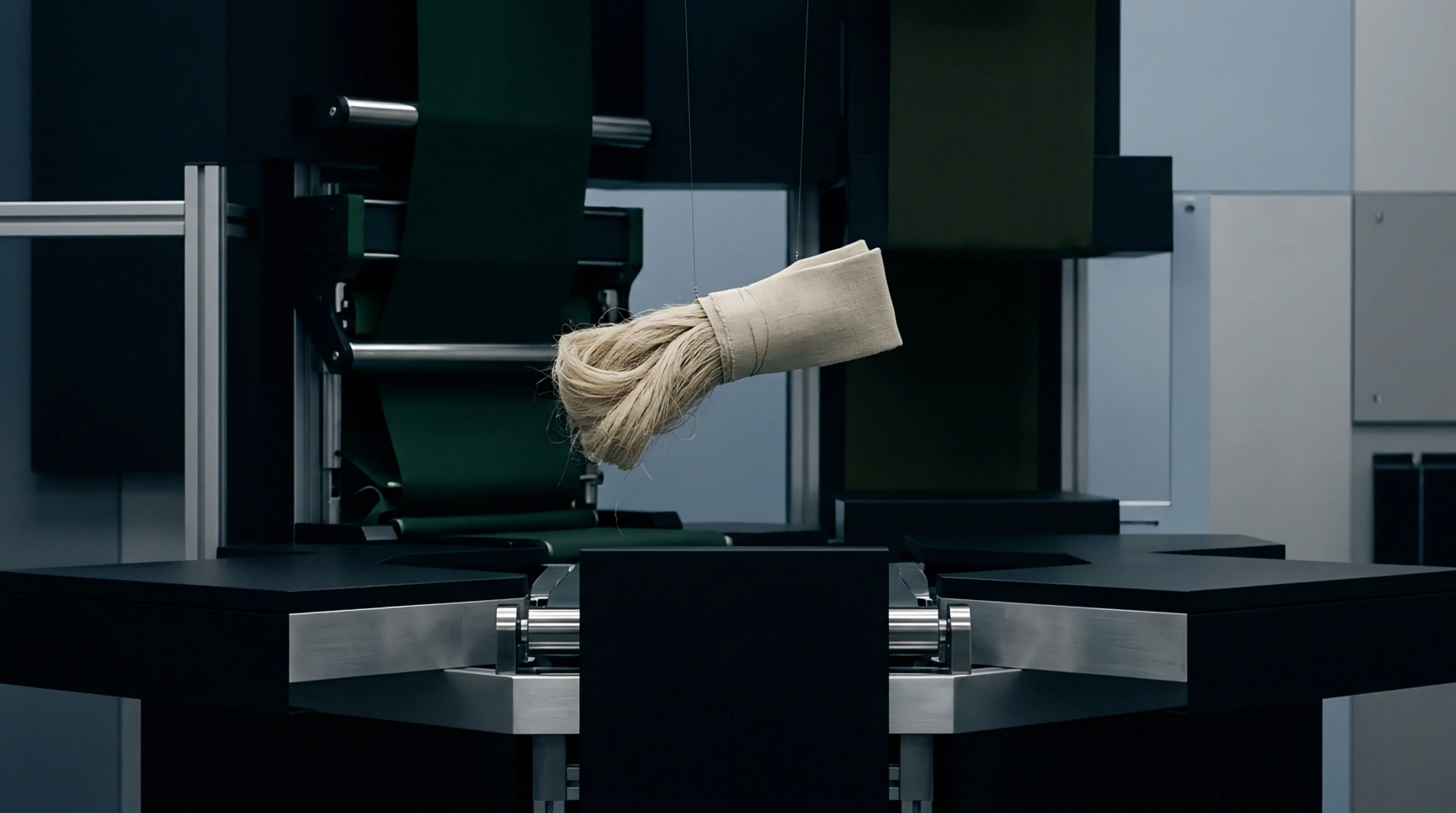
Sclerenchymatous stem fiber derived from the Boehmeria nivea plant belongs to the nettle family and yields long, crystalline cellulosic strands. This perennial shrub produces raw material known for high tensile tenacity, low elongation, and a characteristic natural silky luster. Commercial textile operations use thoroughly degummed ramie in fine lightweight apparel shirting, table linens, and stable structural canvas blends.
The plant definition excludes the interior woody stalk, industrial decortication peelings, and secondary waste noils derived from the combing line.
Chemical Degumming
Thick layers of insoluble pectins and hemicelluloses coat raw bast ribbons, preventing mechanical separation until industrial degumming strips the sticky gummy matrix. Unlike flax, which undergoes biological field retting, this fiber requires heavy industrial pressure boiling in hot sodium hydroxide solutions combined with mechanical washings to dislodge gums. Residual gum percentages must drop below two percent by weight to allow individual fibers to separate through the carding and combing cylinders.
Cleaned fibers exhibit extreme stiffness and brittleness, necessitating application of chemical lubricants or conditioning emulsions before roving. Ramie yarns possess higher wet strength than dry strength, making woven apparel resistant to stretching but prone to sharp, brittle wrinkle lines. Spinning mills frequently blend the refined fiber with polyester, viscose, or combed cotton to introduce elasticity and improve soft hand-feel during final garment wear.
Grading Certificate
Standard testing laboratories grade degummed lots under national framework protocols covering residual gum levels, tensile strength, whiteness, and mean fiber length. Test certificates record the tensile breaking load alongside bundle fineness measured via airflow resistance. Mill spinning specifications record these certified parameters to set draft gear configurations and optimize drawing frame distances.
Uncut long ramie fibers feed into specialized bast combing units, while cut staple fibers proceed to conventional ring frames. Acceptance reports confirm that the lot satisfies agreed moisture and residual gum targets before stock moves into mill manufacturing.