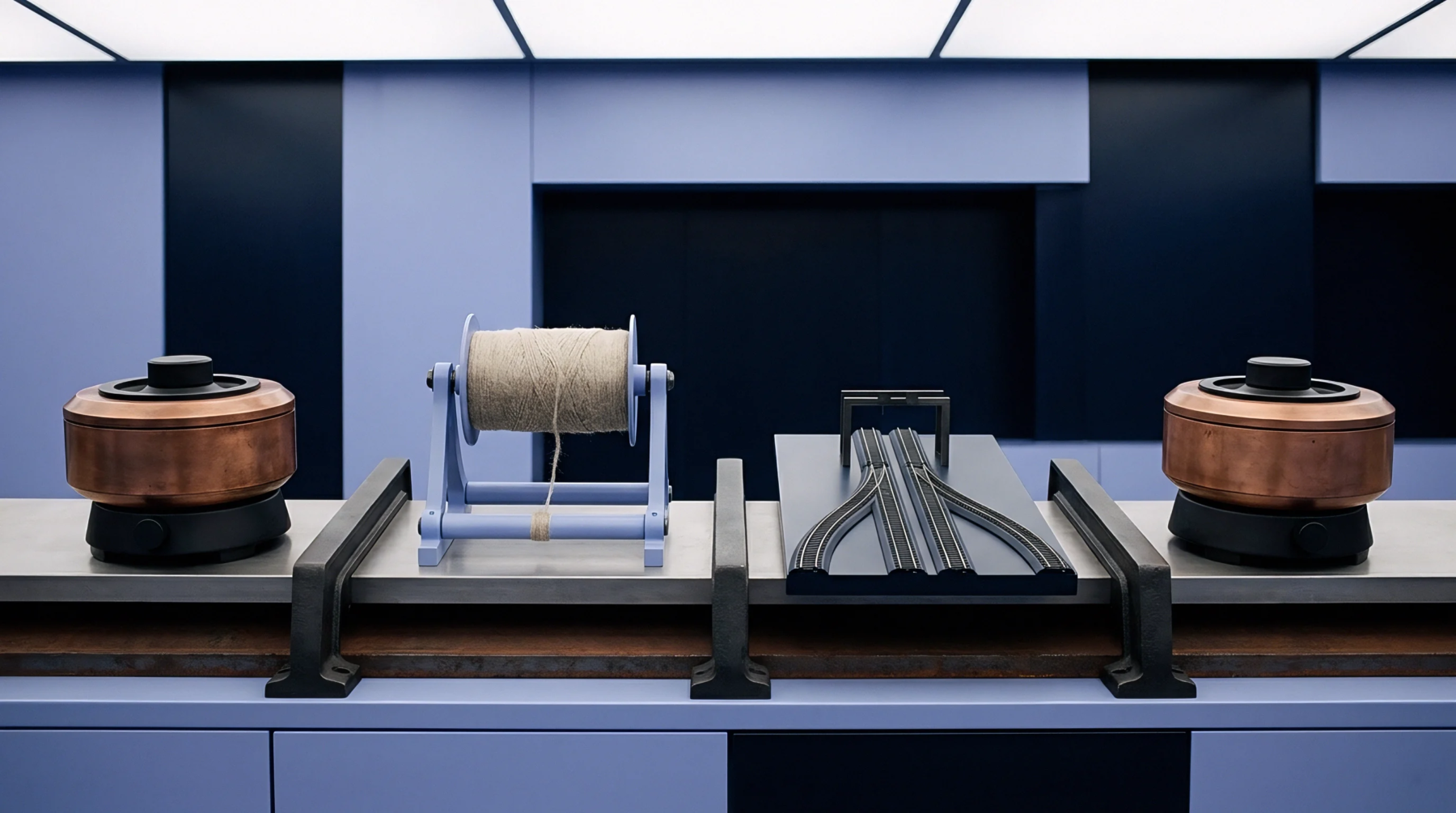
Physical Interface
Mechanical linkage connecting the drafting rollers in a flax spinning frame ensures proportional tension across wet-spun linen rovings. This assembly known as neck cord coupling prevents yarn breakage during high-speed elongation by synchronizing rotational speeds between adjacent drawing zones. Mill operators adjust the tension setting whenever humidity levels shift inside the workshop floor, because moisture absorption alters bast fibre elasticity.
Correct calibration stops excessive stretching before fibres reach the final twist ring.
Tension Threshold
Maximum load tolerance defines the breaking point where individual flax filaments snap under operational stress during yarn production. Factory supervisors record these rupture limits daily on the spinning room log sheet to satisfy buyer acceptance criteria regarding tensile strength. Mill standards typically permit a narrower safety margin than commercial contracts demand, creating a distinct buffer against mechanical failure.
Excess friction within the drive mechanism raises internal temperatures, which alters yarn diameter consistency across long production runs.
Export Grade
Finished yarn evaluation separates acceptable commercial bobbins from defective batches prior to international shipment. Inspectors grade packed cartons according to weight uniformity and hairiness index values established by destination markets. Foreign buyers reject consignments falling below contracted cleanliness limits, leaving the manufacturing mill financially liable for rejected lots.
Proper maintenance of mechanical linkage components directly influences final export certification results by preserving structural uniformity.