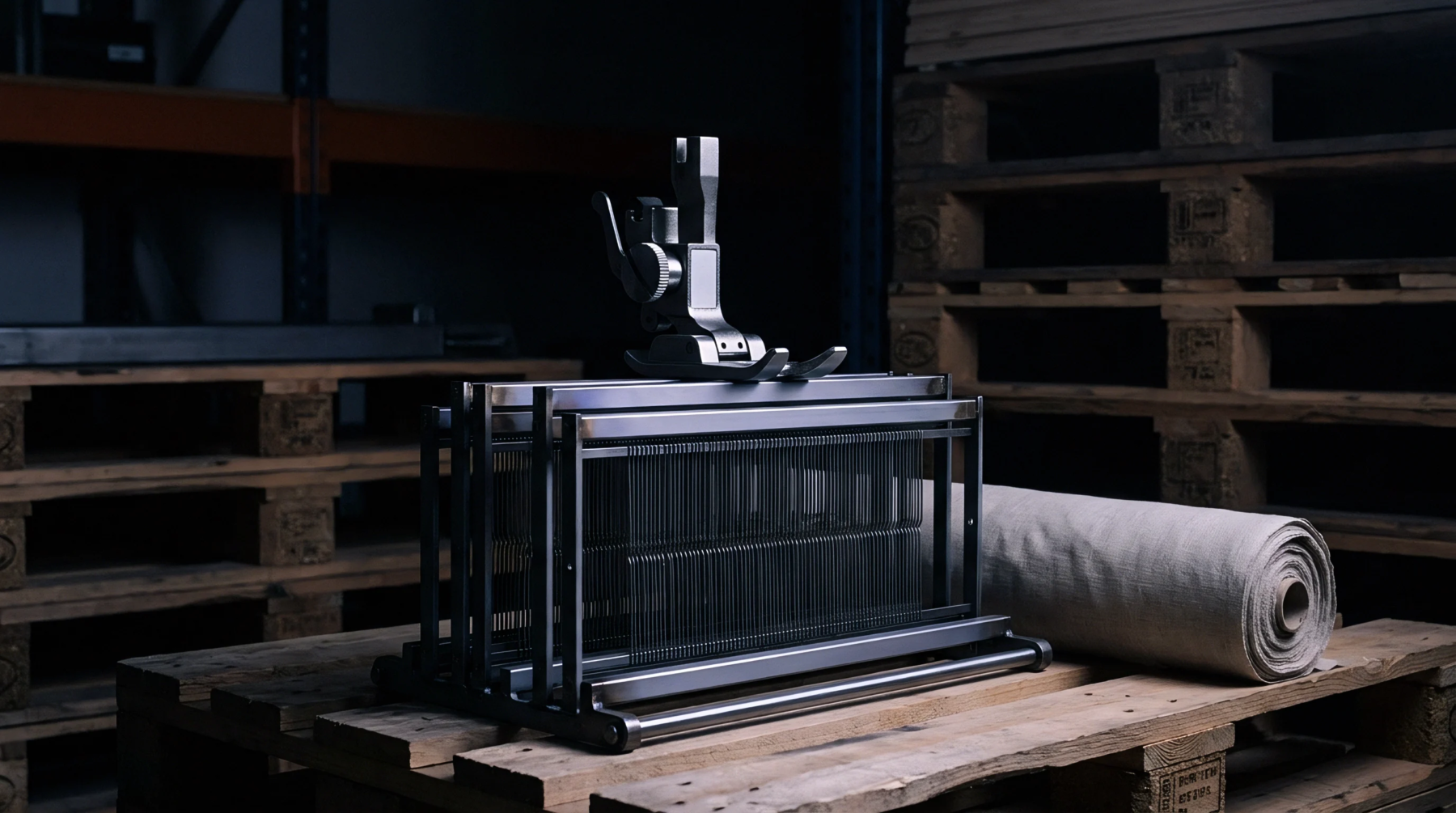
Harness Layout
Combined arrangement of straight and pointed threading systems in a single jacquard comber board allows for both borders and symmetrical patterns to be woven simultaneously. This loom configuration, known as the mixed tie, organizes the harness cords to optimize the pattern capability of the machine across the fabric width. Mills employ this layout when producing structured linen tablecloths or decorative fabrics.
Threading Path
Laying out the cords requires dividing the comber board into sections that feed different regions of the warp. The mixed tie allocates a portion of the hooks for the straight tie to produce asymmetric borders, while the remaining hooks are arranged in a point tie to create the repeating center motifs. This dual routing prevents the need for two separate jacquard machines or overly complex card programming.
Because flax yarns are highly sensitive to friction, the angle of the harness cords from the board to the heald eyes must be calculated to prevent yarn abrasion.
Pattern Capability
Woven exports with complex borders and repeating centers require this hybrid harness arrangement to maintain high production speeds. Implementing the mixed tie reduces the total number of harness cards required for the pattern, lowering the cost of loom setup. Weavers register this harness configuration in the loom setup card to ensure repeatability across different dye lots.