Edge Waste
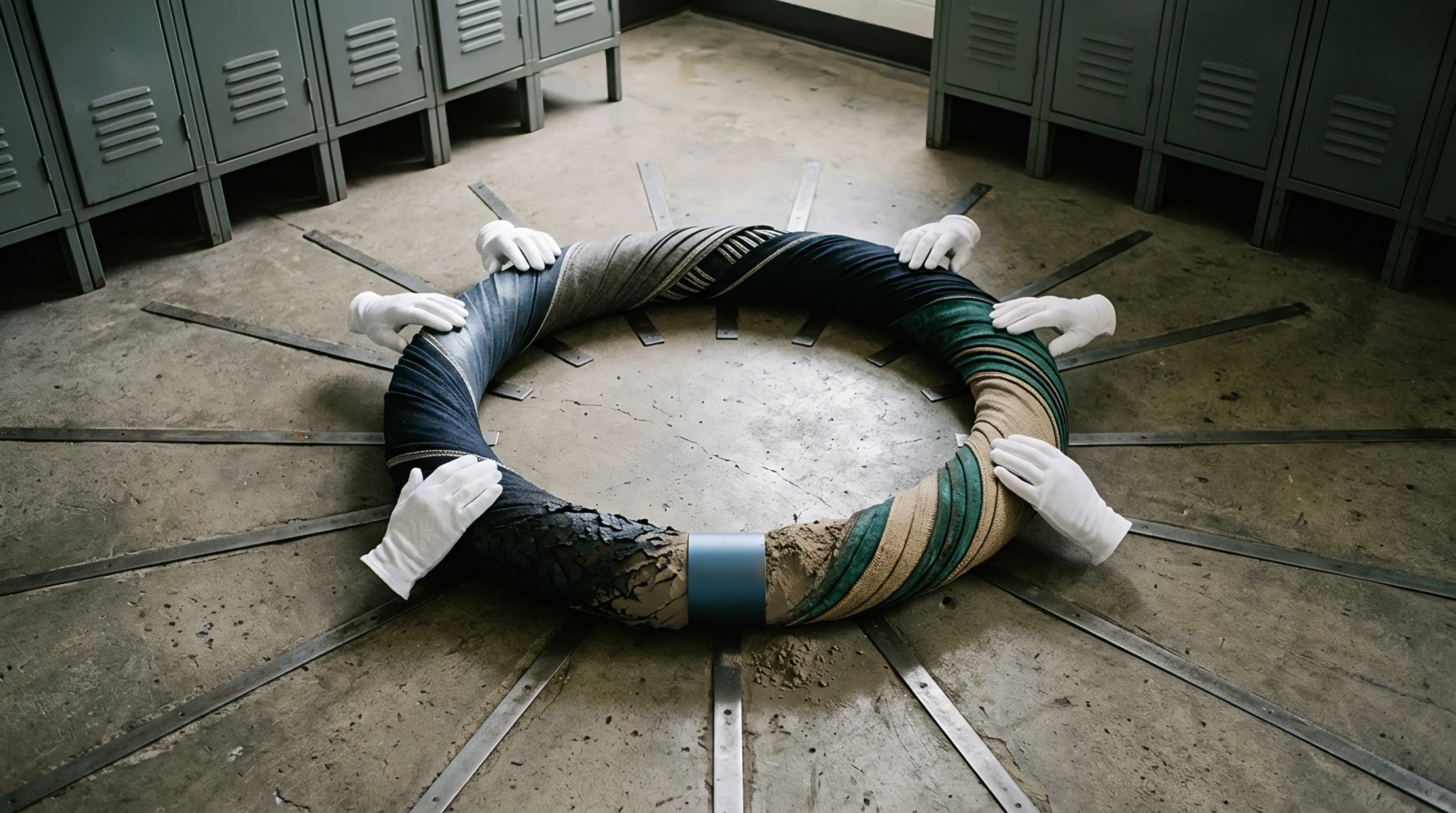
Textile production defines leno selvedge scrap as the narrow strips of linen fabric severed from the sides of a loom during the specialized crossing of warp threads that lock a cloth edge. These segments consist of the Leno weave structure paired with small amounts of adjacent base fabric, representing the primary byproduct of the finishing stage when industrial-width linens undergo trimming to reach final commercial dimensions. Standards for the material track the specific moisture regain and fibre length distribution of the discarded strips to determine how much value remains in the fibrous material compared to the original flax tow used in the primary production run.
Recovery Logic
Mills manage the mass of this material through a calculation based on the total width of the loom against the final usable width of the finished linen rolls. Engineers record the weight of these strips in a production log to distinguish between deliberate trim allowances for standard quality control and excessive waste caused by mechanical misalignment on the shuttle or rapier heads. Each batch of strips undergoes a separation process where operators remove any synthetic binding agents or plastic edge guards that prevent the linen from being returned to the initial spinning stage for carding.
High concentrations of dust or machine oil on the clippings render the entire collection batch unsuitable for recycling, forcing the facility to divert the mass into low-value secondary markets instead of high-grade yarn production.
Material Yield
Disposal of leno selvedge scrap hinges on the purity of the flax content measured after the shedding of the leno structure itself. Processing facilities value these clippings as an secondary raw source when the mechanical integrity of the individual flax fibres remains intact despite the twisting forces applied during the weaving process. Factories report this yield as a percentage of the total weight passing through the final cut station, providing an objective metric for mill efficiency that identifies whether the raw material supply meets the necessary consistency for circular production cycles.
Constant monitoring of this output confirms the economic viability of the entire linen operation.