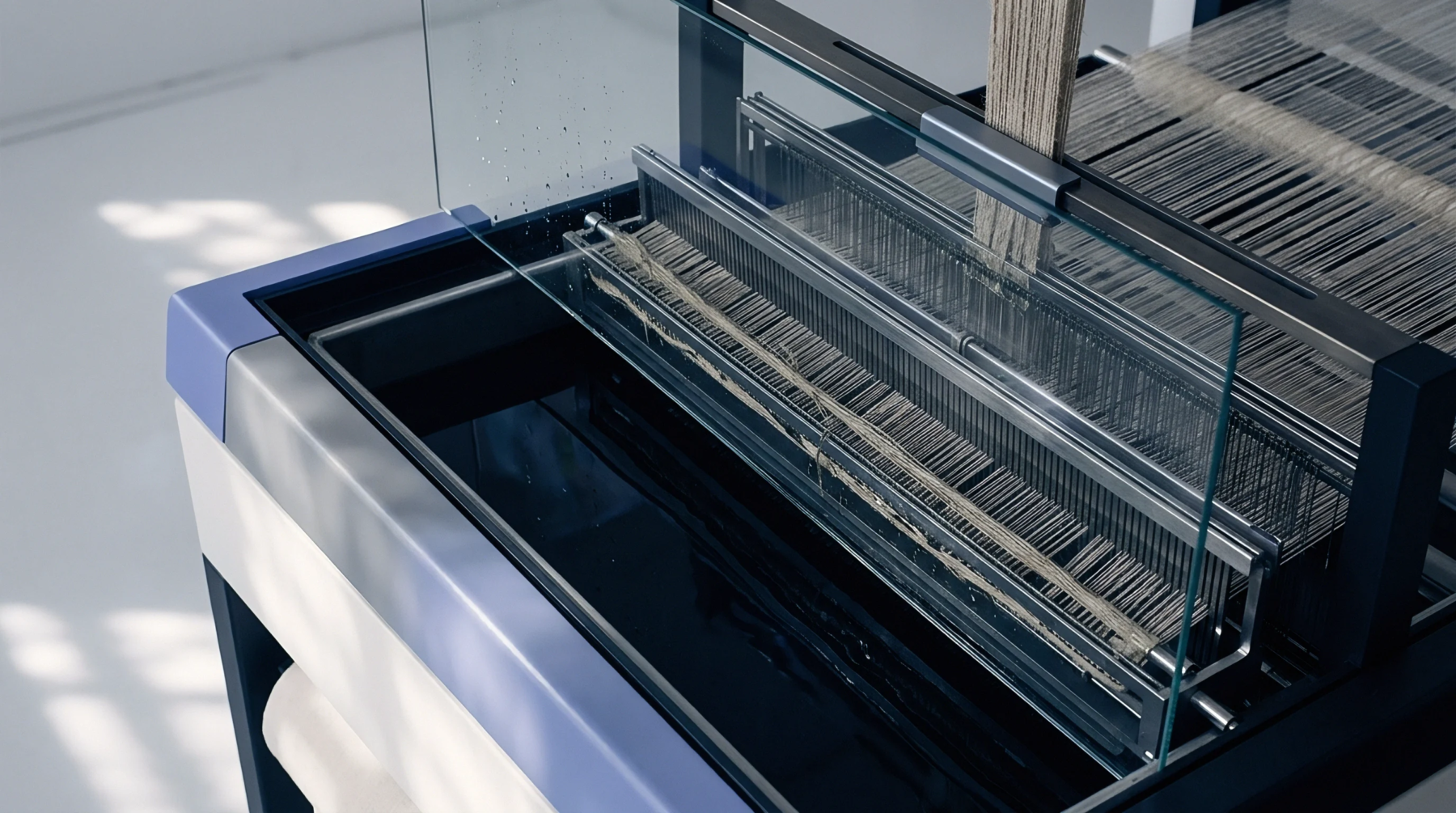
Machine Specification
Mechanical shed-forming specifications define the number of individually addressable warp ends that an automated harness mechanism can lift during each weaving cycle. Jacquard capacity designates the total hook count engineered into an electronic or mechanical shedding unit mounted above a commercial loom. Modern industrial jacquards provide selector capacities extending from 1,440 hooks up to 24,576 hooks, determining pattern repeat dimensions across the woven fabric width.
The metric designates physical lifting hooks and electrical solenoid modules, while excluding ground weave shafts driven independently by under-loom dobbies. In Chinese linen mills weaving damask tablecloths, decorative upholstery, and specialized apparel, this capacity dictates the boundary between small recurring geometric motifs and broad non-repeating scenic compositions.
Loom Integration
Harness installation protocols link individual electronic jacquard knives to loom heald wires through engineered cord gantry layouts. Linen weaving operations configure jacquard capacity to match the reed width and high warp density typical of fine linen damask fabrics. When setting up wide rapier looms for two-hundred-centimetre table linens, technicians thread harness cords through perforated comber boards, mapping individual hooks to warp ends.
A six-thousand-hook shedding head allows designers to execute full-width floral repeats without mechanical pattern reversal across the fabric face. Heavy linen yarns place substantial abrasive friction and tension strain on harness return springs, requiring durable cord selection and precise oil-bath maintenance. Mill technicians program electronic controller boxes to monitor solenoid drop-out times, preventing mispicks and skipped sheds at production speeds exceeding four hundred picks per minute.
Pattern Constraint
Repeat dimensions are bound mathematically by dividing total hook capacity by warp ends per centimetre across the reed. Insufficient hook quantity forces weavers to introduce point-paper symmetry or repeated horizontal panels, restricting creative freedom in jacquard capacity execution. Coarse flax tow yarns run on lower capacity setups because loose open weaves require fewer individual control points per square decimetre.
Unused harness cords are tied off safely outside the selvage zone to prevent mechanical tangling during fast cycle shedding.