Seam Slippage
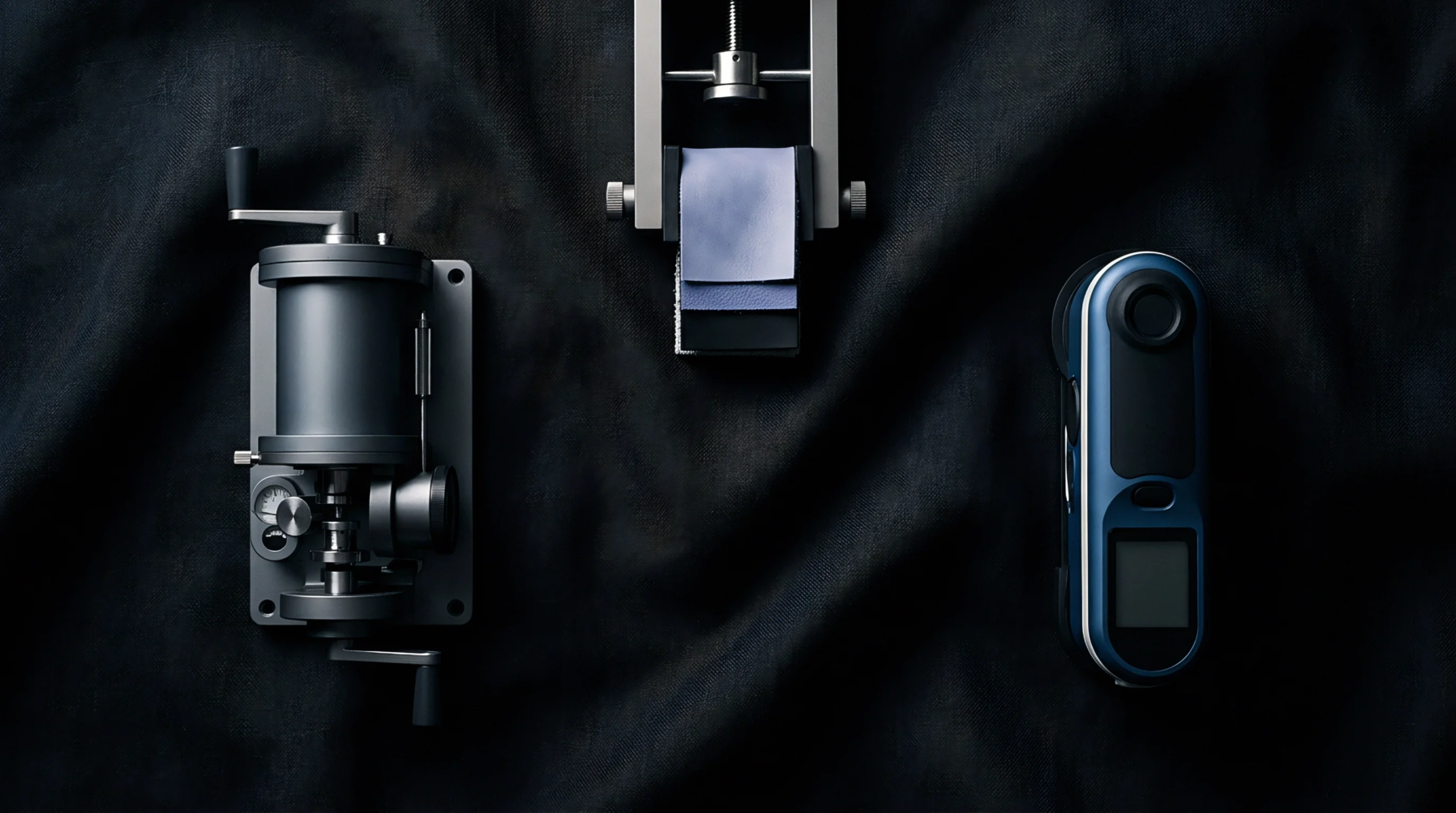
Tensile separation along woven cloth joints under controlled pulling force represents a standard mechanical evaluation codified as ISO 13936-1. Flax yarn slippage arises when warp and weft threads lack sufficient frictional constraint within low count linen sheeting. Laboratory operators clamp specified rectangular swatches into tension jaws and apply continuous load perpendicular to the stitched joint until thread displacement reaches three millimetres.
Mill export documentation records this metric to verify that unbleached flax fabrics withstand garment assembly stress without structural failure at high tension areas.
Load Resistance
Applied tension builds progressively inside testing machines during the continuous displacement cycle. Weight ratings increase until lateral yarn groups pull apart from intersecting threads within the stitch line. Evaluators monitor elongation curves to identify exact displacement thresholds for export grade linen.
Commercial buyers establish acceptance limits based on these breaking profiles before signing supply contracts with spinning mills.
Joint Stability
Production departments adjust loom density settings to prevent premature yarn displacement during garment manufacture. Warp tension values dictate final fabric resistance against mechanical pulling forces. Higher thread counts reduce slippage potential by increasing frictional contact points across intersecting linen yarns.
Proper finishing treatments secure individual fibres within yarn bundles to maintain structural integrity throughout export shipping.