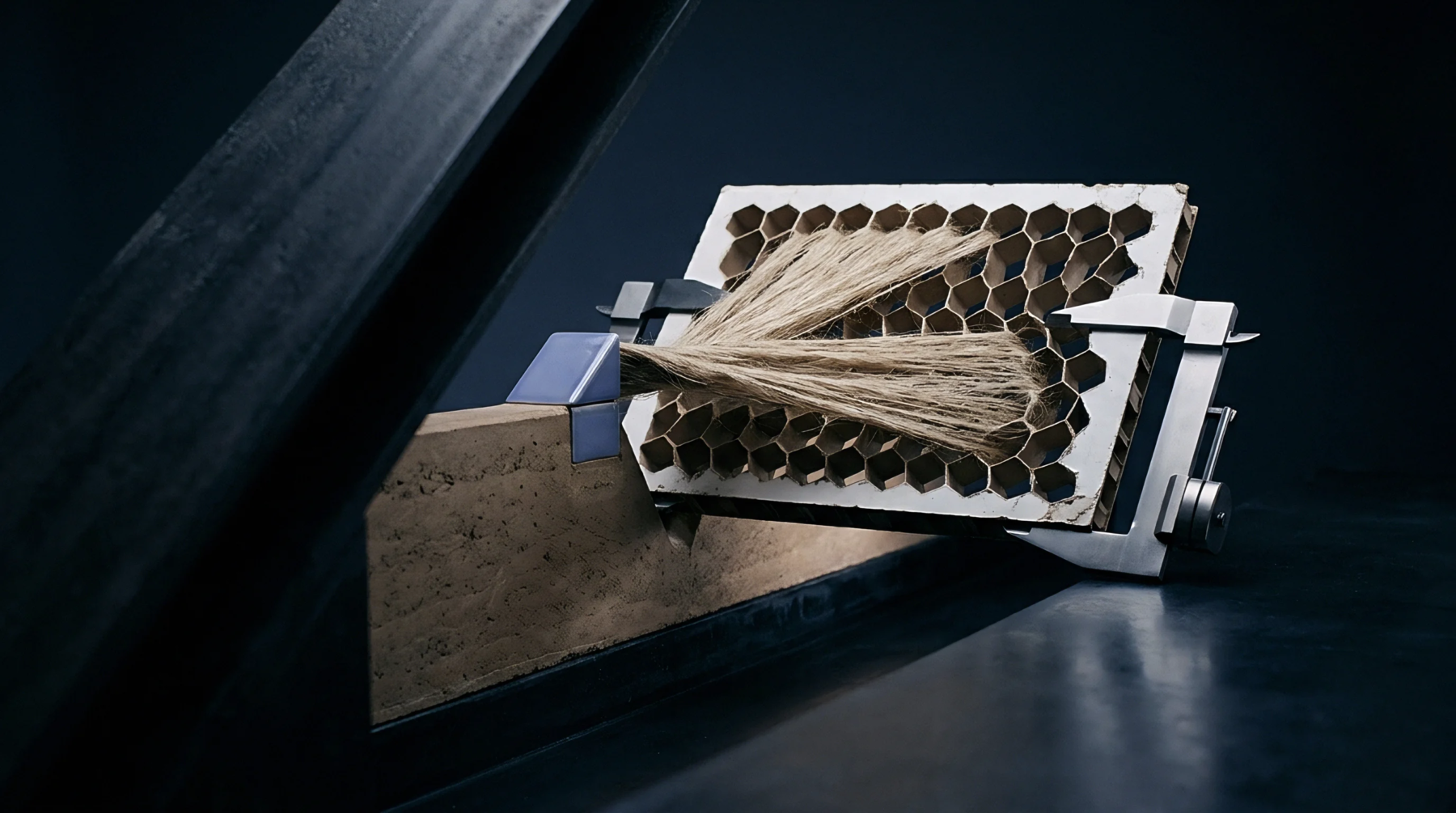
Mechanical Distortion
Time-dependent plastic deformation in jacquard shed lifting cords alters warp shed geometry during continuous high-speed weaving operations. In high-capacity Chinese linen mills, harness cord creep describes the permanent elongation of synthetic cords under constant static and cyclic tension from the jacquard machine. Linen weaving applies high shedding tension to clear sticky flax fibers, which accelerates cord elongation over long production runs.
Uncompensated elongation lowers the warp shed line and causes poor shuttleless insertion or pattern distortion in complex damask fabrics.
Loom Maintenance
Jacquard mechanism adjustment routines must account for cord stretch to maintain clean shed openings across the entire reed width. Excessive harness cord creep causes mispicks, warp float defects and uneven tension distribution among individual warp ends. Mill technicians measure shed clearance during periodic loom overhauls, adjusting individual cord lingo weights or pulley heights to restore correct warp line positions.
Modern synthetic cords utilizing high-modulus aramid or polyethylene cores reduce cord stretch compared to traditional braided nylon cords. Monitoring cord elongation rates allows maintenance teams to schedule loom re-harnessing before fabric defect rates exceed customer acceptance thresholds.
Maintenance Register
Equipment tracking logs record cumulative operating hours alongside measured harness cord creep distance across the loom width. The recorded values determine harness cord replacement cycles during planned preventative maintenance windows.