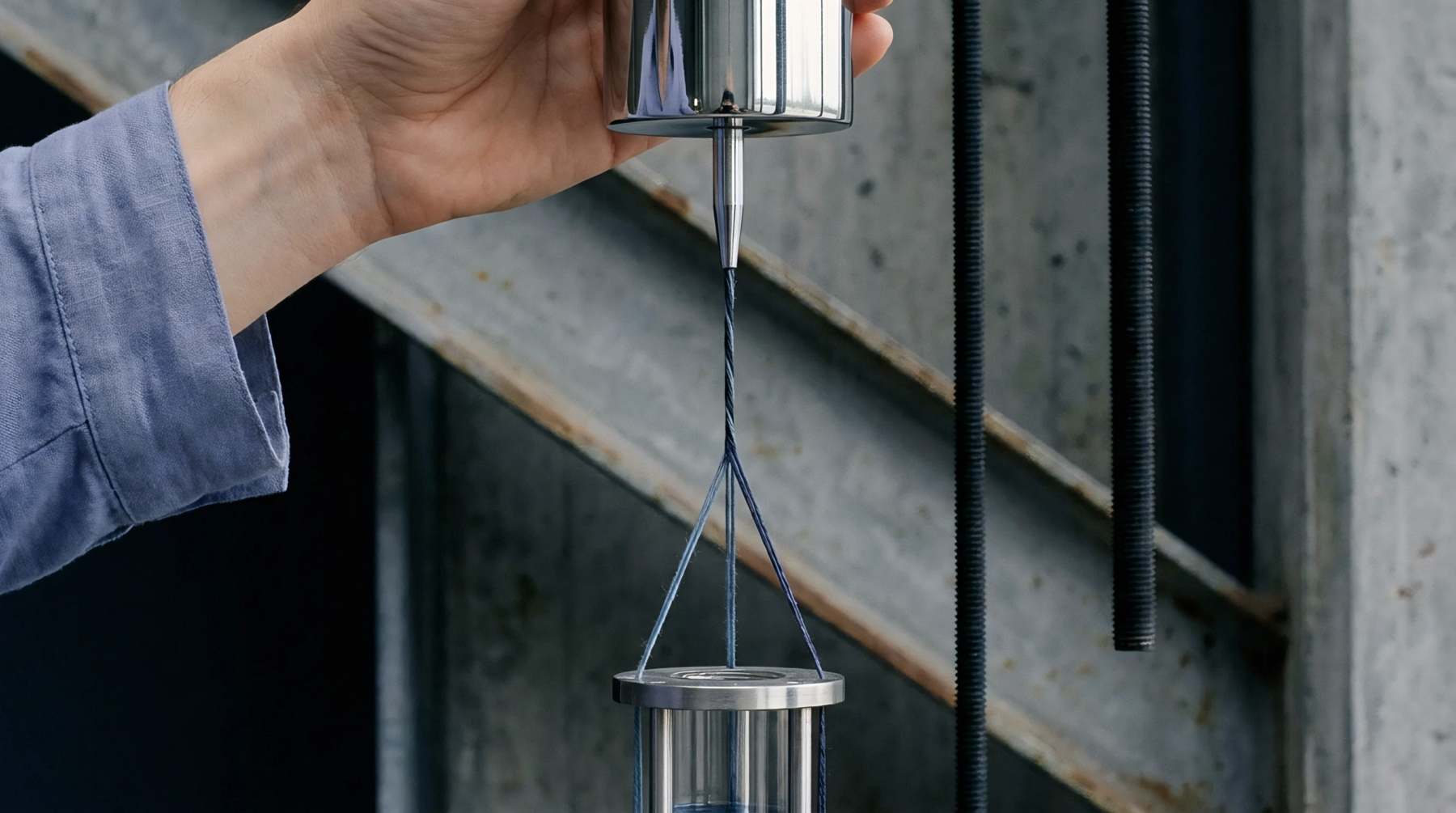
Fracture Mechanism
Brittle failure within stressed crystalline materials initiates at microscopic flaws when elastic strain energy release rates exceed the surface energy required to create new crack interfaces. In natural cellulosic structures, Griffith crack propagation accounts for sudden tensile ruptures occurring along the elementary cell walls under axial stress. High crystalline alignment of cellulose chains within flax bast microfibrils leaves little room for plastic yield, causing localized defects, dislocation nodes, and processing abrasions to act as severe stress concentrators.
When mechanical loads surpass critical local thresholds, these internal micro-cracks sprint across the cell wall, ending in brittle failure rather than ductile draw.
Rupture Dynamics
Mechanical scutching, heavy drawing, and tight bending impart structural micro-cracks known as dislocation bands or kink bands across the cell wall matrix. As tensile loads mount during wet spinning or high-speed winding, stress accumulates at the sharp tips of these pre-existing fissures. The mathematical criterion shows that crack advancement accelerates spontaneously once the strain energy released by cell elongation outstrips the chemical bond energy of the cellulose chains.
Moisture plays a modifying role in this mechanism, because water molecules plasticize inter-microfibrillar amorphous zones, reducing localized stress concentrations and boosting apparent tensile resistance. Dry processing environments lack this moisture buffer, encouraging rapid crack growth that cleaves fibres under modest tensile loads.
Failure Analysis
Fracture surface analysis under scanning electron microscopy distinguishes clean, transverse brittle fractures from irregular, fibrillated ductile separations. Laboratory managers use these microscopic evaluations to confirm whether yarn ruptures stem from chemical degradation during bleaching or excessive mechanical stress during spinning. High crack initiation rates during spinning manifest as continuous end-breakages on the spinning floor, forcing operators to lower machine speeds.
Export fabric testing sheets document the resulting losses in tensile and tear resistance, tracing yarn deficiencies directly to stress concentrations in raw flax processing. Loom performance records reveal that high micro-crack populations elevate warp stops and increase weaving downtime across high-density linen contracts.