Fabric Definition
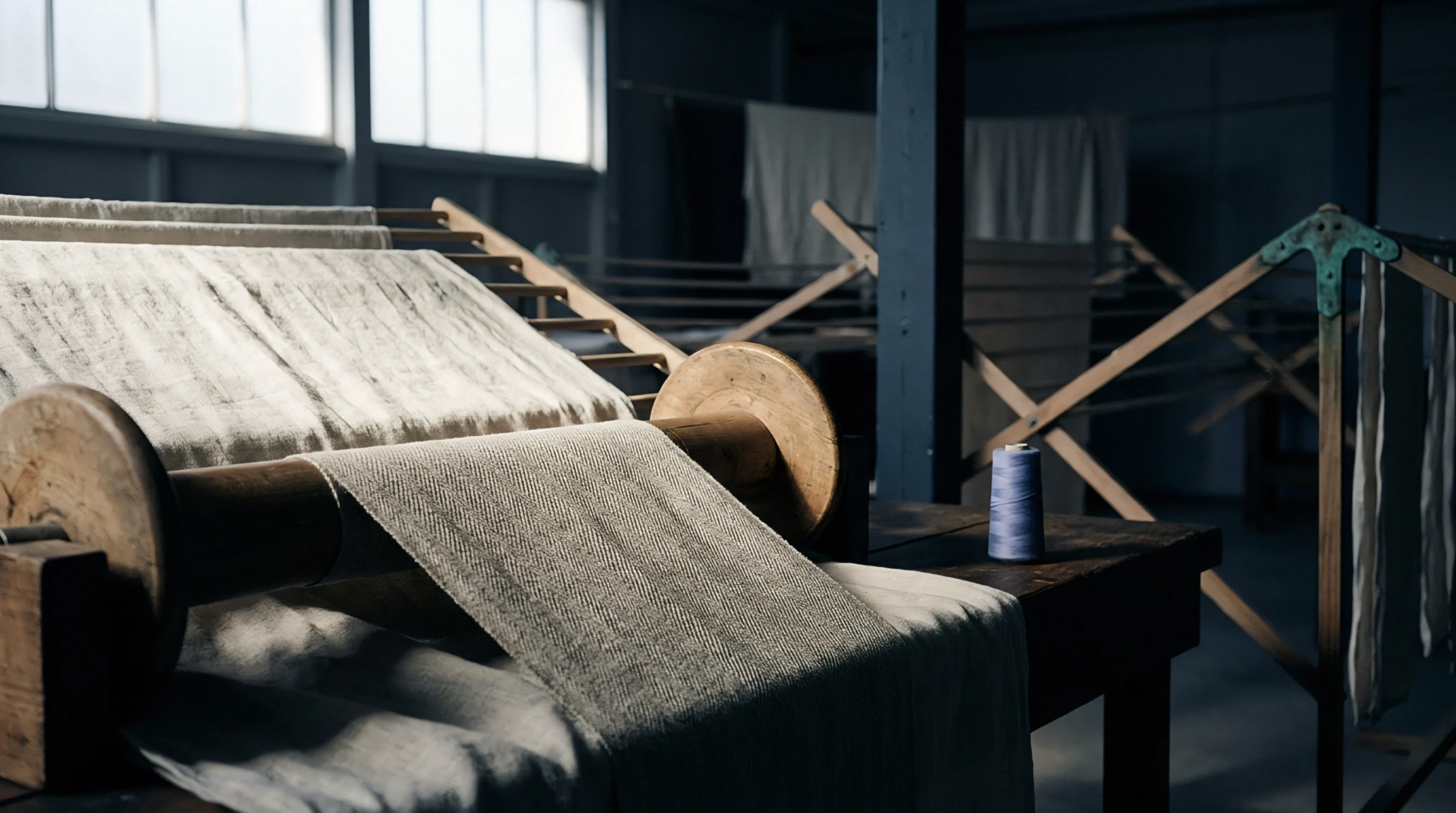
Unprocessed cloth emerges from a power loom as a raw substrate composed of crossing warp and weft fibres arranged in a basic interlacing pattern. This grey plain weave remains in its natural state before any chemical scouring, bleaching, or dyeing alters the physical properties of the fibre. Mills classify the material according to construction density, which indicates the number of yarns per square inch.
Standard production cycles track the weight of the fabric at this stage to establish a baseline for subsequent finishing losses. The material sits at the intersection of raw material procurement and technical finishing, serving as the neutral reference point for all future value additions.
Process Documentation
Quality control technicians assign a numerical identifier to each batch of unfinished material to log its structural integrity before it leaves the mill floor. They evaluate the consistency of the interlacing to ensure no skips or broken yarns occurred during the rapid oscillation of the heddles. This document verifies the fibre content and the count of the yarns to confirm that the output matches the technical specifications requested by the contract buyer.
Inspectors record these findings on a mill ledger, which functions as the primary evidence of production quality for the exporter. A signed report verifies the physical characteristics of the lot, providing the buyer with the necessary data to authorize the transition from loom state to processing.
Commercial Status
The market value of the commodity depends upon its ability to accept various chemical finishes without structural failure or excessive shrinkage. Traders purchase the unfinished product in bulk quantities, knowing that the absence of surface treatments allows for customization during the secondary manufacturing phase. Fabric in this state represents the most liquid form of textile asset because the final consumer determines its ultimate purpose through dyeing or mechanical brushing.
The material provides a stable foundation for industrial applications, ensuring that any subsequent modification follows a predictable outcome based on the original density and fibre uniformity.