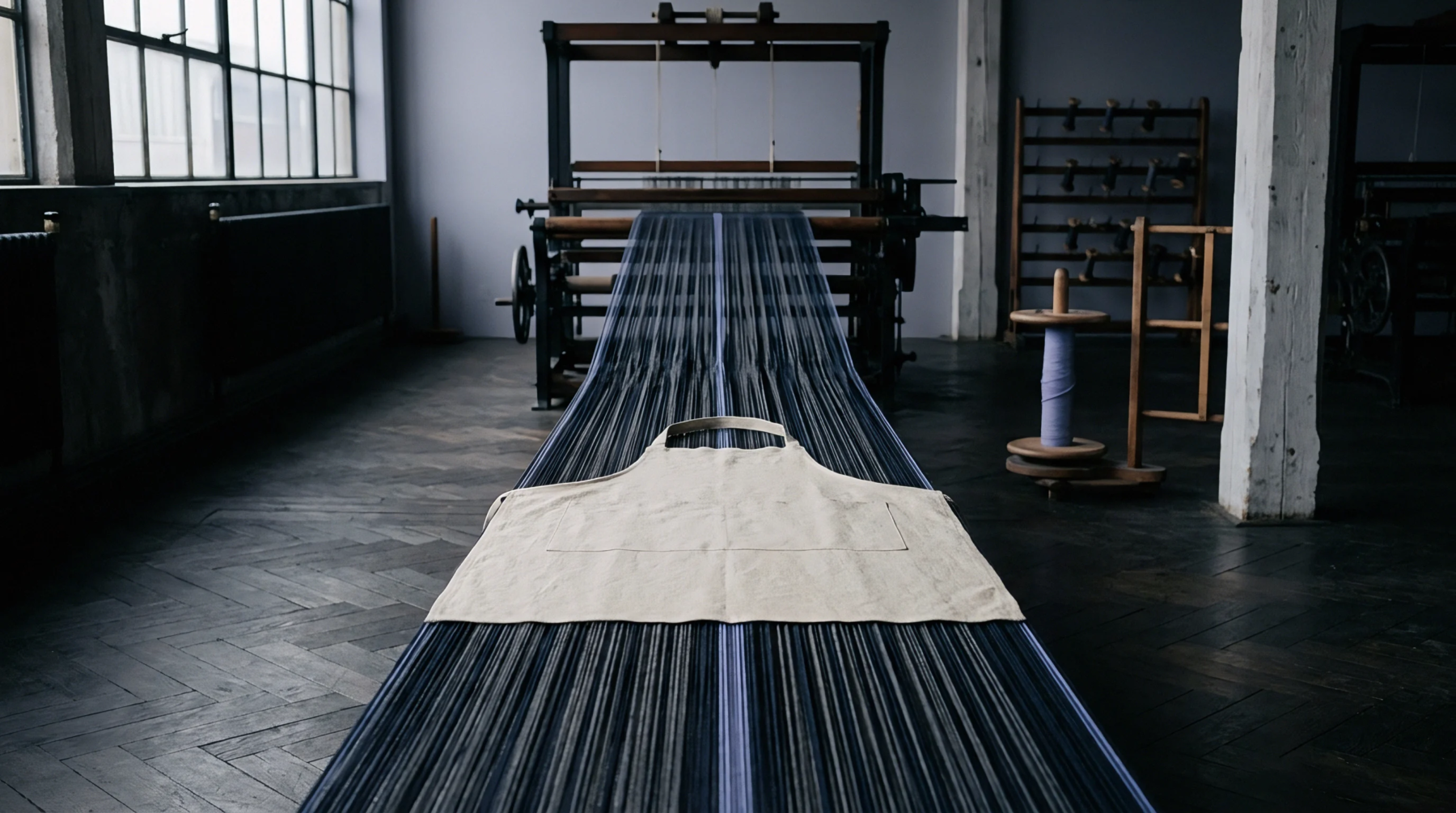
Loom Oscillation
Vertical vibration occurring during high-speed shuttle insertion cycles creates the phenomenon known as fell bounce instability. This mechanical resonance affects the precision of cloth density at the beat-up line. Production engineers record this metric in the daily weave efficiency report to monitor tension variance across the warp.
Excessive deviation forces immediate adjustment to the secondary cam profile.
Tolerance Specification
Factory quality standards mandate that the fell bounce instability remains within a five millimetre variance from the target line. Fabric mills verify this limit during the finishing stage by examining the warp cross-section for uneven yarn displacement. Each lot requires a documented check against the mill internal production manual.
Measurements exceeding this threshold indicate a failure in the warp let-off timing or a misalignment in the reed motion. Operators calibrate the beam brake to mitigate these forces before the fabric proceeds to the export pallet. Higher tension levels often stabilize the beat-up operation by suppressing the kinetic energy generated during the shuttle passage.
Spinning mills contribute to this control by ensuring that yarn tensile strength meets the demands of the weaving environment. Consistent yarn diameter allows the loom to maintain a rhythmic beat without jarring the warp sheet.
Export Calibration
Shipping contracts for finished linen prioritize the consistency of fabric texture achieved through the mitigation of fell bounce instability. Final inspectors assess the physical integrity of the rolls against the buyer acceptance criteria set in the procurement agreement. Goods demonstrating irregular density at the fell line undergo a secondary grading process to determine suitability for retail distribution.
Mill laboratories quantify the defect rate by analyzing the gap between parallel picks across the entire length of the textile. Traceability records link each batch of fabric to the specific loom settings used during the original assembly phase. Accurate documentation provides the basis for claims regarding the structural uniformity of premium linens.
A stable beat-up process ensures that the finished cloth retains the required dimensional stability for all subsequent industrial garment manufacturing.