Sensor Mechanism
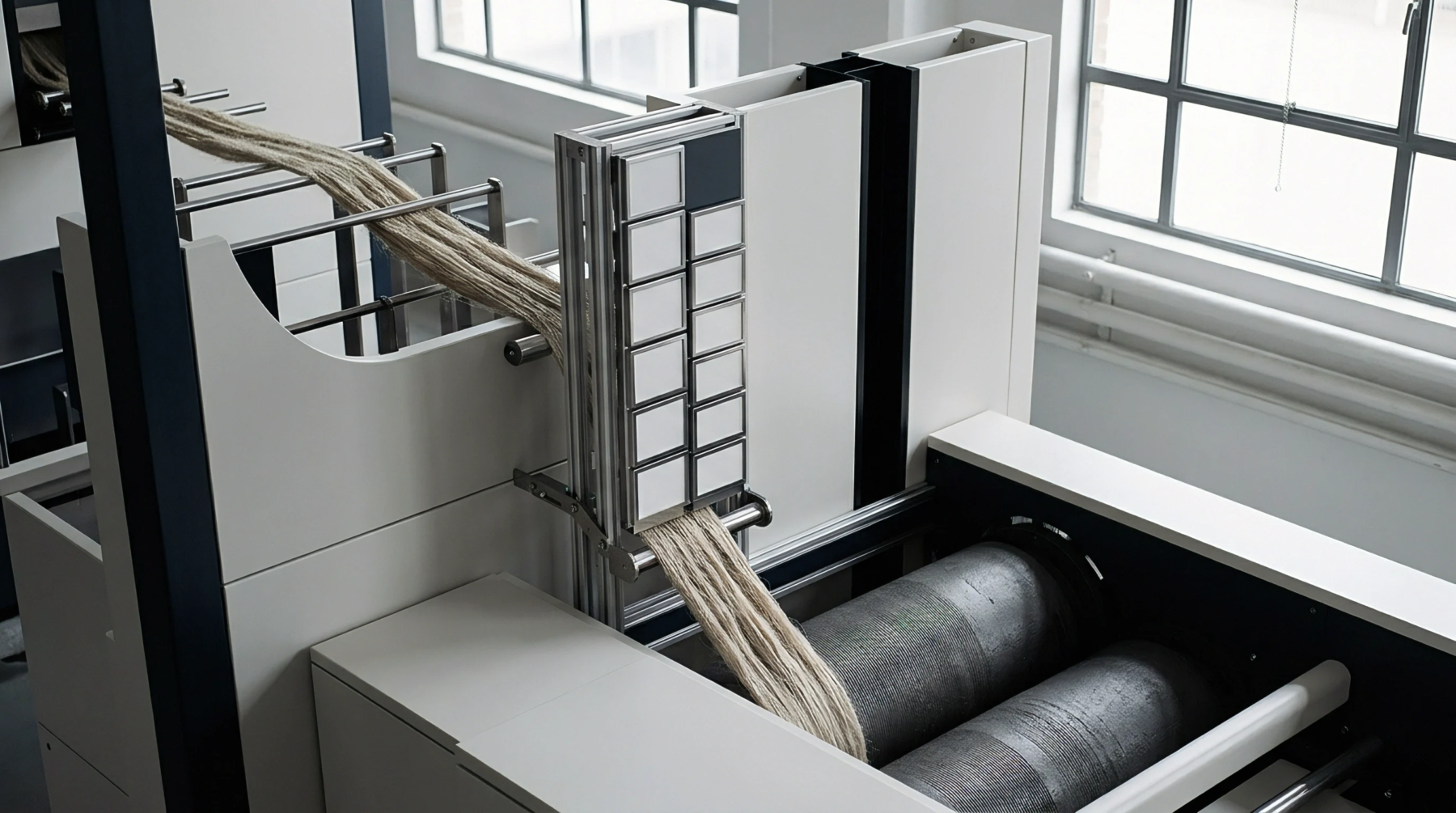
Electrical fault detection in spinning frames relies on the drop-wire telemetry system to identify broken filaments within the high-speed movement of natural fibre. This sensing architecture monitors tension profiles across individual yarn paths to trigger an automated halt when a separation occurs. Mechanical contacts remain closed under the weight of a weighted wire resting on the tensioned thread.
Sudden tension loss causes the wire to drop, which closes an internal circuit and sends a signal to the frame controller. Such physical triggers ensure that damaged yarn does not feed into subsequent winding stages or degrade the output quality of the final textile roll.
Transmission Logic
Operational signals travel from the spinning frame to a centralized monitoring console to map the location of every yarn break across the production line. Information processed by this system allows for granular analysis of raw fibre consistency and machine wear. Technicians receive precise data regarding the frequency of breaks per spindle, which distinguishes between isolated machine performance and systemic faults in the flax input.
Digital logs generated by this process function as the primary record for verifying production efficiency against mill performance benchmarks.
Integration Standard
Acceptance criteria for exported finished cloth include the evaluation of splice density and fibre continuity recorded during the initial formation of the yarn. Buyers compare these automated records against the physical condition of the delivered fabric to determine if a batch meets the agreed technical requirements for structural integrity. Discrepancies between the sensor data and the final product appearance indicate contamination or inadequate cleaning processes occurring between the spinning and weaving stages.
Comprehensive traceability relies on this telemetry to correlate downstream fabric defects with specific fibre batch identifiers established at the source.