Drafting Interval
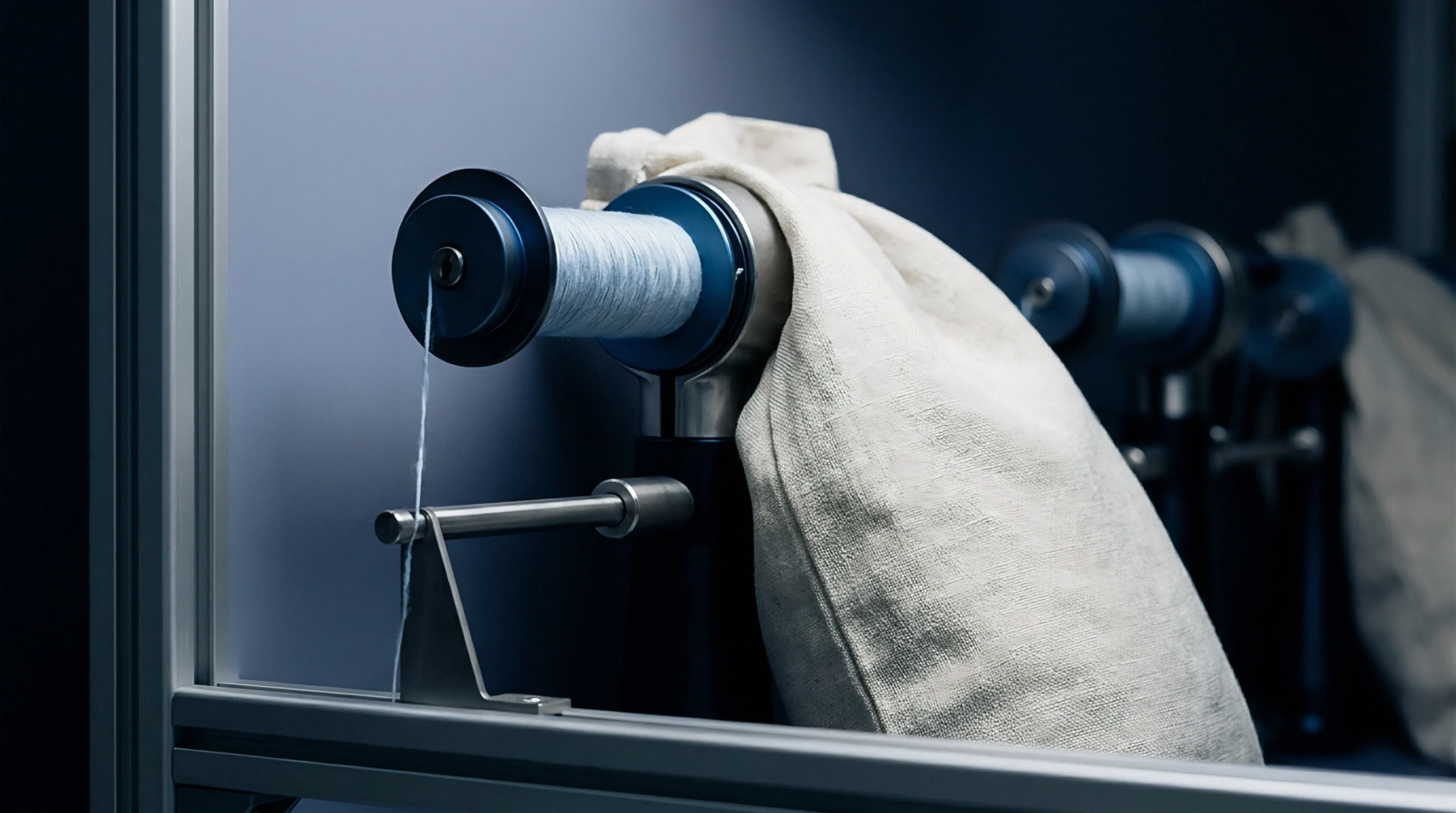
Mechanical spacing between drafting roller pairs in a sliver attenuation frame establishes the physical boundary where flax fibres are drawn past each other to reduce linear density. The drawing zone operates inside wet-spinning preparation and dry-spinning gilling passes to control sliver weight per unit length. Mill floor process logs record draft ratios and nip distances for each draw frame pass.
Buyer specifications set target sliver levelling thresholds and maximum mass variation limits across produced lots.
Roller Configuration
Nip roller pressures clamp the flax bundle while draft rollers rotate at a higher surface velocity to pull the sliver down to its required count. Fibre bundle cohesion depends on natural pectin levels and sliver moisture content, which dictate the friction between adjacent flax filaments. Improper nip distance settings cause either fibre breakage from premature clamping or drafting waves from loose control.
Technicians adjust roller gauge settings according to mean fibre length measurements taken during raw material grading.
Fibre Realignment
Slivers entering the drafting zone undergo parallelization as twisted bundles unfold under longitudinal tension. Controlled draft ratios align coarse flax fibres prior to roving and final wet spinning, directly influencing yarn evenness. High draft ratios in early gilling stages generate sliver irregularities if the draft zone length does not match the upper tail of the fibre length distribution curve.
Laboratory tests measure sliver mass variation using capacitive testing equipment to generate spectrograms before approving the material for roving production. Grey sliver inspection sheets record mass variation values as part of internal quality control protocols.