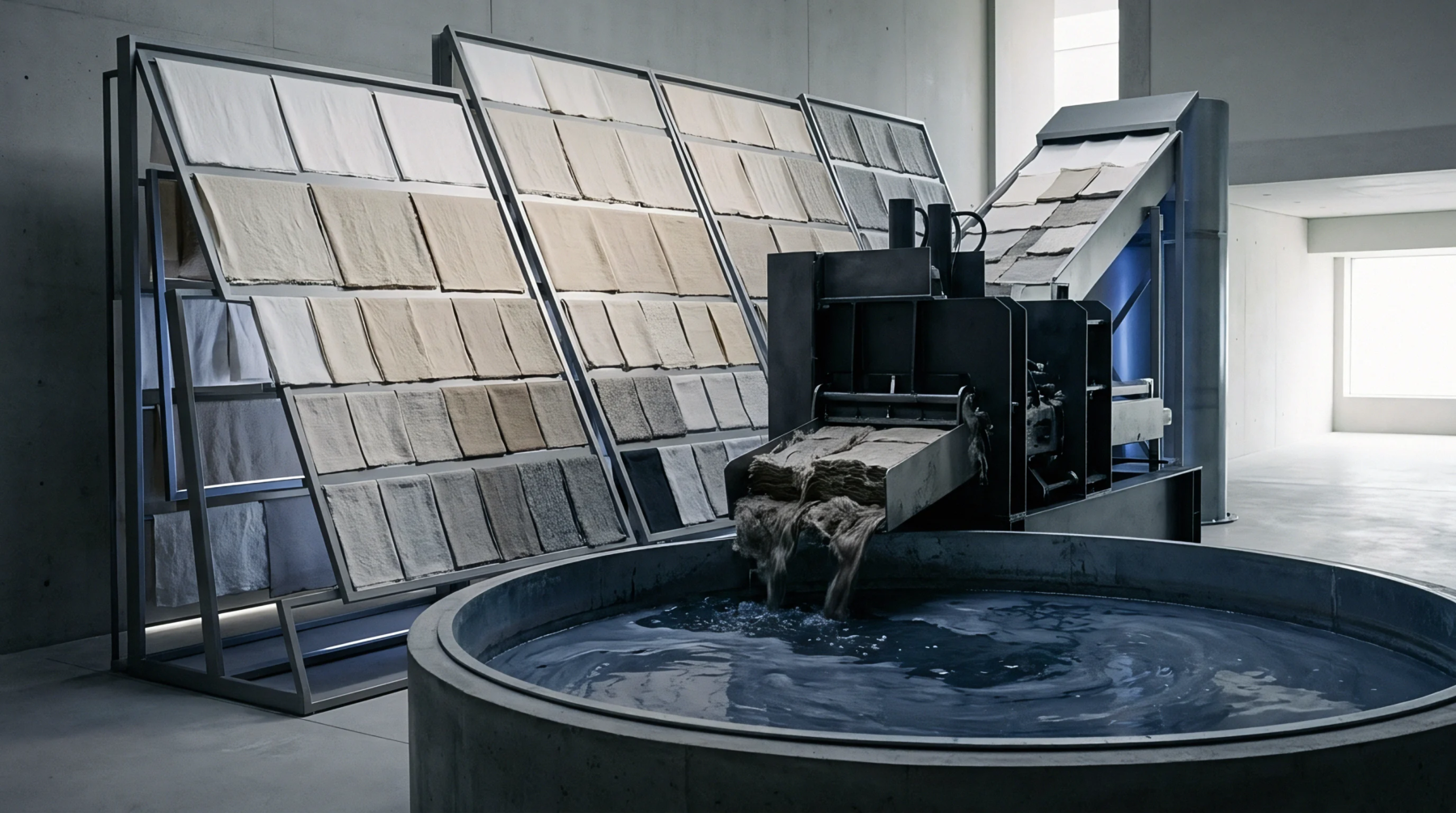
Chemical Scouring
Alkaline scouring of raw flax yarn degrades waxy biopolymers present on the outer cuticle layer of bast fibre bundles. Industrial wet processing applies cutin removal to strip hydrophobic ester networks, enhancing water absorbency and dye liquor penetration during yarn finishing operations. Process control sheets record residual wax content percentages to confirm adequate scouring efficiency before dyeing.
The chemical reaction hydrolyzes crosslinked hydroxy fatty acids into water-soluble soaps, establishing a clean cellulose surface while marking the boundary where underlying structural pectin must remain unattacked.
Surface Absorbency
Hot aqueous sodium hydroxide solutions saponify ester linkages within the cuticular matrix at elevated temperatures. Mills monitor cutin removal during continuous yarn bleaching cycles to ensure uniform dye uptake without inducing excessive tensile strength loss in the flax yarn. Saponified fatty acids emulsify in the boiling alkaline bath, holding suspended impurities away from the textile substrate until rinsing phases complete.
Laboratory technicians test residual surface wax via solvent extraction methods, recording bath temperature and reaction duration parameters on quality tracking certificates. Excessive chemical treatment strips protective interfibrillar waxes, weakening inter-fibre cohesion during high-speed winding.
Processing Limit
Incomplete scouring leaves localized hydrophobic patches that cause blotchy dye shade variations across finished linen cloth. Over-scouring removes essential binder compounds, causing severe fibre shedding during weaving. Quality standards define target residual wax percentages between half a percent and one percent by weight.