Failure Mechanism
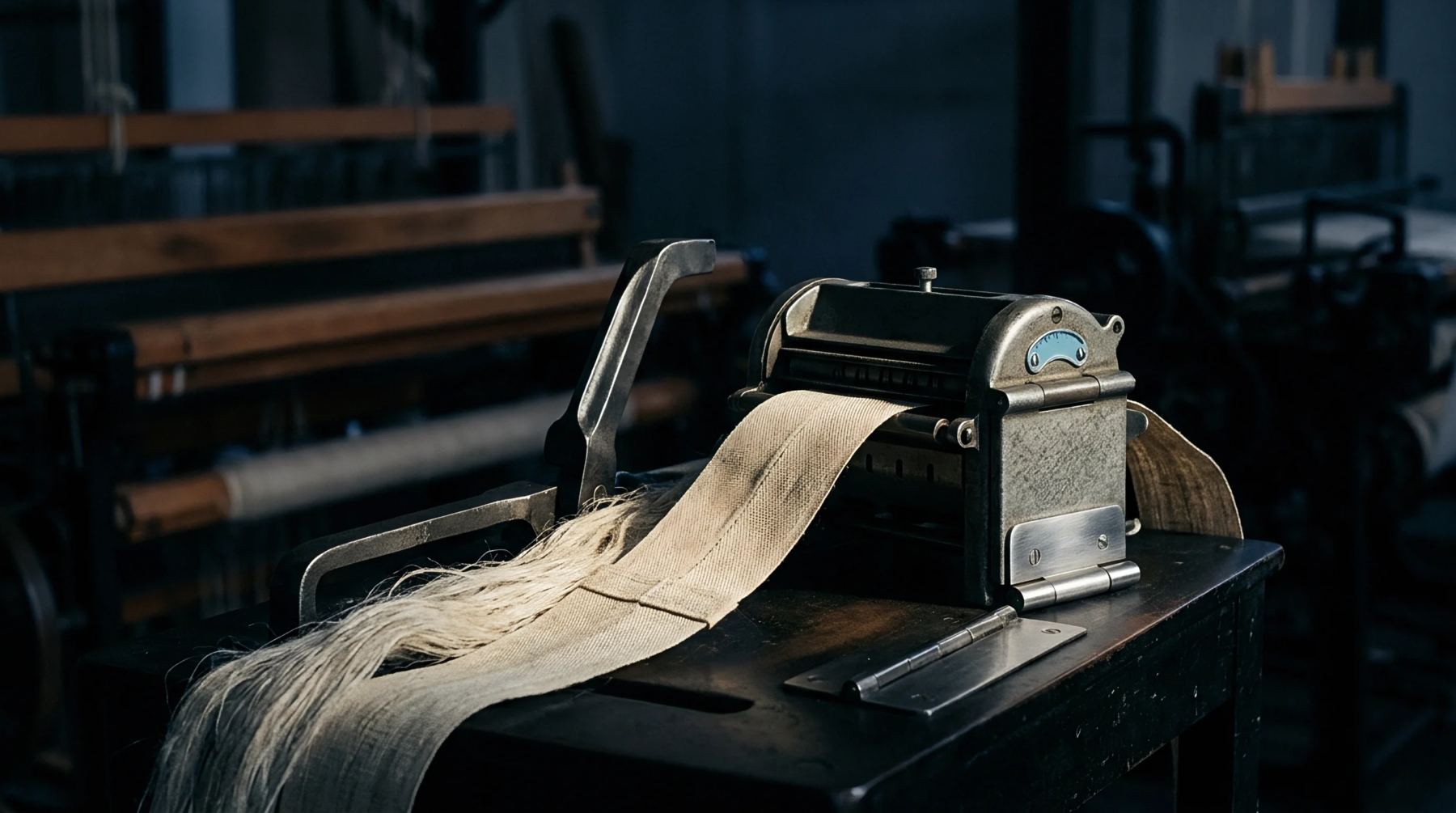
Sudden structural failure of yarn or coating materials without significant plastic deformation occurs when tensile stress exceeds the cohesive strength of the material. In linen weaving, brittle fracture typically happens in the starch or polymer sizing film when the moisture content drops below a critical threshold. This cracks the protective coating, exposing the raw flax fibrils to the abrasive action of the loom.
The resulting loss of warp integrity increases the frequency of loom stops.
Yarn Damage
Mechanical degradation of dry spun flax yarns during weaving impairs the efficiency of the textile mill. When the sizing film undergoes brittle fracture, the yarn loses its smooth surface and starts to shred as it passes through the heald wires and reed. This degradation leads to loose fibres accumulating in the loom area, which creates yarn cling and further stops.
Spinning mills grade flax warp yarn partly on its resistance to this type of failure under high tension. Technicians record these occurrences in the loom efficiency sheet, noting the humidity level at which the breakages occurred. If the humidity is too low, the sizing agent cannot maintain its necessary elasticity and snaps under sudden peak loads.
Prevention Strategy
Controlling the environmental conditions in the weaving shed stabilizes the performance of flax warp yarns. To counteract brittle fracture, mills add plasticising agents like glycerol or urea to the sizing mixture. These additives keep the protective film supple even under the high dynamic loads of modern rapier looms.
This approach is recorded in the mill’s standard operating procedure for dry climate operations.